Blog

Linux Patch Management: A Production-Trust Checklist

Linux Patch Management: A Production-Trust Checklist

Nov 18, 2026    Mariusz Antonik    Automation    10 min read

Linux patch management needs more than a scheduler and a green dashboard before administrators can trust it in production. A reliable process controls scope, checks service health, preserves evidence, handles failures, and supports a tested rollback path. This checklist explains how to evaluate a patching tool across mixed Linux fleets without confusing command completion with business-service recovery. It also shows how Linux server monitoring can provide the before-and-after evidence needed for safer changes and useful compliance reports.

Read More
Server Metrics Trends: Turn History Into Early Warnings

Server Metrics Trends: Turn History Into Early Warnings

Nov 17, 2026    Mariusz Antonik    Automation    9 min read

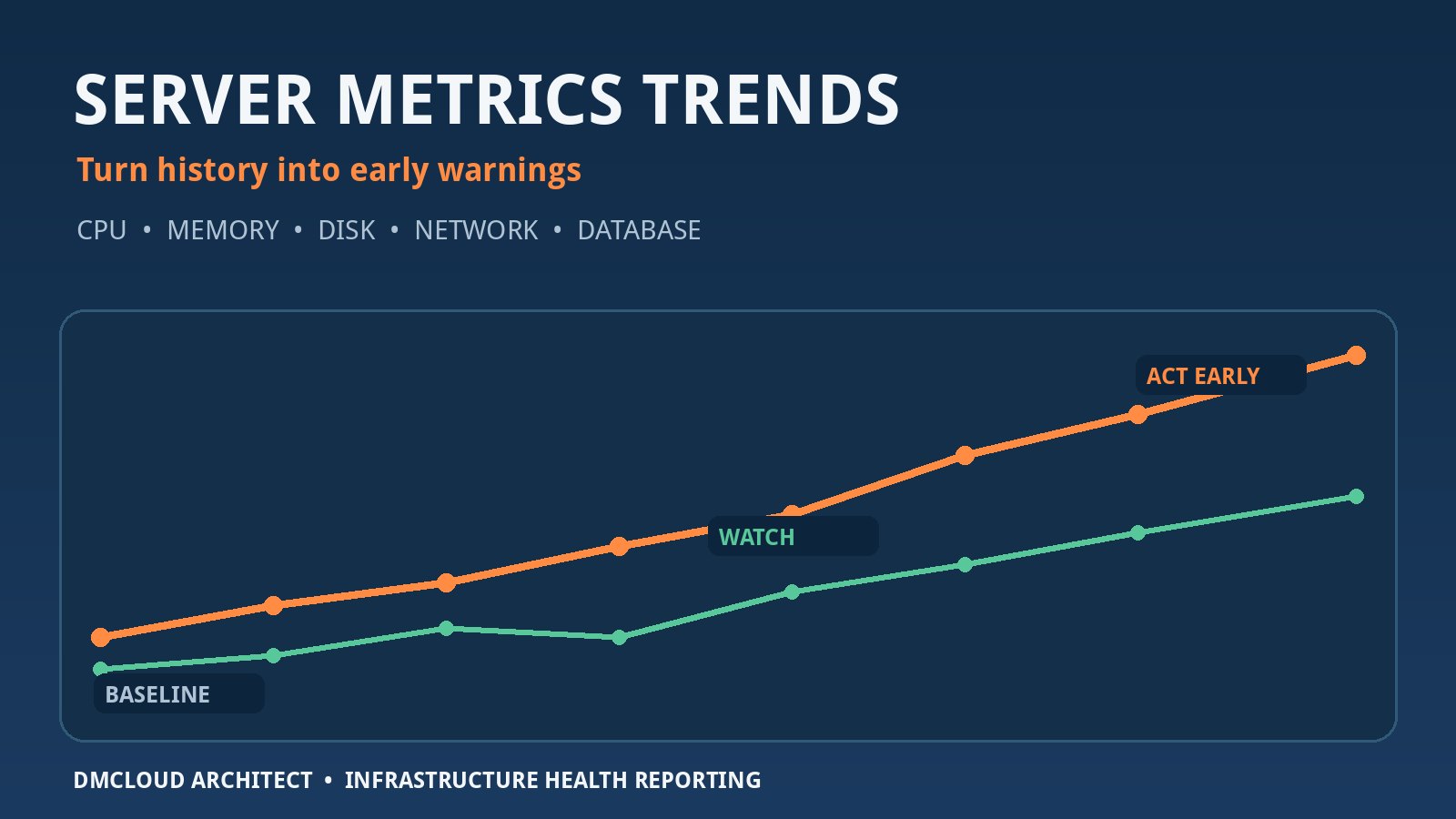
Server metrics trends reveal gradual capacity loss and performance drift that isolated checks often miss. A useful analysis compares consistent workload windows across CPU, memory, disk, network, application, and database signals instead of reacting to every spike. This guide shows how to build dependable baselines, connect related changes, and turn historical server monitoring into concise weekly actions.

Read More
Linux Multi-Seat Lab Setup: A Budget Server Checklist

Linux Multi-Seat Lab Setup: A Budget Server Checklist

Nov 16, 2026    Mariusz Antonik    Automation    9 min read

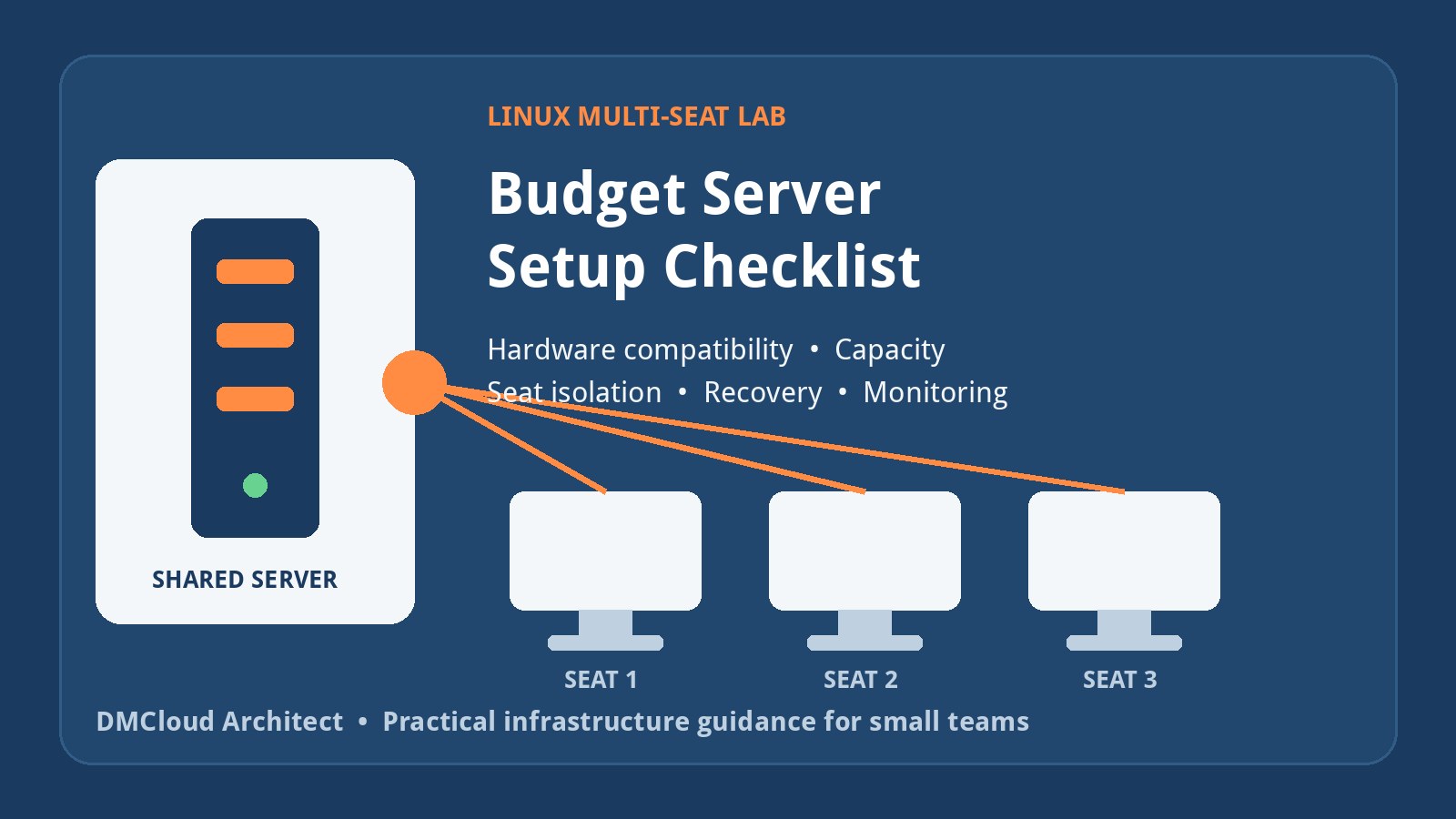
A Linux multi-seat lab can stretch a small training budget by letting several students share one computer. Success depends on verified hardware compatibility, dedicated input and display paths, realistic capacity planning, and a tested fallback. This checklist covers the decisions to make before buying used server parts and the health checks to run after deployment. It also explains when inexpensive thin clients may be simpler than true multi-seat hardware.

Read More
Server CPU Trend Analysis: Find Linux Performance Drift Early

Server CPU Trend Analysis: Find Linux Performance Drift Early

Nov 15, 2026    Mariusz Antonik    Automation    9 min read

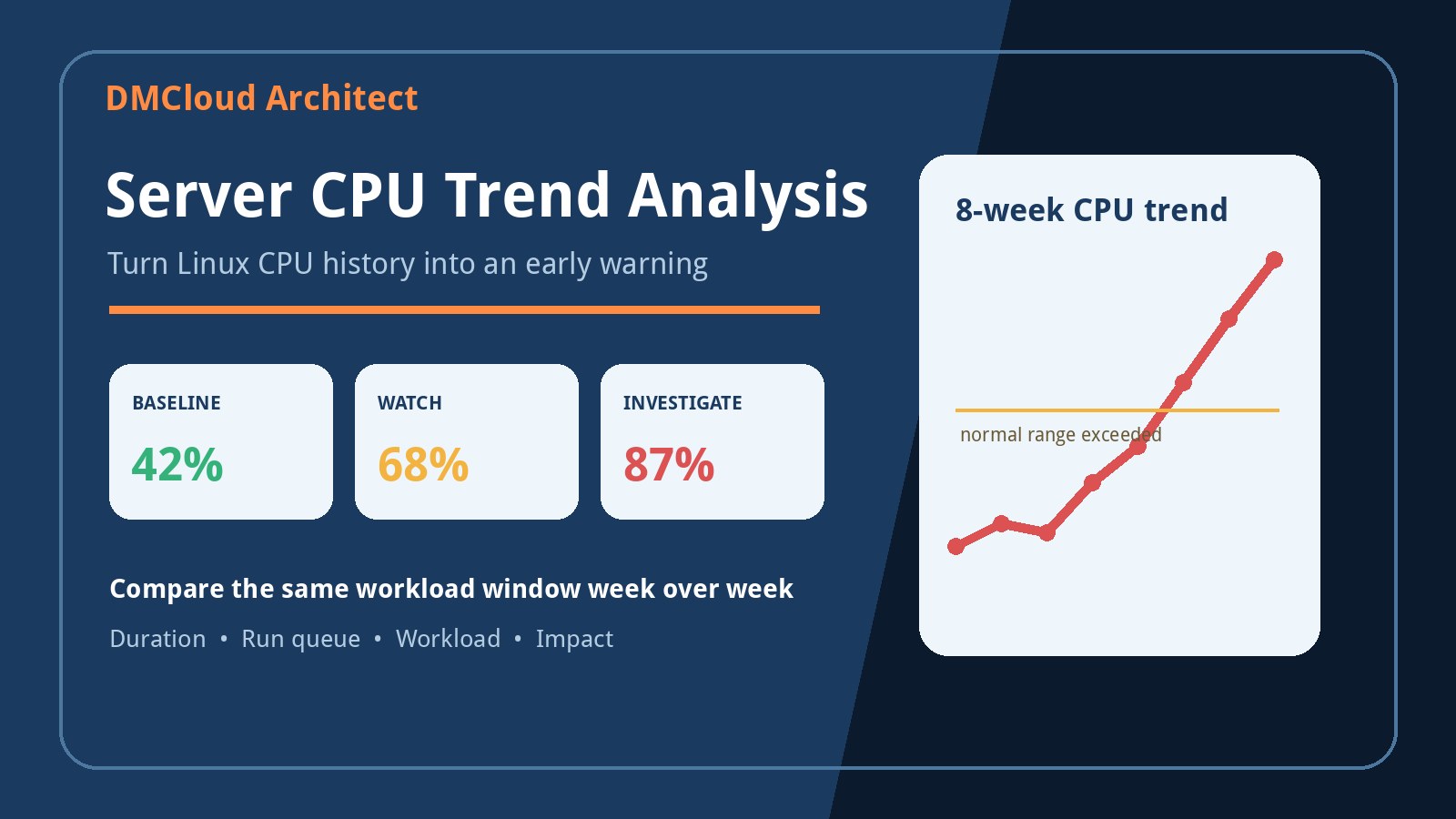
Server CPU trend analysis reveals gradual Linux performance drift that a one-time utilization snapshot cannot show. A useful review compares consistent workload windows, duration, run-queue demand, process activity, and service impact against a reliable baseline. This guide explains how to collect CPU history, interpret the trend, and turn it into practical weekly decisions before users notice a slowdown.

Read More
Linux Server Monitoring: A Practical Small-Business Operations Checklist

Linux Server Monitoring: A Practical Small-Business Operations Checklist

Nov 14, 2026    Mariusz Antonik    Automation    8 min read

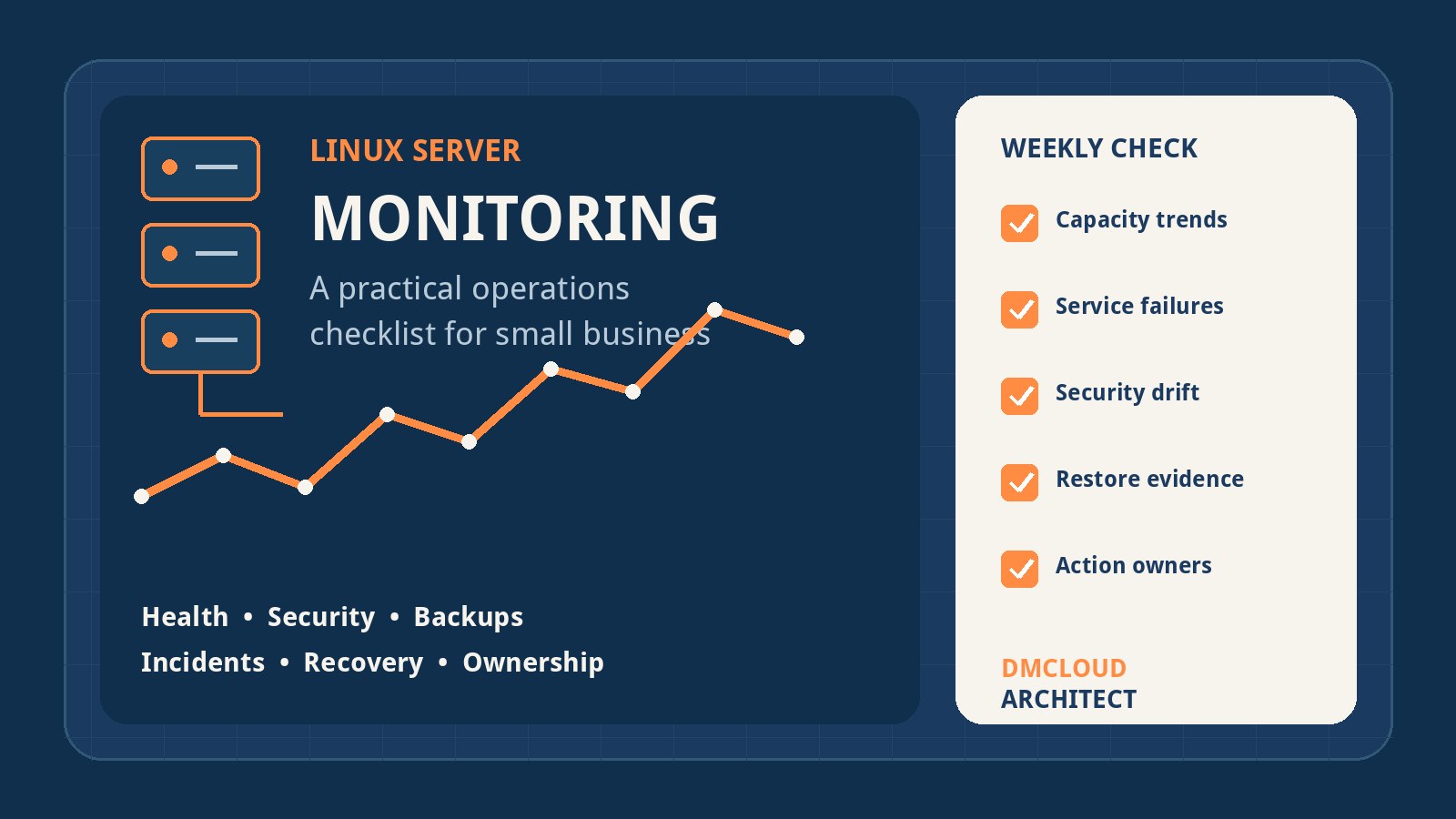
Reliable Linux server monitoring is more than watching CPU and memory charts. Small businesses need a repeatable operating checklist that connects system health, security, backups, incident response, and recovery readiness. This guide explains what to inspect, which evidence to retain, and how to turn technical findings into clear actions. Use it to build dependable infrastructure oversight without adding another dashboard to watch all day.

Read More
Track Disk Usage Over Time on Linux Before Capacity Becomes an Incident

Track Disk Usage Over Time on Linux Before Capacity Becomes an Incident

Nov 13, 2026    Mariusz Antonik    Automation    7 min read

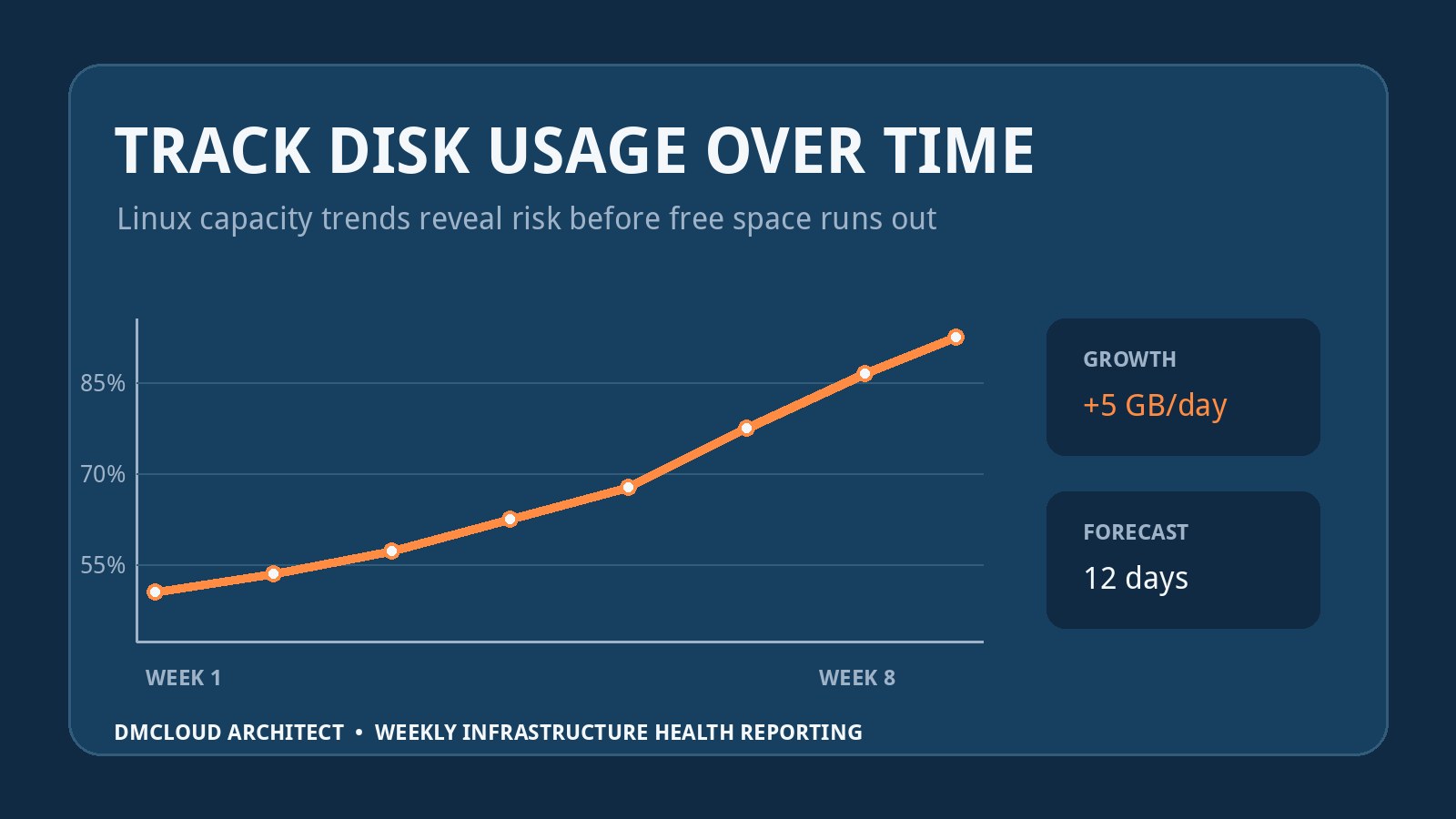
Tracking disk usage over time on Linux reveals capacity risk that a one-off free-space check cannot show. A small history of filesystem utilization, growth rate, and workload context lets you estimate when space may run out and investigate abnormal growth early. This guide presents a lightweight collection method, practical commands, and a weekly reporting approach for developers and small business owners.

Read More
Clonezilla LUKS2 Backup Repositories: A Weekly Capacity Checklist

Clonezilla LUKS2 Backup Repositories: A Weekly Capacity Checklist

Nov 12, 2026    Mariusz Antonik    Automation    10 min read

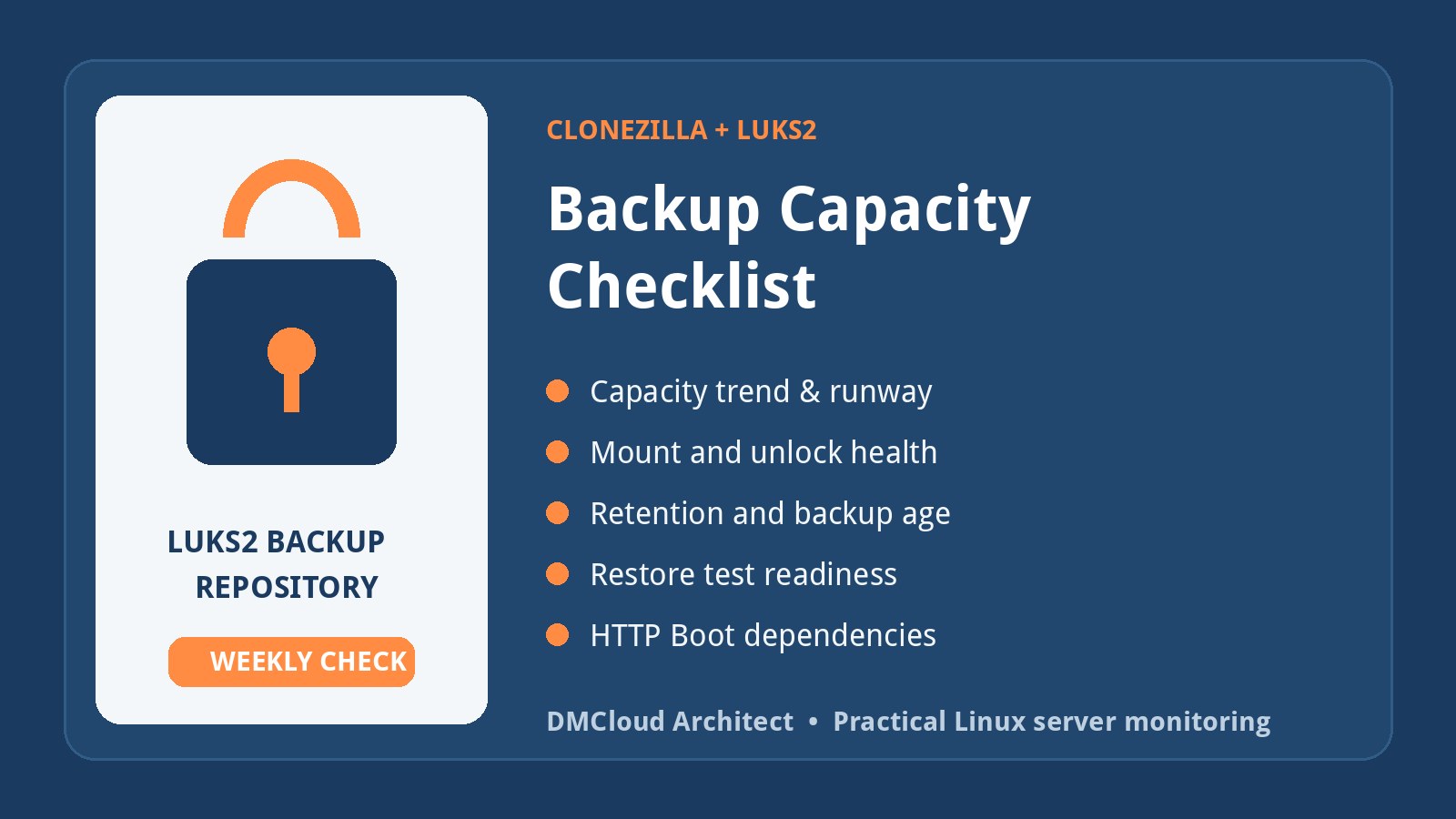
Encrypted image repositories make bare-metal recovery safer, but encryption does not protect them from capacity drift, failed mounts, or incomplete retention. This practical checklist shows how to monitor LUKS2-backed Clonezilla storage, estimate growth, verify usable backups, and preserve recovery headroom. It also covers HTTP Boot infrastructure and the operational checks that matter after a deployment-tool upgrade. Use it as a focused Linux server monitoring routine for imaging environments without adding another dashboard.

Read More
CPU Bottleneck Reporting on Linux: Detect Degradation Early

CPU Bottleneck Reporting on Linux: Detect Degradation Early

Nov 11, 2026    Mariusz Antonik    Automation    8 min read

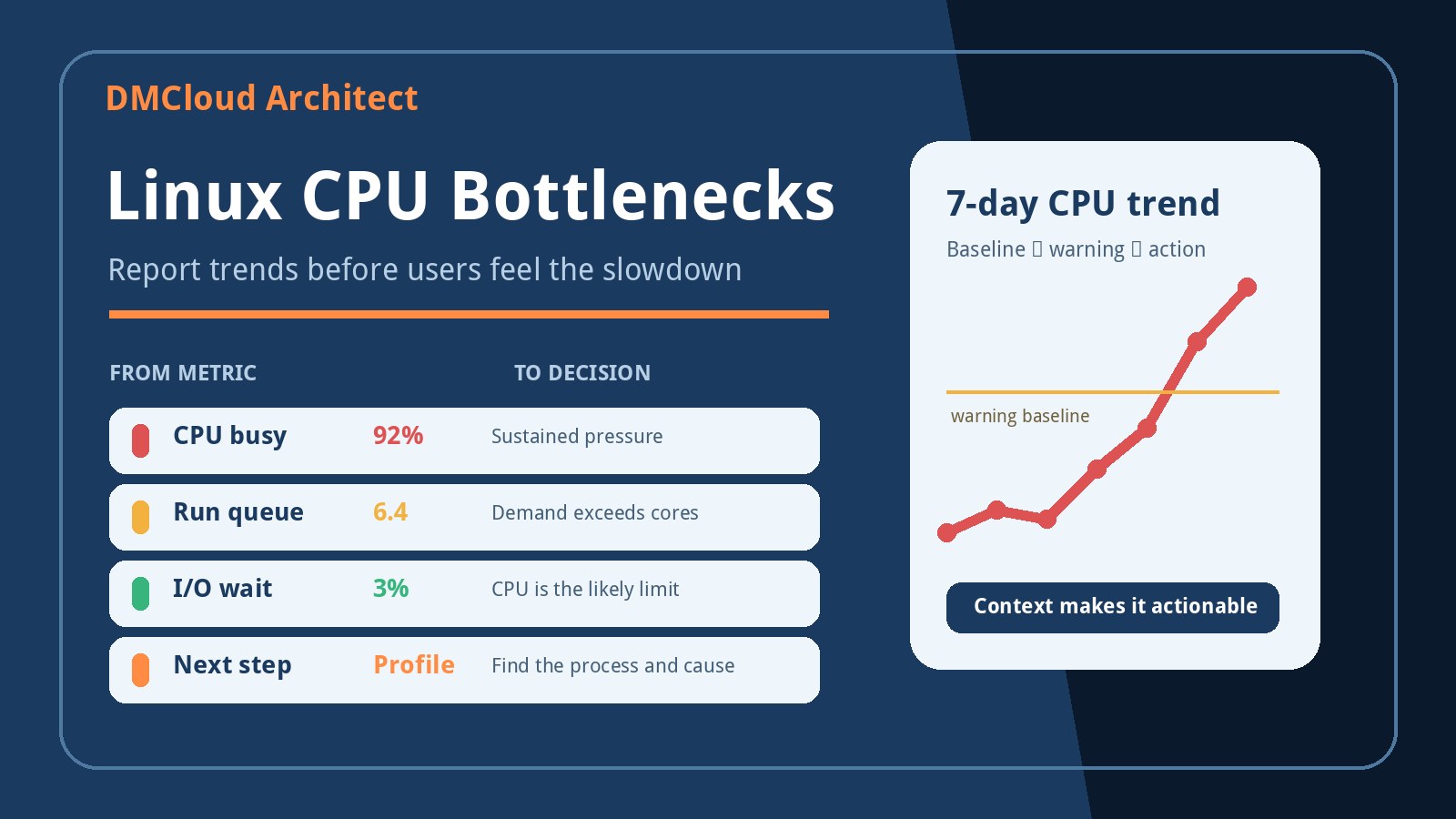
CPU bottleneck reporting on Linux should explain sustained pressure, not merely list a high utilization percentage. Combining CPU time, run-queue demand, load, process data, and workload context helps teams distinguish real saturation from harmless bursts. This guide shows how to build a concise report that detects degradation early and ends with a practical next action.

Read More
Disk Growth Warning Signs: A Weekly Linux Server Checklist

Disk Growth Warning Signs: A Weekly Linux Server Checklist

Nov 10, 2026    Mariusz Antonik    Automation    9 min read

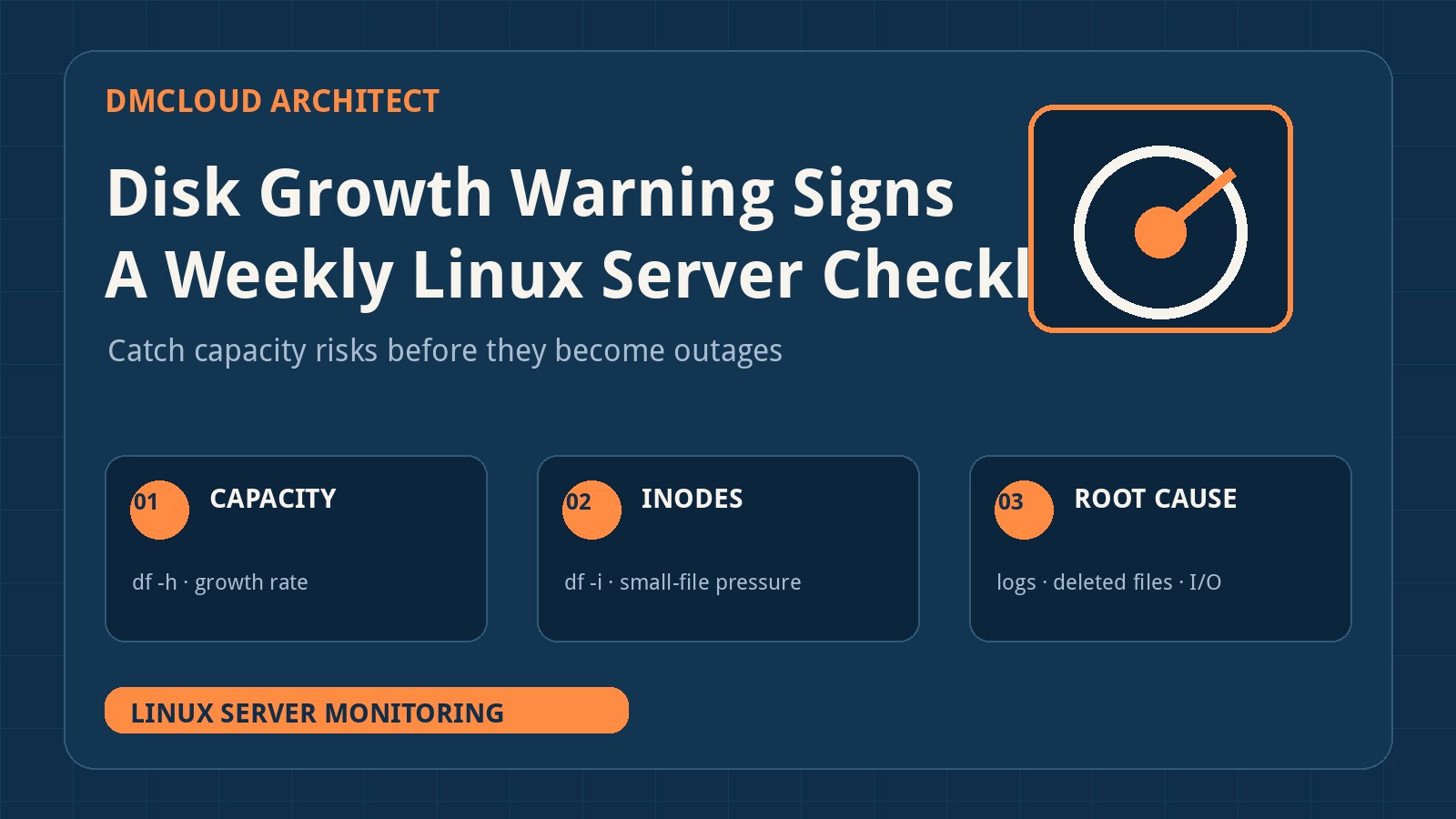
Disk incidents rarely begin with a completely full filesystem; they begin with a trend that nobody reviews. This weekly Linux server checklist shows how to check capacity, inode use, log growth, deleted-open files, and high-I/O processes before they cause downtime. It also explains which warning signs need immediate action and which belong in a measured cleanup plan. Use it as a lightweight Linux server monitoring routine for small fleets without adding another dashboard.

Read More
MySQL Health Check: A Practical Weekly Checklist

MySQL Health Check: A Practical Weekly Checklist

Nov 09, 2026    Mariusz Antonik    Database    8 min read

A MySQL health check should confirm more than whether the database service is running. A short weekly review of availability, connections, query performance, storage, backups, and recent changes can expose gradual risk before users notice it. This checklist gives developers and small teams a repeatable way to assess MySQL health without living in a monitoring dashboard.

Read More