Blog - Tag: Linux monitoring

Practical Server Monitoring for Small Infrastructure Teams

Apr 17, 2026    Mariusz Antonik    Infrastructure Monitoring    6 min read

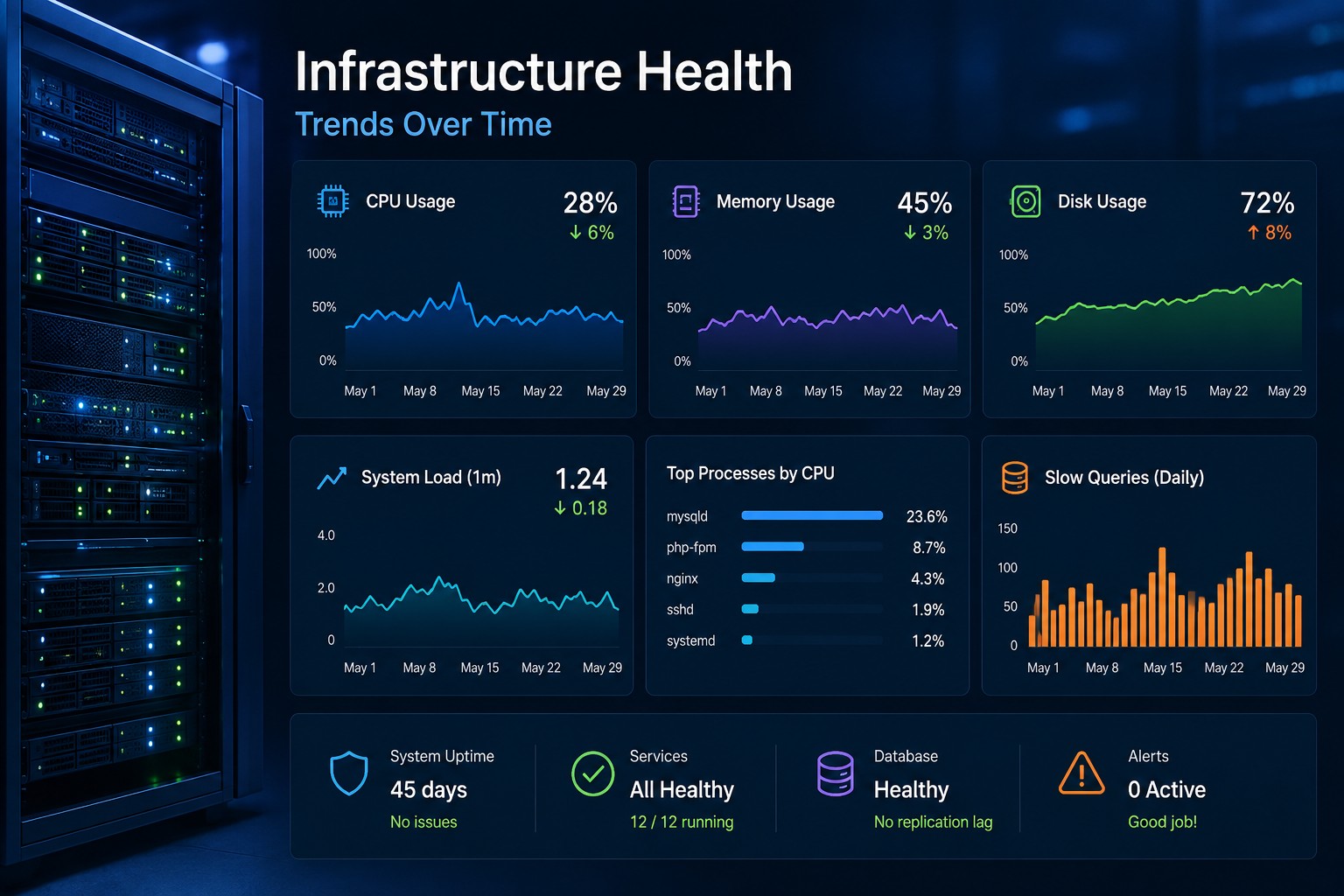
Practical server monitoring does not mean tracking every metric. It means tracking the right ones and reviewing them consistently. For small infrastructure teams managing a handful of servers, the goal is not more alerts but better visibility into how your systems trend over time. This guide covers what to monitor, how to build a review routine that works, and how to spot problems like filling disks or growing slow query counts before they become outages.

Read More

Linux Monitoring Without Grafana: Simpler Alternatives

Apr 17, 2026    Mariusz Antonik    Infrastructure Monitoring    5 min read

Grafana is a powerful monitoring tool, but for small Linux environments it often brings more complexity than the team can justify. There are solid lightweight alternatives — tools like Netdata, Glances, and Munin — that give you real operational visibility without standing up a full observability stack. Even a simple scheduled shell script delivering a daily health summary can outperform an ignored Grafana dashboard. This guide walks through the practical options for Linux monitoring without Grafana, with guidance on which approach fits your environment size.

Read More
Linux Monitoring Without Prometheus

Linux Monitoring Without Prometheus

Apr 12, 2026    Mariusz Antonik    Infrastructure Monitoring    4 min read

Not every Linux environment needs a full Prometheus stack. This article explains how to build a lightweight monitoring setup using native tools, scripts, and simple alerts. Learn how to track essential metrics without adding unnecessary complexity. A practical approach for small teams and OCI deployments.

Read More
Infrastructure Monitoring Report: What to Track and Why It Matters

Infrastructure Monitoring Report: What to Track and Why It Matters

Apr 10, 2026    Mariusz Antonik    Server Health    4 min read

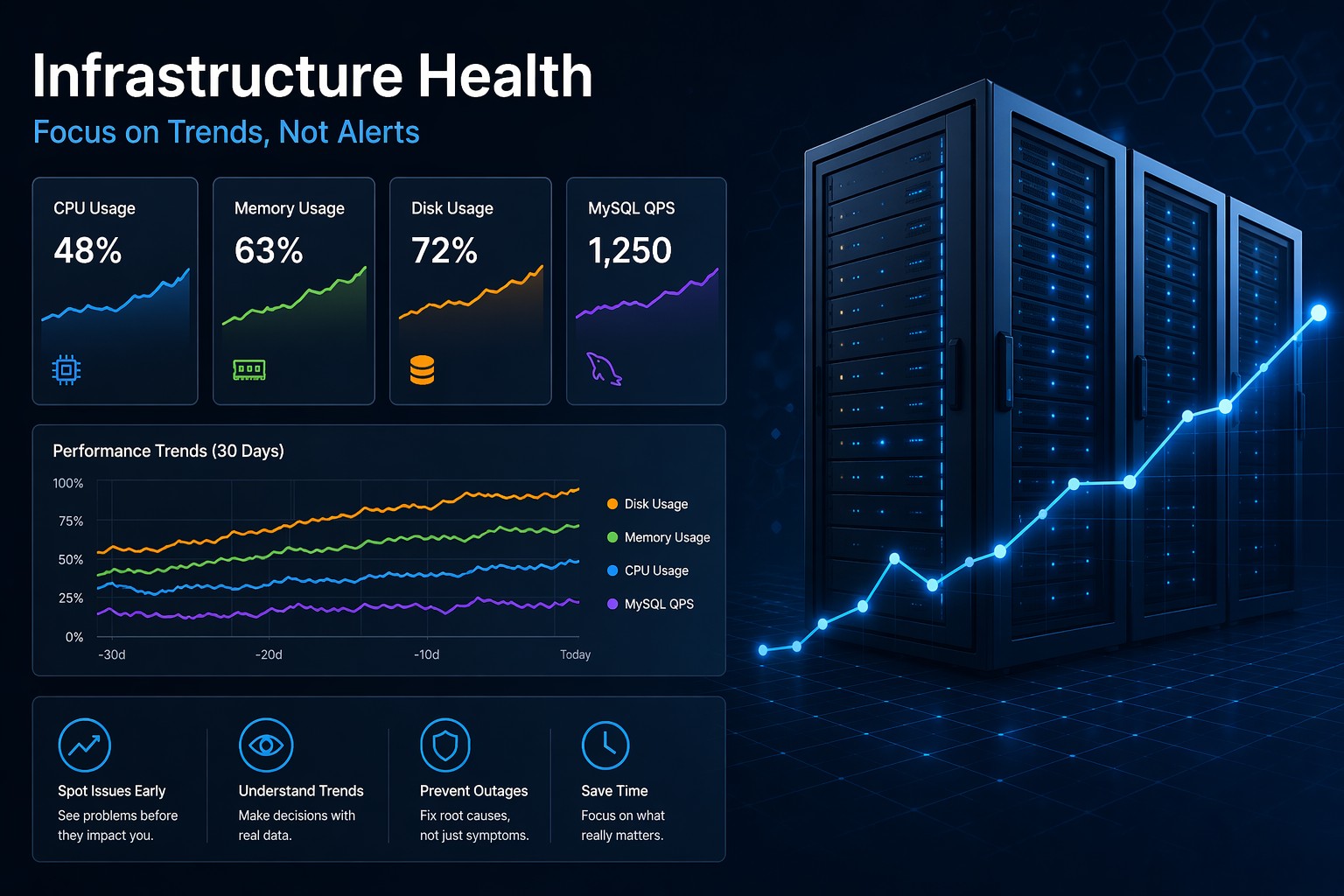
An infrastructure monitoring report helps teams move beyond reactive alerts and understand system behavior over time. By focusing on trends in CPU, memory, disk, and MySQL performance, teams can detect issues early and plan ahead. This approach reduces downtime and improves operational visibility without complex tools. Learn what to include and how to build a practical reporting process.

Read More
Linux Server Health Reports: A Practical Guide for Small Teams

Linux Server Health Reports: A Practical Guide for Small Teams

Apr 08, 2026    Mariusz Antonik    General    3 min read

Linux server health reports help teams move beyond reactive monitoring by focusing on performance trends over time. Instead of relying on alerts alone, these reports highlight gradual changes in CPU, memory, disk, and MySQL behavior. This approach allows small teams to detect issues early and plan ahead with confidence. Learn how to build a lightweight reporting system that delivers real operational insight without unnecessary complexity.

Read More
Disk Usage Script Linux: Simple Monitoring That Actually Works

Disk Usage Script Linux: Simple Monitoring That Actually Works

Apr 07, 2026    Mariusz Antonik    Server Health    3 min read

Disk space issues in Linux environments often go unnoticed until they cause outages. This article shows how to build a simple disk usage script that logs trends over time. Learn how to automate monitoring with cron and gain better visibility into storage growth. A practical approach helps teams prevent issues before they impact systems.

Read More
Lightweight Linux Monitoring Tool (That Actually Works for Small Teams)

Lightweight Linux Monitoring Tool (That Actually Works for Small Teams)

Apr 06, 2026    Mariusz Antonik    Infrastructure Monitoring    1 min read

Finding the right lightweight Linux monitoring tool can be challenging for small teams that don’t need complex observability stacks. This article explains how to monitor Linux systems effectively without Prometheus or Grafana using a simple, trend-based approach. Learn which metrics matter and how to build a minimal monitoring setup that actually delivers value. Perfect for teams that want clarity without operational overhead.

Read More
Linux Server Health Trends: How to Spot Issues Before They Break Production

Linux Server Health Trends: How to Spot Issues Before They Break Production

Apr 06, 2026    Mariusz Antonik    General    2 min read

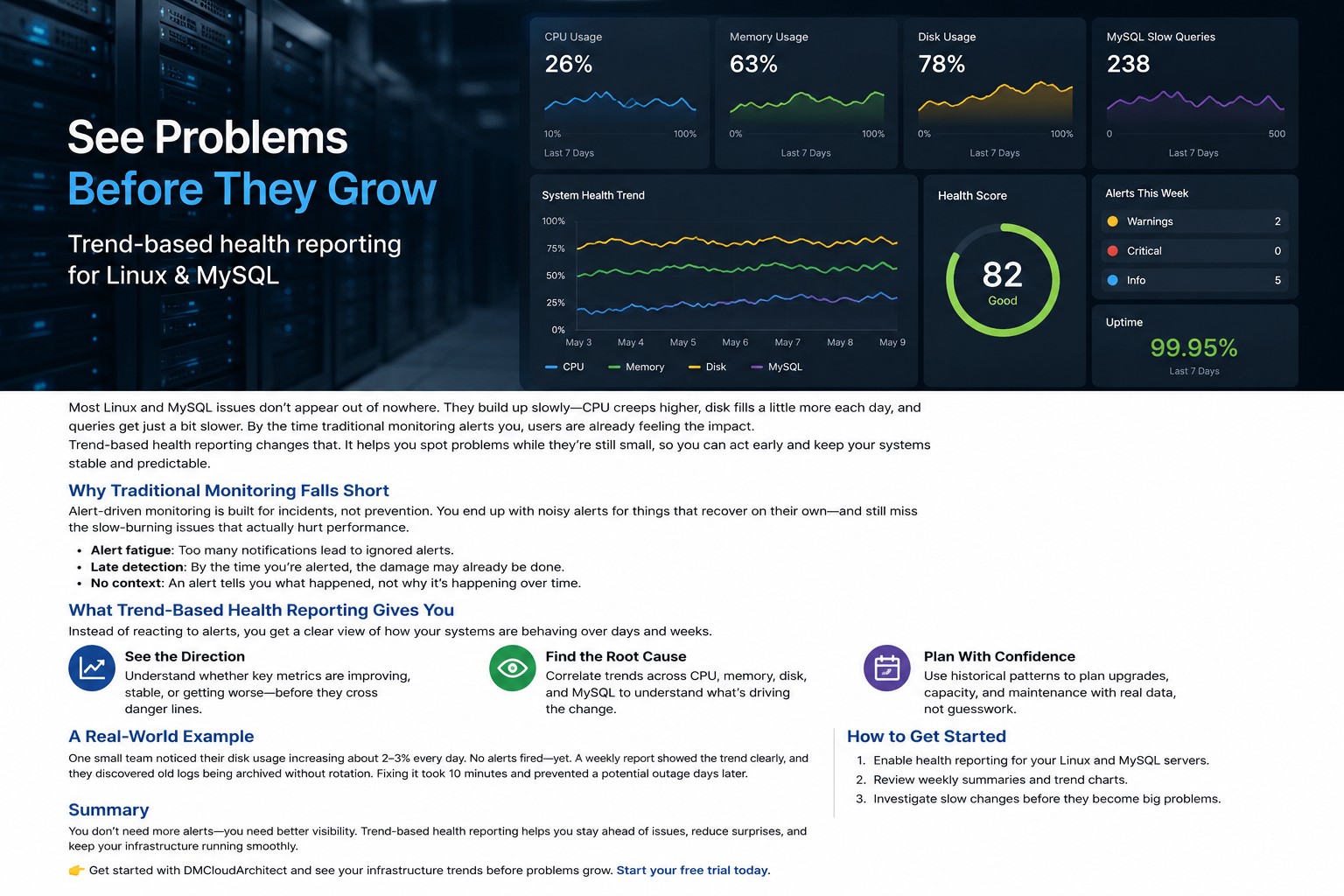
Linux server problems rarely happen instantly—they build over time through subtle changes in CPU, memory, disk, and database behavior. This article explains how tracking health trends helps teams detect issues early and avoid unexpected outages. Learn which metrics matter most and how to implement lightweight trend-based monitoring. Ideal for teams managing Linux and MySQL environments without complex observability tools.

Read More
How to Monitor Disk Usage in Linux (Step-by-Step Guide)

How to Monitor Disk Usage in Linux (Step-by-Step Guide)

Apr 05, 2026    Mariusz Antonik    Server Health    3 min read

Monitoring disk usage in Linux is essential to prevent unexpected outages caused by gradual storage growth. This step-by-step guide shows how to use built-in commands, scripts, and cron jobs to track disk usage over time. Learn how to identify trends, detect issues early, and improve infrastructure visibility. A practical approach for teams managing real-world Linux servers.

Read More
Small Server Monitoring That Actually Works for Small Teams

Small Server Monitoring That Actually Works for Small Teams

Apr 05, 2026    Mariusz Antonik    Infrastructure Monitoring    4 min read

Small server monitoring doesn’t need to be complex to be effective. This guide explains how small teams can track system health, identify trends, and prevent issues before they escalate. Learn what to monitor, why trends matter, and how to avoid noisy, over-engineered tools. Discover a practical approach to monitoring without a dedicated DevOps team.

Read More