Blog - Tag: infrastructure monitoring

A Simple Linux Monitoring Solution for Small Business Servers

A Simple Linux Monitoring Solution for Small Business Servers

Aug 24, 2026    Mariusz Antonik    Automation    5 min read

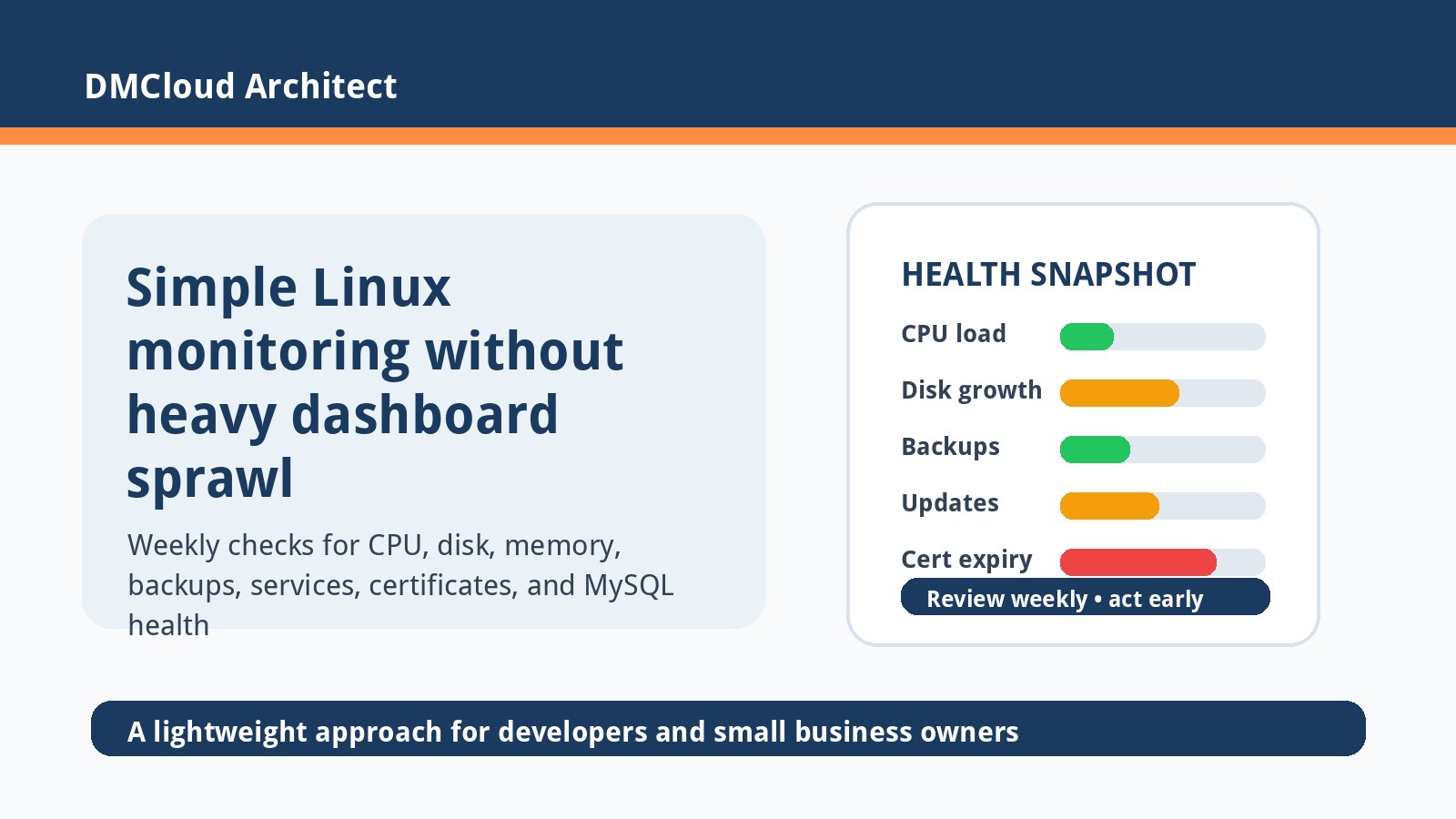
Linux monitoring does not have to start with a complex dashboard stack. A small team can get real value from a focused weekly review of capacity, service health, backups, updates, and certificate risk. This guide explains how to build a simple monitoring habit that catches practical problems before customers notice them.

Read More
How to Plan Disk Growth Before Your Linux Server Runs Out of Space

How to Plan Disk Growth Before Your Linux Server Runs Out of Space

Aug 22, 2026    Mariusz Antonik    Automation    5 min read

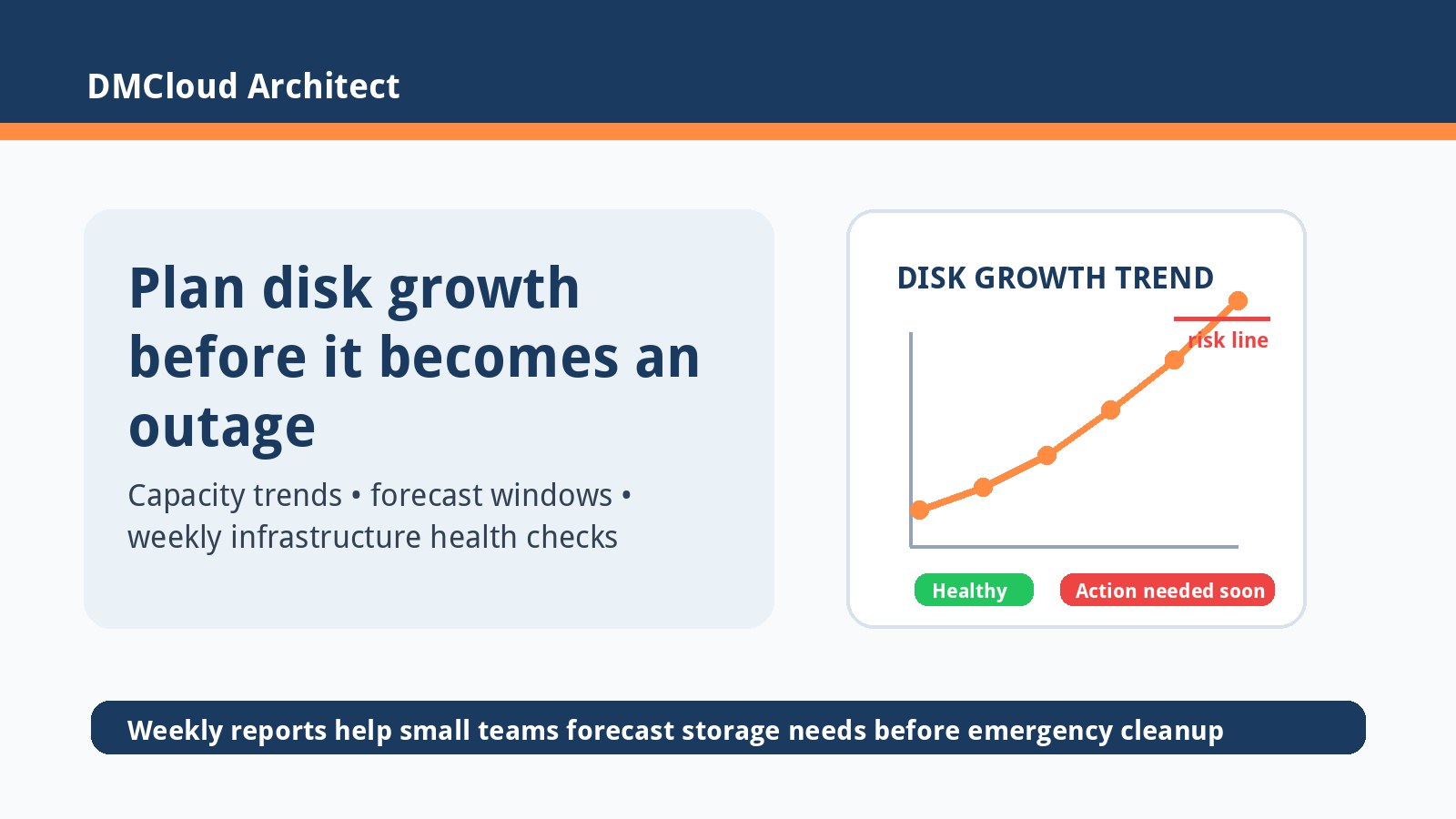
Disk capacity problems usually start as slow growth trends long before they become outages. This guide shows developers and small business owners how to forecast Linux storage usage, set review windows, and avoid emergency cleanup work. Use it to turn disk monitoring into a calm weekly planning habit instead of a last-minute scramble.

Read More
How to Monitor Linux Server Health Without Dashboard Overload

How to Monitor Linux Server Health Without Dashboard Overload

Aug 20, 2026    Mariusz Antonik    Automation    4 min read

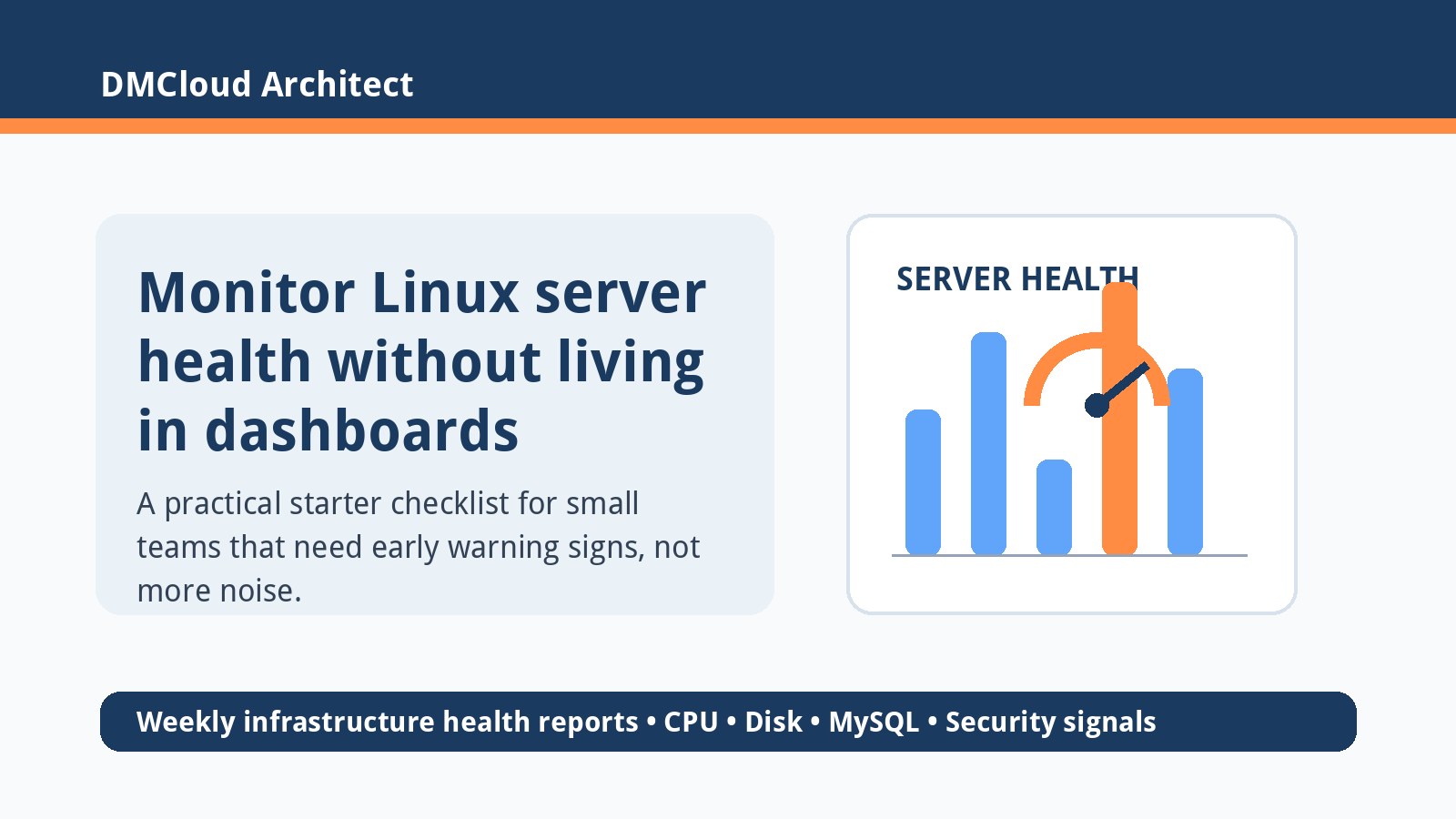
Small teams need practical Linux server monitoring that surfaces risk before users notice slowdowns. This guide explains which health signals matter most, how often to review them, and how to avoid turning monitoring into a second job. Use it as a lightweight checklist for catching capacity, disk, service, and database problems early.

Read More
Linux Server Monitoring Checklist for Learning Real DevOps

Linux Server Monitoring Checklist for Learning Real DevOps

Aug 15, 2026    Mariusz Antonik    Automation    7 min read

DevOps is easier to learn and teach when you start with real operational signals instead of random install tutorials. This checklist uses linux server monitoring to build practical habits around uptime, capacity, patches, logs, backups, and incident review. Use it as a portfolio-friendly learning path for developers, IT support pros, and small business teams that want useful infrastructure visibility.

Read More
Monitor Server Trends Over Time: A Practical Guide for Small Teams

Monitor Server Trends Over Time: A Practical Guide for Small Teams

Aug 12, 2026    Mariusz Antonik    Automation    5 min read

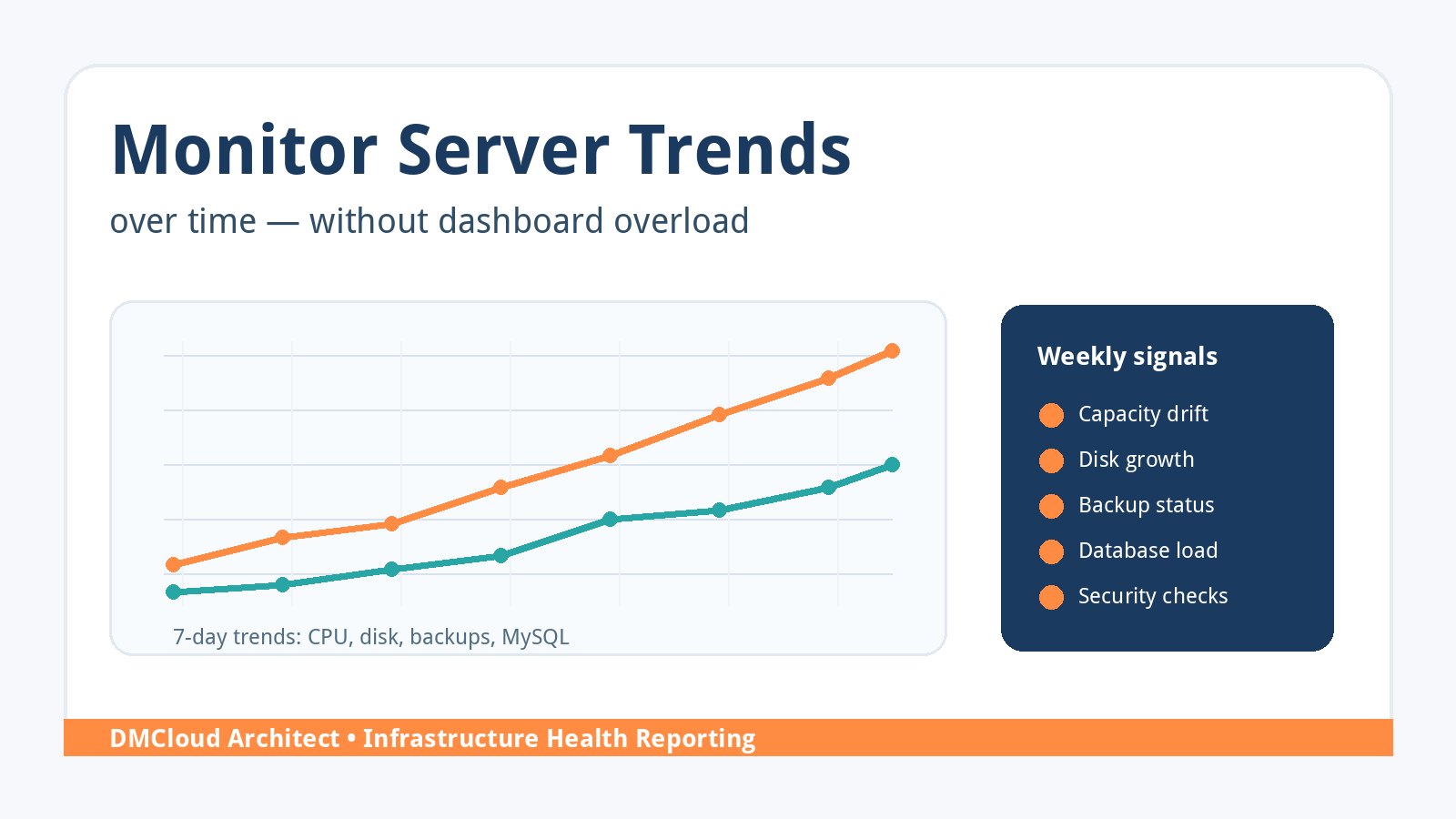
Monitoring server trends over time helps small teams spot infrastructure problems before they become outages. Instead of reacting to one noisy CPU spike or a single full-disk warning, trend-based monitoring shows whether capacity, database load, backups, and security signals are moving in the wrong direction. This guide explains which server trends to track, how to review them weekly, and how to turn historical monitoring into practical maintenance decisions. Use it as a lightweight baseline for better planning without adding dashboard fatigue.

Read More
Linux Server Monitoring Checklist for High-Risk CVE Advisories

Linux Server Monitoring Checklist for High-Risk CVE Advisories

Aug 07, 2026    Mariusz Antonik    Security    7 min read

When a high-risk Linux advisory appears before a fixed package is available, small teams need a calm way to reduce exposure without making rushed changes. This checklist shows developers and small business owners how to use linux server monitoring, inventory checks, log review, and change planning while waiting for vendor patches. Use it for SSRF, local file read, package, and service advisories where the right response is visibility first, then controlled remediation.

Read More
Initial Linux Server Audit Checklist for Small Business Owners and Developers

Initial Linux Server Audit Checklist for Small Business Owners and Developers

Aug 05, 2026    Mariusz Antonik    Automation    8 min read

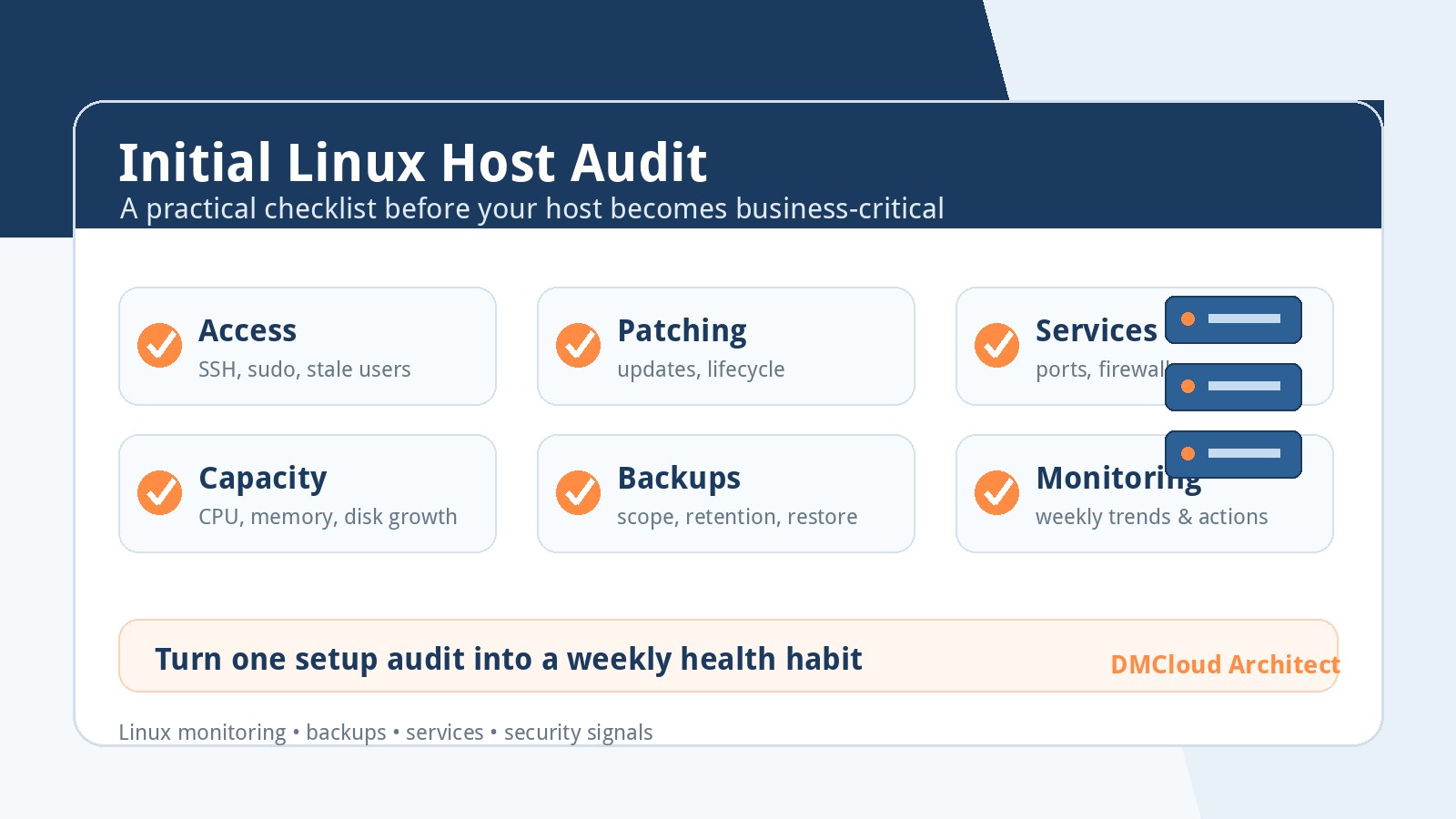
A fresh Linux server can look healthy on day one while still hiding weak passwords, missing backups, noisy logs, and capacity issues that will become urgent later. This practical initial audit checklist gives developers and small business owners a repeatable way to baseline access, services, updates, disk growth, backups, and linux server monitoring before the server becomes business-critical. Use it after provisioning, migrations, handoffs, or any time you inherit a machine without a clear runbook.

Read More
Low Maintenance Monitoring: Keep Servers Healthy Without Dashboard Sprawl

Low Maintenance Monitoring: Keep Servers Healthy Without Dashboard Sprawl

Jul 25, 2026    Mariusz Antonik    Automation    4 min read

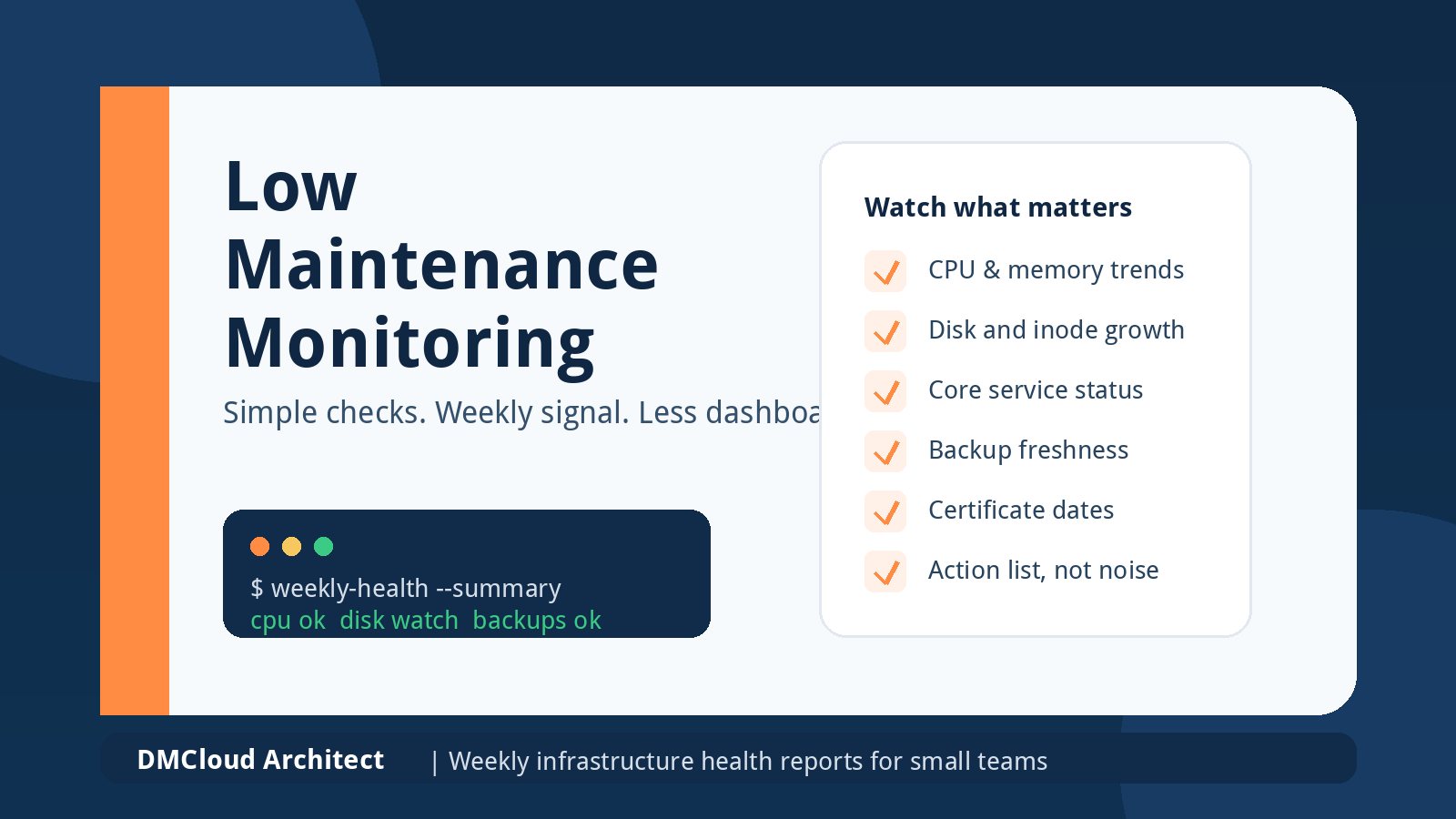
Low maintenance monitoring helps small teams catch real infrastructure problems without adopting a full-time dashboard habit. The practical approach is to watch a few meaningful server, database, backup, and certificate signals, then review them on a steady cadence. This guide shows how to build simple monitoring that creates action instead of alert noise.

Read More
Linux Server Monitoring Checklist Before You Hire Backend or DevOps Help

Linux Server Monitoring Checklist Before You Hire Backend or DevOps Help

Jul 08, 2026    Mariusz Antonik    Automation    6 min read

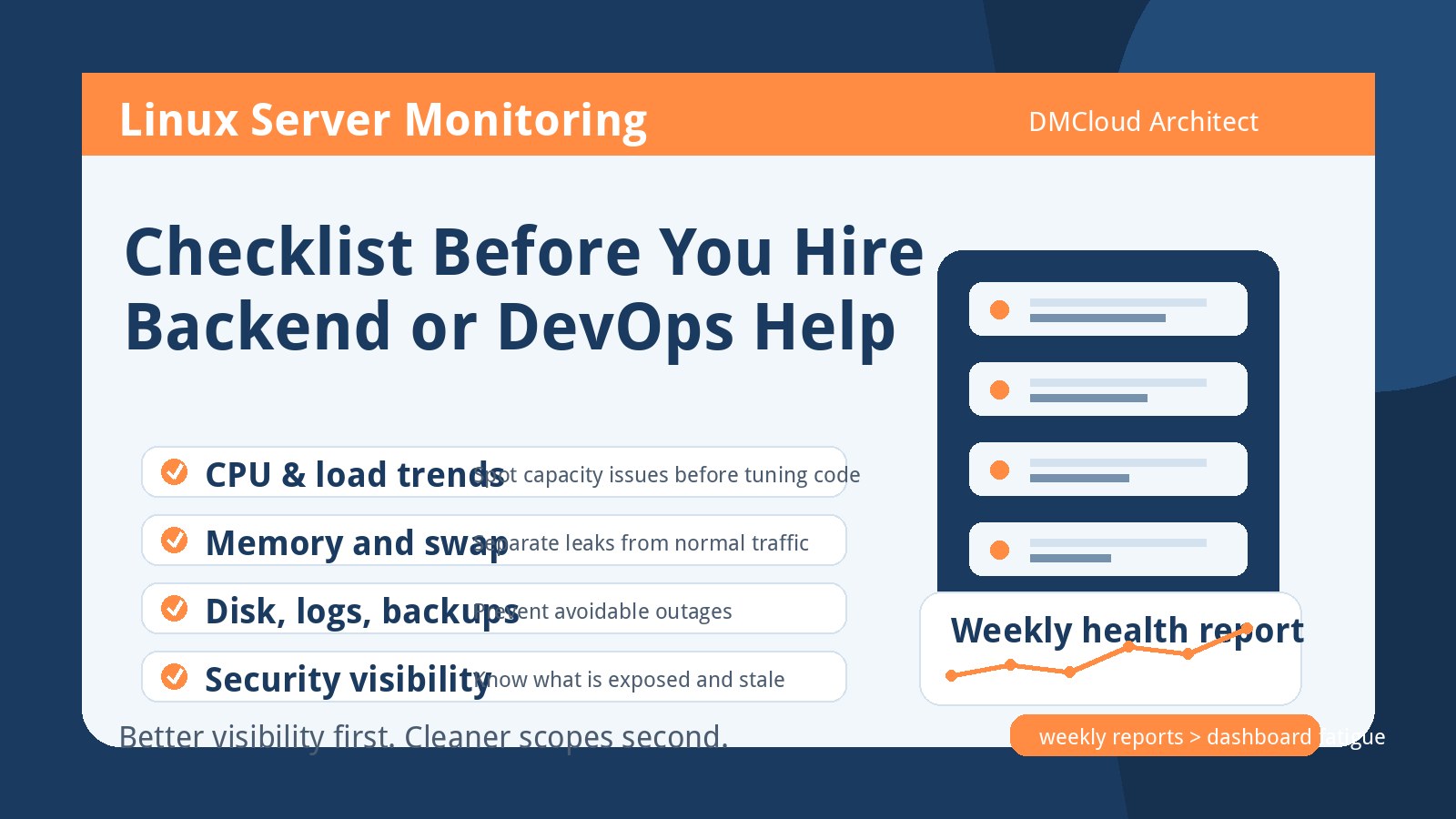
When a small team needs backend, DevOps, or AI infrastructure help, the fastest win is often better visibility into the Linux servers already running production. This checklist helps you separate urgent engineering work from routine monitoring gaps, so you can hire specialists for the right reasons. Use it to review CPU, memory, disk, logs, security, and backup signals before committing to a monthly engagement or a new dashboard project.

Read More
Linux Fleet Ops Interview Prep: Real Scenarios Every Admin Should Know

Linux Fleet Ops Interview Prep: Real Scenarios Every Admin Should Know

Jul 06, 2026    Mariusz Antonik    Automation    7 min read

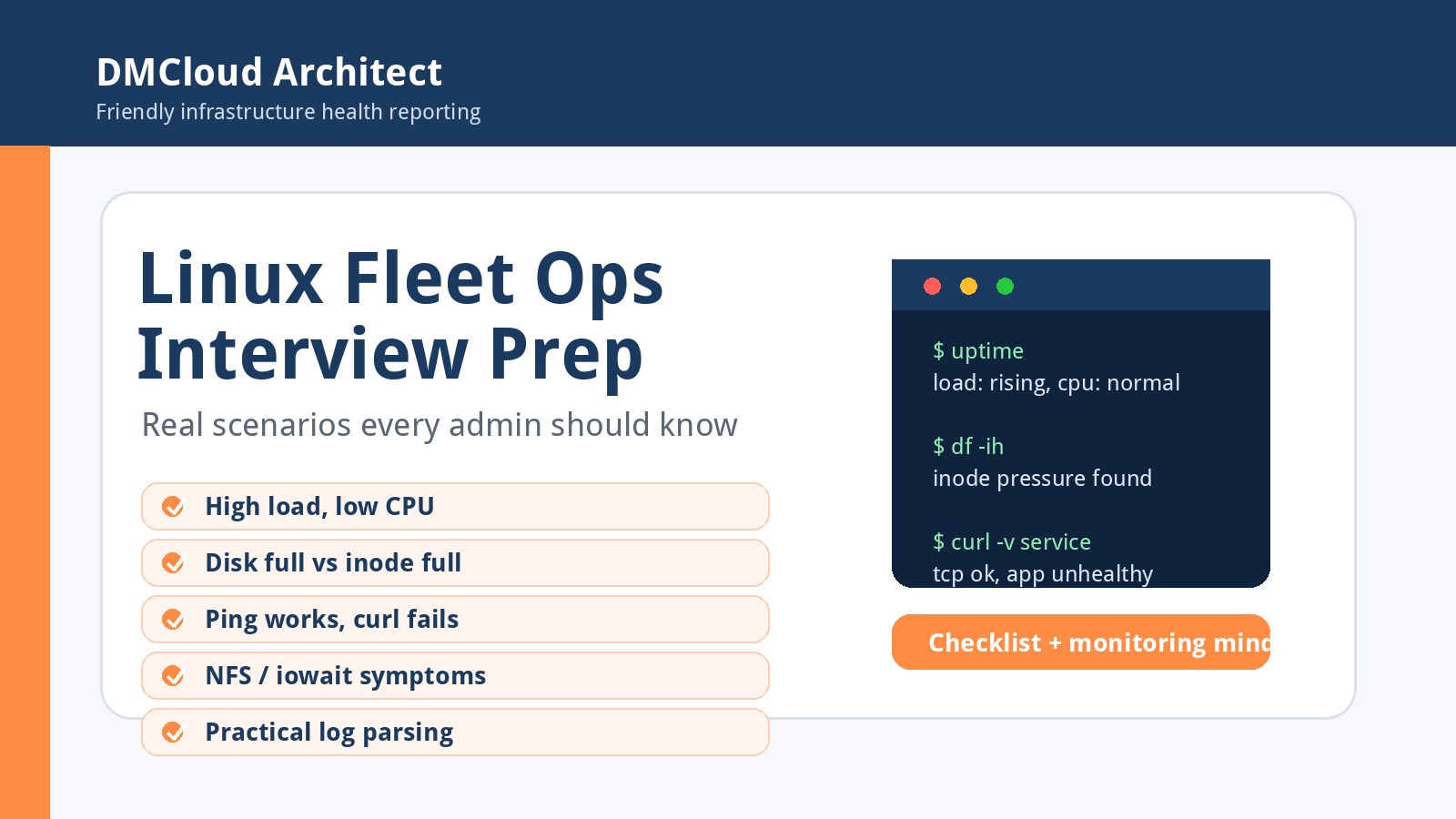
Preparing for an early-career Linux or fleet operations interview is easier when you focus on practical scenarios instead of memorizing commands. This checklist covers the Linux, networking, storage, scripting, and monitoring situations that show real operational judgment. Use it to practice explaining what you would check first, what evidence matters, and when dashboards or weekly reports can support faster troubleshooting.

Read More