Blog - Tag: MySQL monitoring

Monitoring Without Cloud Tools: A Practical Weekly Checklist for Small Servers

Monitoring Without Cloud Tools: A Practical Weekly Checklist for Small Servers

Sep 05, 2026    Mariusz Antonik    Automation    7 min read

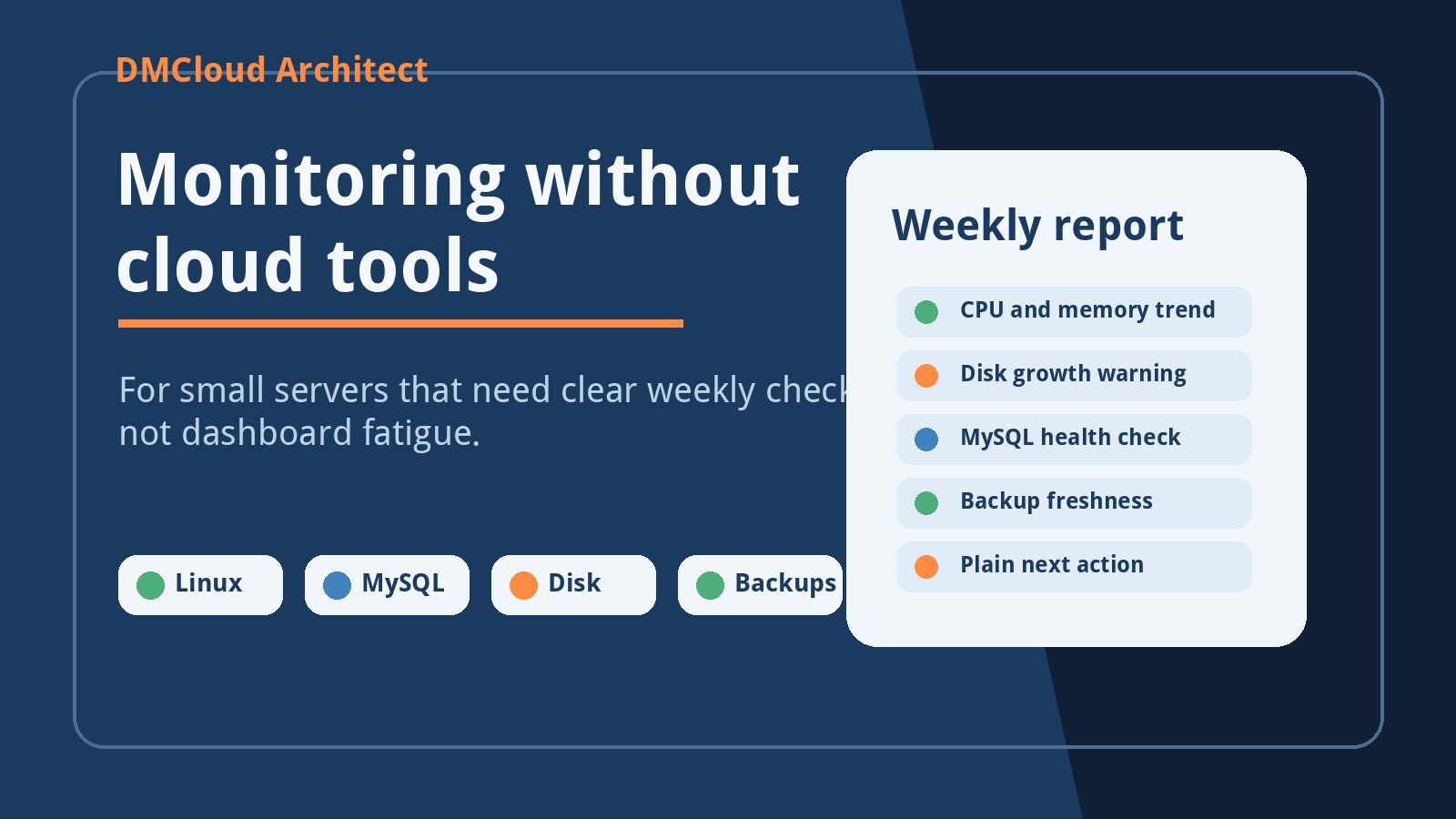
Small servers do not always need a large cloud monitoring platform, but they do need a reliable way to spot drift before customers notice problems. This guide gives developers and small business owners a weekly checklist for Linux, MySQL, disk, backups, and basic security signals. The goal is practical monitoring without cloud tools: clear evidence, a short report, and one sensible next action each week.

Read More
Simple MySQL Monitoring for Small Servers: What to Check Each Week

Simple MySQL Monitoring for Small Servers: What to Check Each Week

Sep 03, 2026    Mariusz Antonik    Database    5 min read

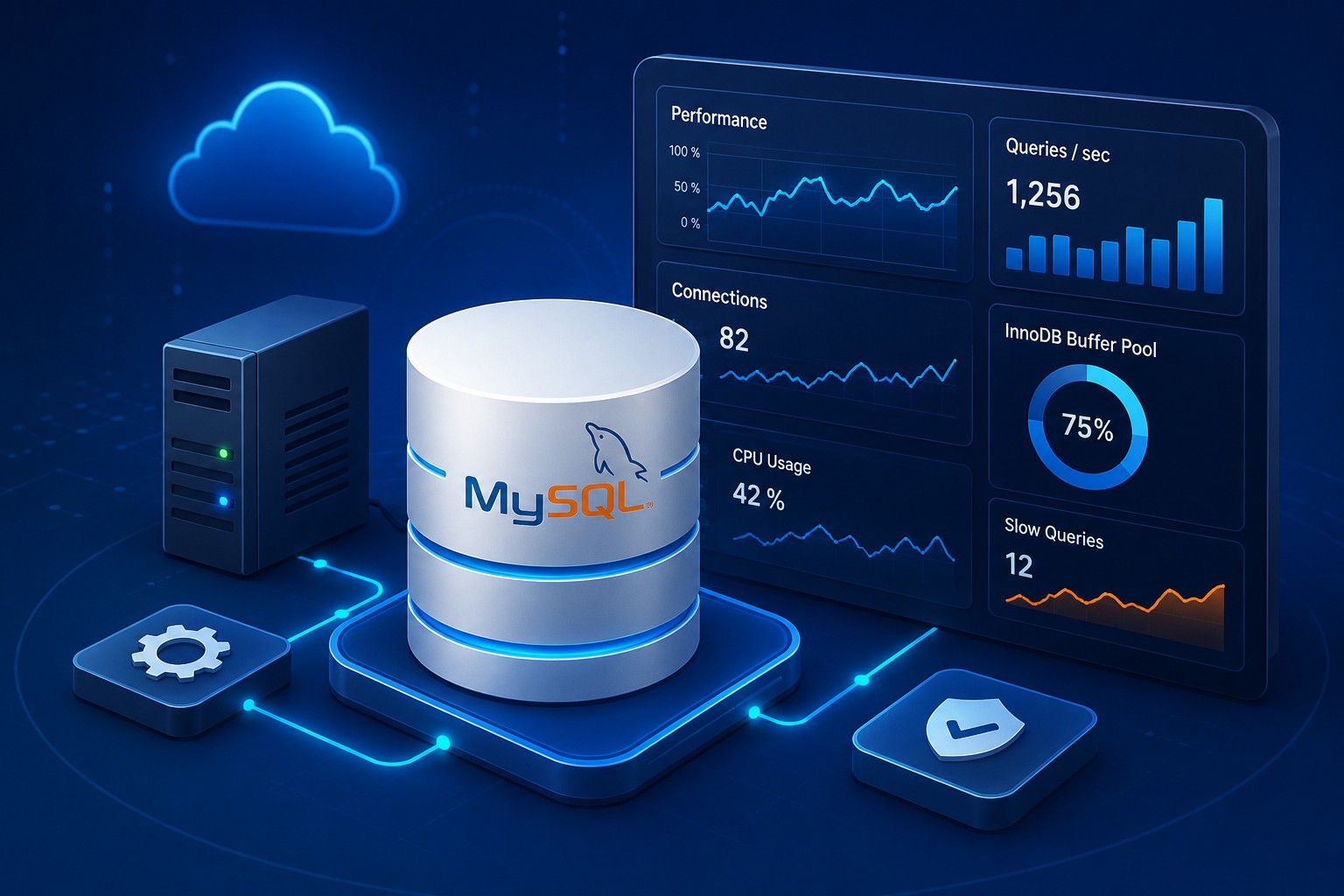
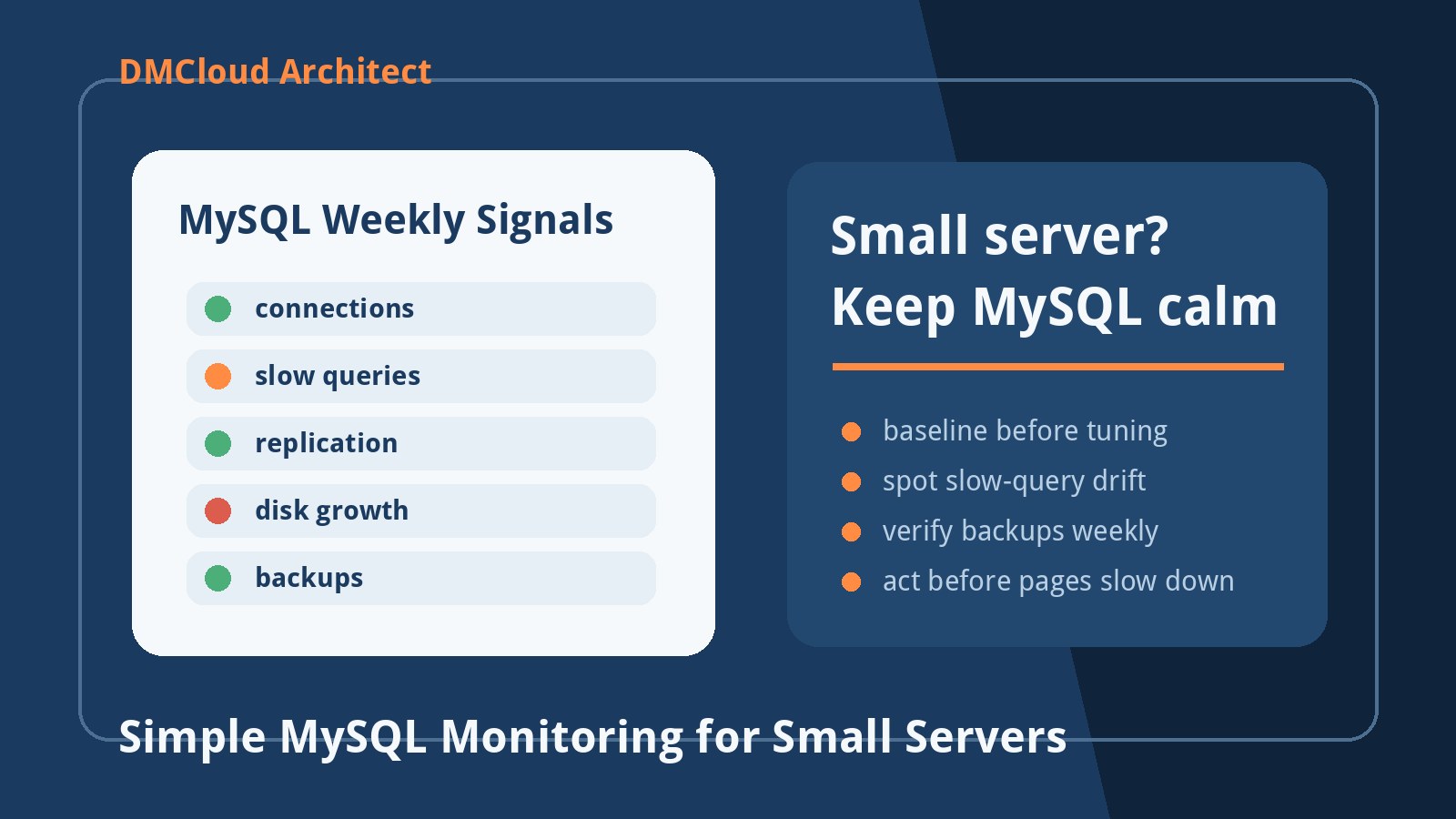
Small MySQL servers do not need dashboard overload, but they do need a short list of weekly checks that catch problems before customers notice. This guide explains the practical signals to track, including slow queries, connection pressure, disk growth, backups, and replication health. It is written for developers and small business owners who want useful MySQL monitoring without building a full operations team.

Read More
Network Monitoring Dense View Checklist for Small Business Servers

Network Monitoring Dense View Checklist for Small Business Servers

Aug 31, 2026    Mariusz Antonik    Automation    5 min read

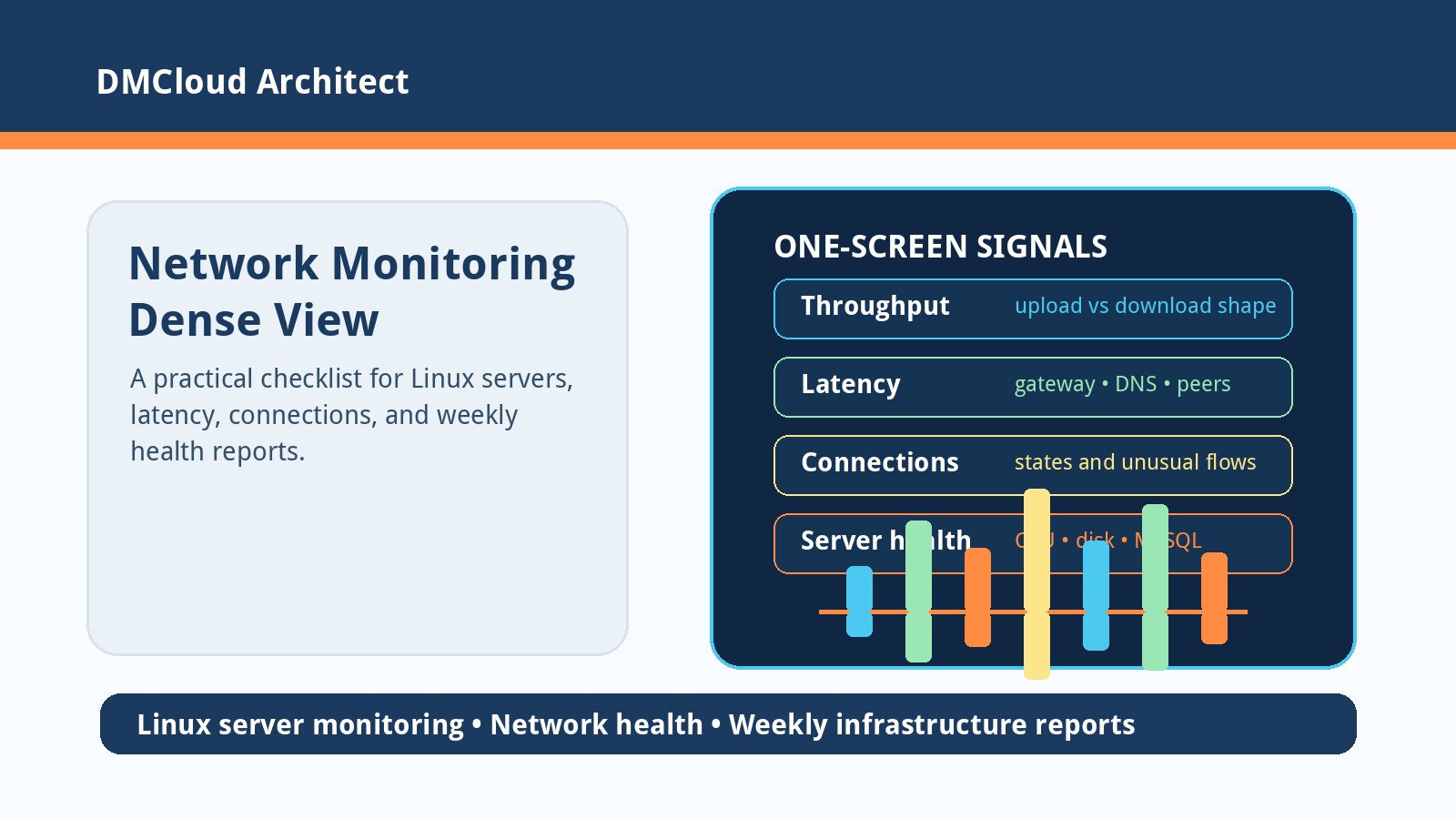
A dense network monitor can show throughput, latency, and connection state in one place, but small teams need those signals translated into practical health checks. This checklist explains how to track traffic shape, split latency into useful hops, review connection changes, and compare network clues with CPU, disk, and MySQL health. It shows how weekly linux server monitoring reports can catch risk early without forcing developers or business owners to watch another dashboard all day.

Read More
How to Monitor Linux Server Health Without Dashboard Overload

How to Monitor Linux Server Health Without Dashboard Overload

Aug 20, 2026    Mariusz Antonik    Automation    4 min read

Small teams need practical Linux server monitoring that surfaces risk before users notice slowdowns. This guide explains which health signals matter most, how often to review them, and how to avoid turning monitoring into a second job. Use it as a lightweight checklist for catching capacity, disk, service, and database problems early.

Read More
Simple Ops Monitoring for Small Teams: What to Track Without Dashboard Overload

Simple Ops Monitoring for Small Teams: What to Track Without Dashboard Overload

Aug 10, 2026    Mariusz Antonik    Automation    5 min read

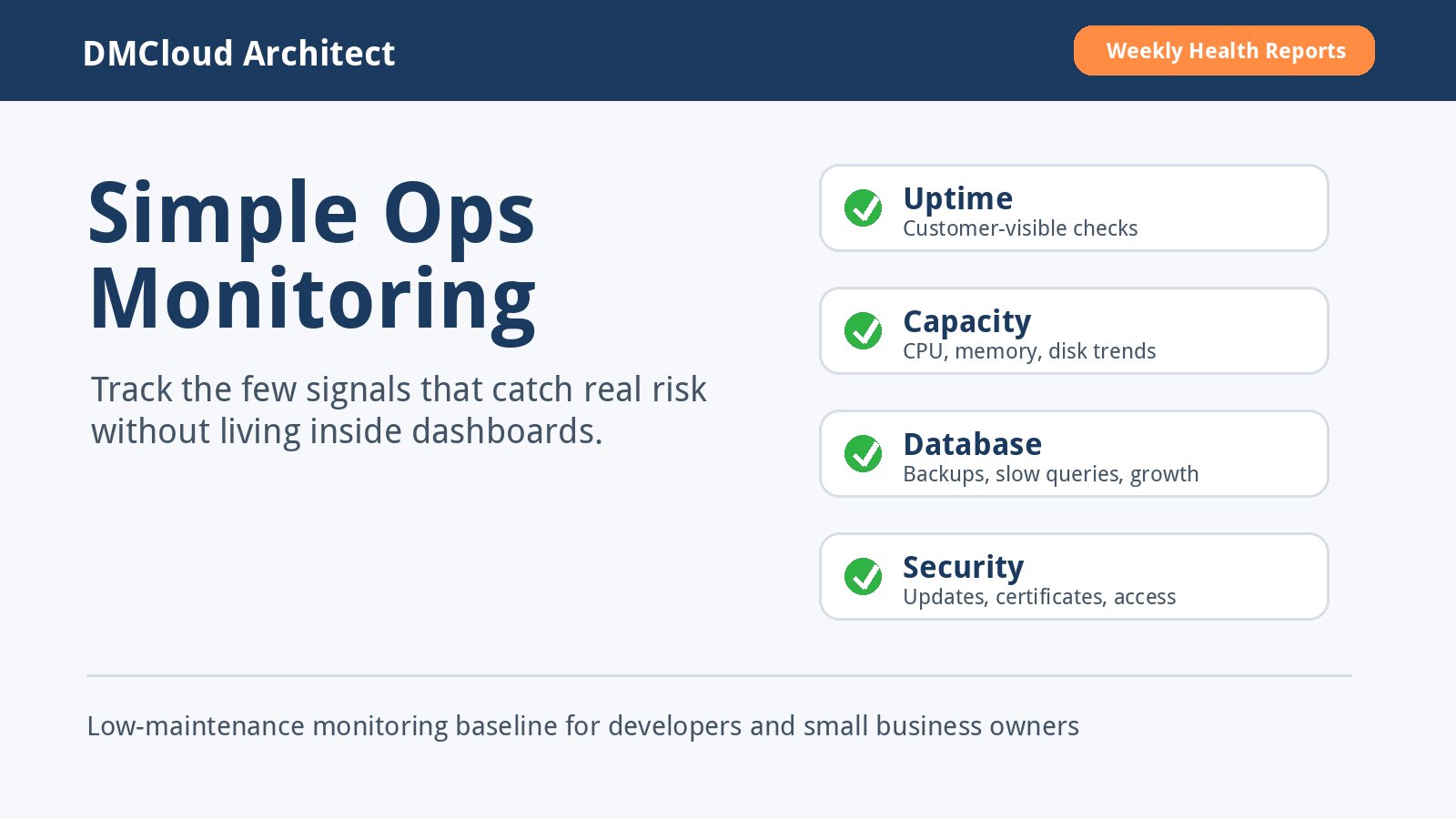
Simple ops monitoring helps small teams catch infrastructure risk without adopting a heavyweight observability stack. The trick is to watch a short list of signals that explain whether servers, databases, and backups are healthy enough for real customers. This guide shows developers and small business owners which checks matter most, how often to review them, and when to automate alerts or reports. Use it as a practical baseline for low-maintenance monitoring that still catches trouble early.

Read More
How to Spot MySQL Query Trends Before Performance Slips

How to Spot MySQL Query Trends Before Performance Slips

Aug 08, 2026    Mariusz Antonik    Database    5 min read

MySQL performance problems often build slowly as query mix, table size, and traffic patterns change. Tracking MySQL query trends gives developers and small business owners a practical way to notice degradation before customers feel it. This guide explains which signals to review weekly, how to separate normal growth from risk, and how to turn the findings into action.

Read More
How to Read MySQL Workload Trends Before Performance Slips

How to Read MySQL Workload Trends Before Performance Slips

Aug 02, 2026    Mariusz Antonik    Database    6 min read

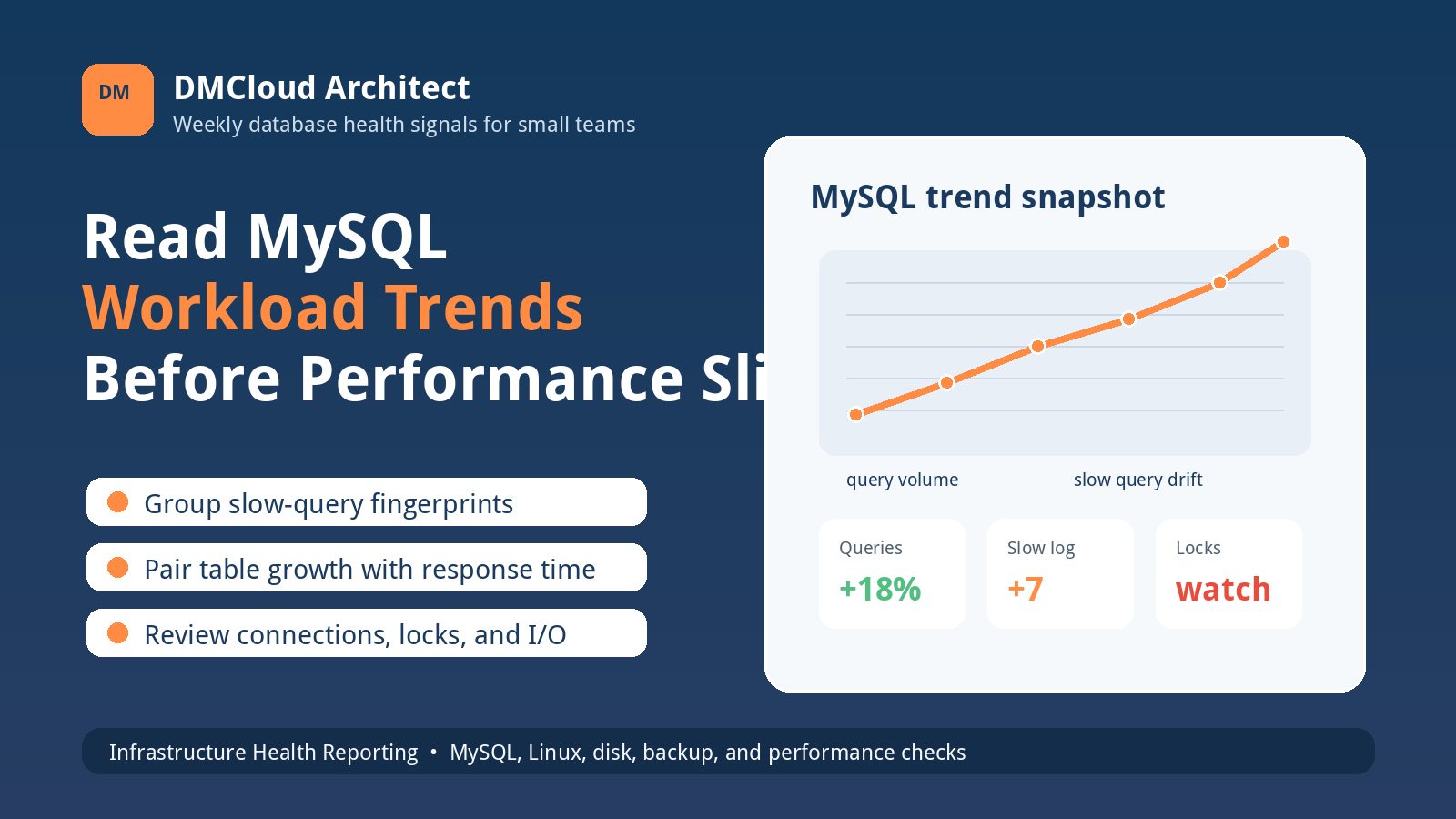
MySQL performance problems often build gradually as traffic, table size, queries, and background jobs change over time. Watching workload trends gives small teams early warning before slow pages, stuck reports, or connection pressure become customer-facing incidents. This guide explains which MySQL workload signals to review weekly and how to turn them into practical next steps.

Read More
Simple MySQL Monitoring: What to Track and Why It Matters

Simple MySQL Monitoring: What to Track and Why It Matters

Jun 21, 2026    Mariusz Antonik    Database    3 min read

MySQL monitoring does not need to be complicated to be effective. This article explains the essential metrics that provide visibility into database health, performance, and availability. Learn how to build a lightweight monitoring strategy that helps identify issues early and supports stable operations. The guide includes practical examples and common mistakes to avoid.

Read More
Minimal Linux Monitoring Setup for Small Teams

Minimal Linux Monitoring Setup for Small Teams

May 09, 2026    Mariusz Antonik    Infrastructure Monitoring    6 min read

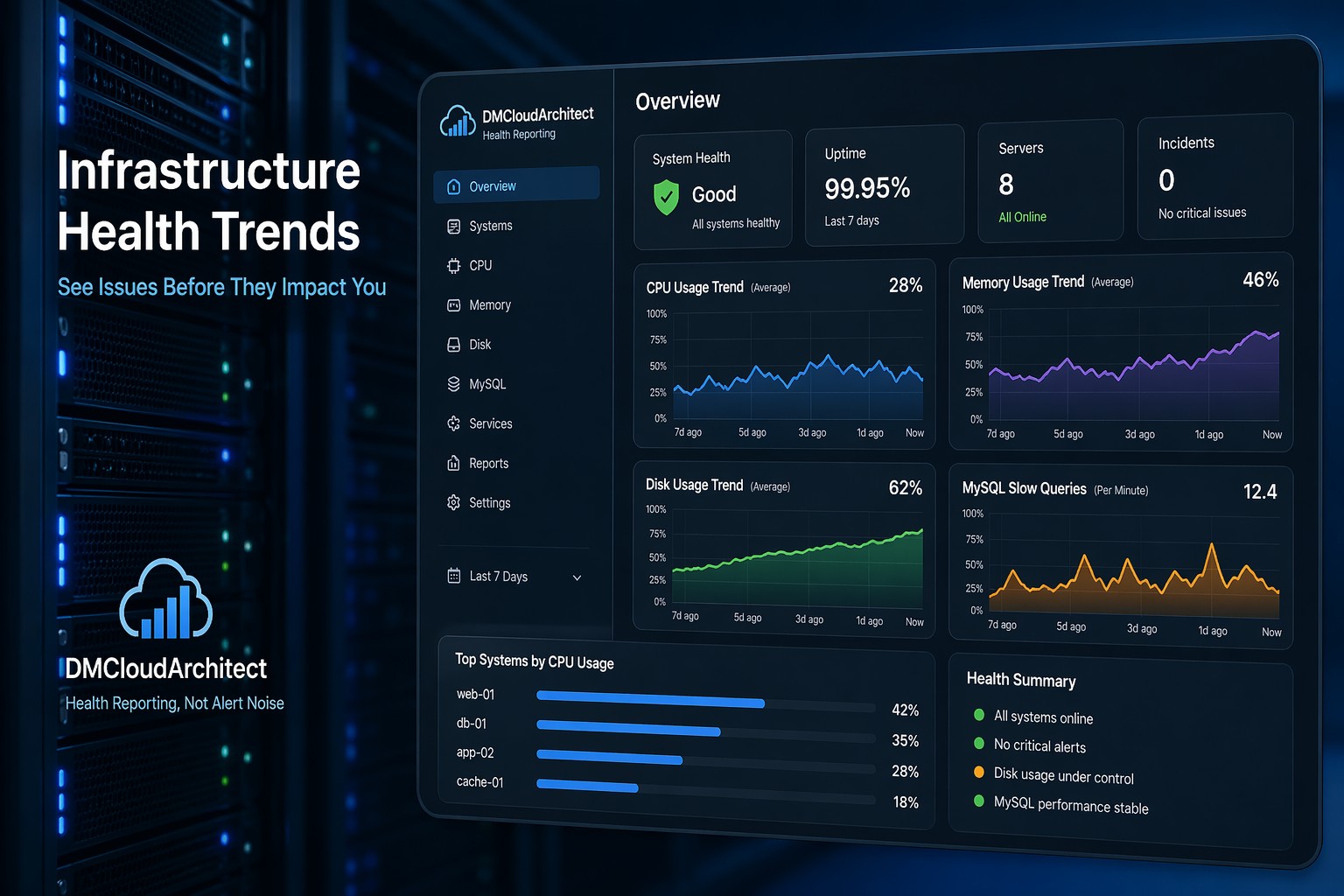
Many small infrastructure teams need better visibility into Linux server health without maintaining complex observability stacks. This article explains how to build a minimal linux monitoring setup focused on trends, stability, and practical operational awareness. You will learn what metrics matter most, why lightweight monitoring often works better for small environments, and how trend-based reporting helps catch issues before outages happen. The guide also covers practical examples, common mistakes, and ways to reduce alert fatigue while keeping systems predictable.

Read More
MySQL Slow Query Trends

MySQL Slow Query Trends

Apr 23, 2026    Mariusz Antonik    Database    4 min read

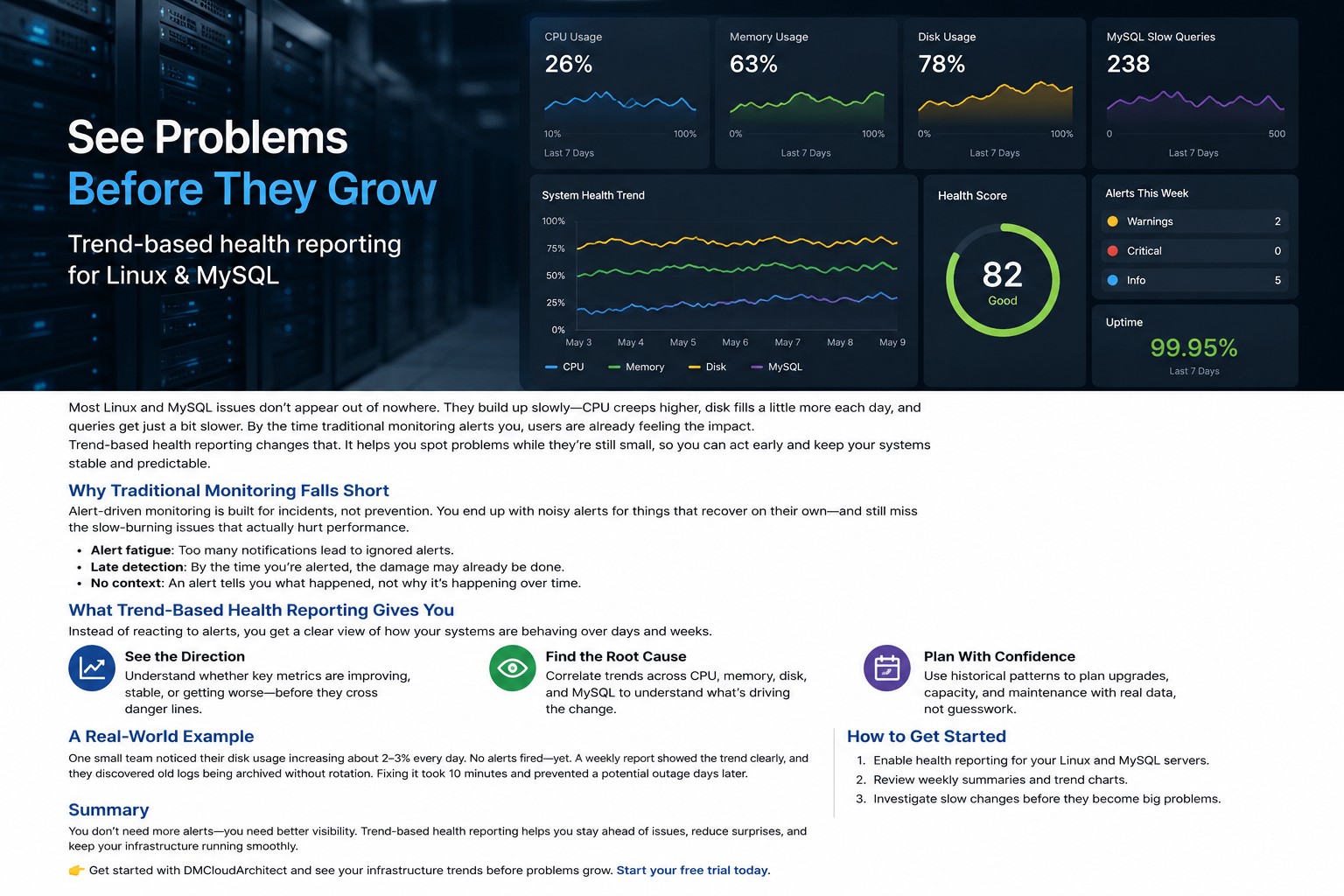
Slow queries in MySQL rarely appear suddenly—they grow over time as data and usage increase. This article explains how tracking slow query trends helps you detect performance issues early instead of reacting to alerts. You’ll learn what metrics matter, how to analyze them, and how real-world systems gradually degrade. With a trend-based approach, you gain clearer visibility into database health and avoid late-stage firefighting.

Read More