Blog - Tag: infrastructure health

Unified Linux Server Monitoring: A Practical Tool Evaluation Checklist

Unified Linux Server Monitoring: A Practical Tool Evaluation Checklist

Oct 15, 2026    Mariusz Antonik    Automation    9 min read

A unified Linux monitoring tool can simplify operations, but only if it turns host data into reliable decisions instead of another noisy dashboard. This practical checklist helps developers and small business owners assess collection coverage, service health, alert quality, security, remote management, and reporting. It also explains when a focused weekly health report is more useful than expanding a real-time monitoring stack.

Read More
Inventory Monitoring for Linux and Windows: A Practical Small-Team Checklist

Inventory Monitoring for Linux and Windows: A Practical Small-Team Checklist

Oct 13, 2026    Mariusz Antonik    Automation    7 min read

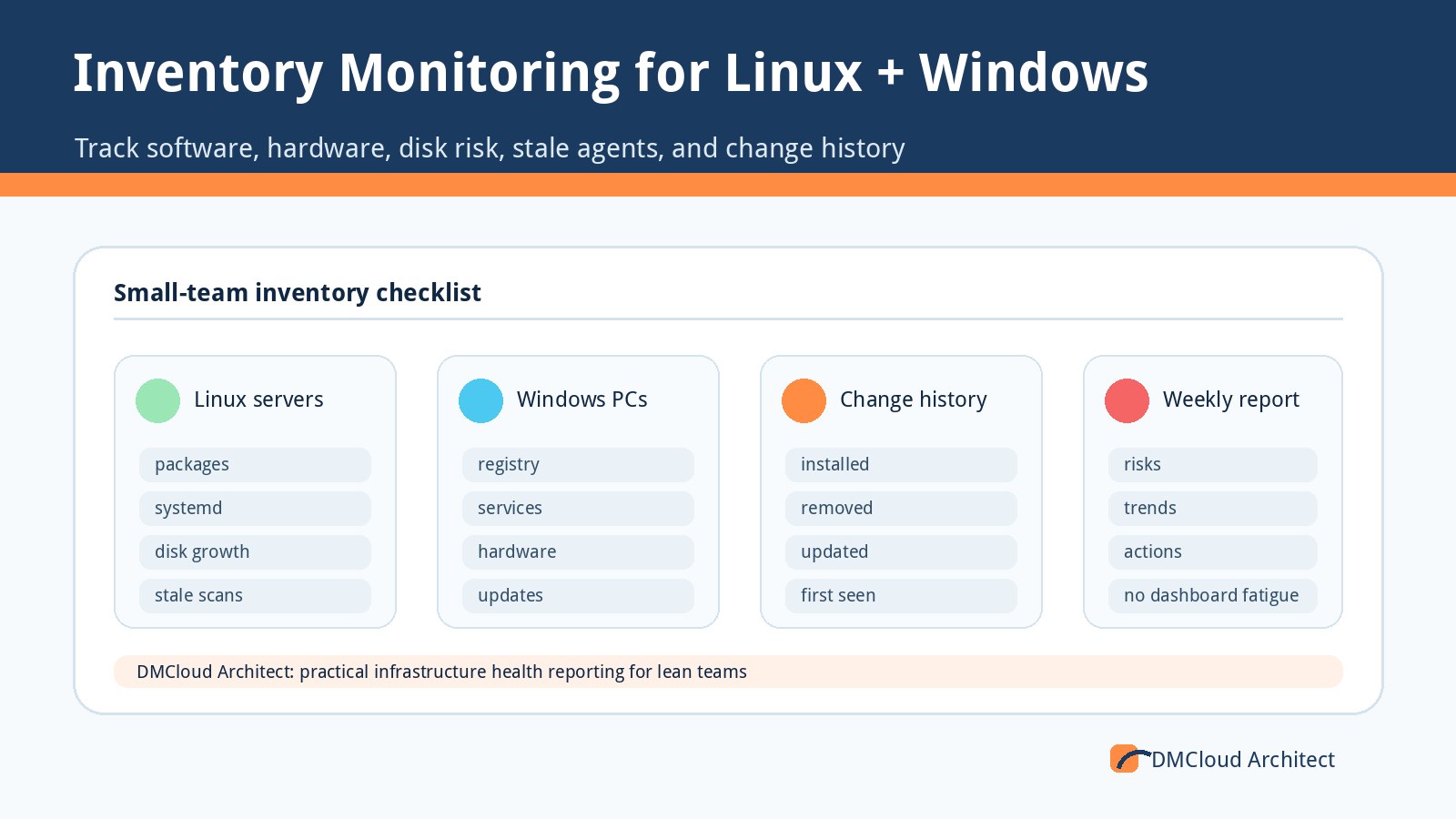
Inventory monitoring is useful only when it helps small teams understand what changed, which machines stopped reporting, and which risks need action. This checklist explains how to evaluate software and hardware tracking across Windows and Linux without turning it into another noisy dashboard. It covers change history, stale agents, disk trends, remote actions, AI categorization, and where weekly infrastructure reports fit beside live monitoring.

Read More
Disk Alert Before Full Linux: Catch Storage Problems Before Downtime

Disk Alert Before Full Linux: Catch Storage Problems Before Downtime

Sep 28, 2026    Mariusz Antonik    Automation    7 min read

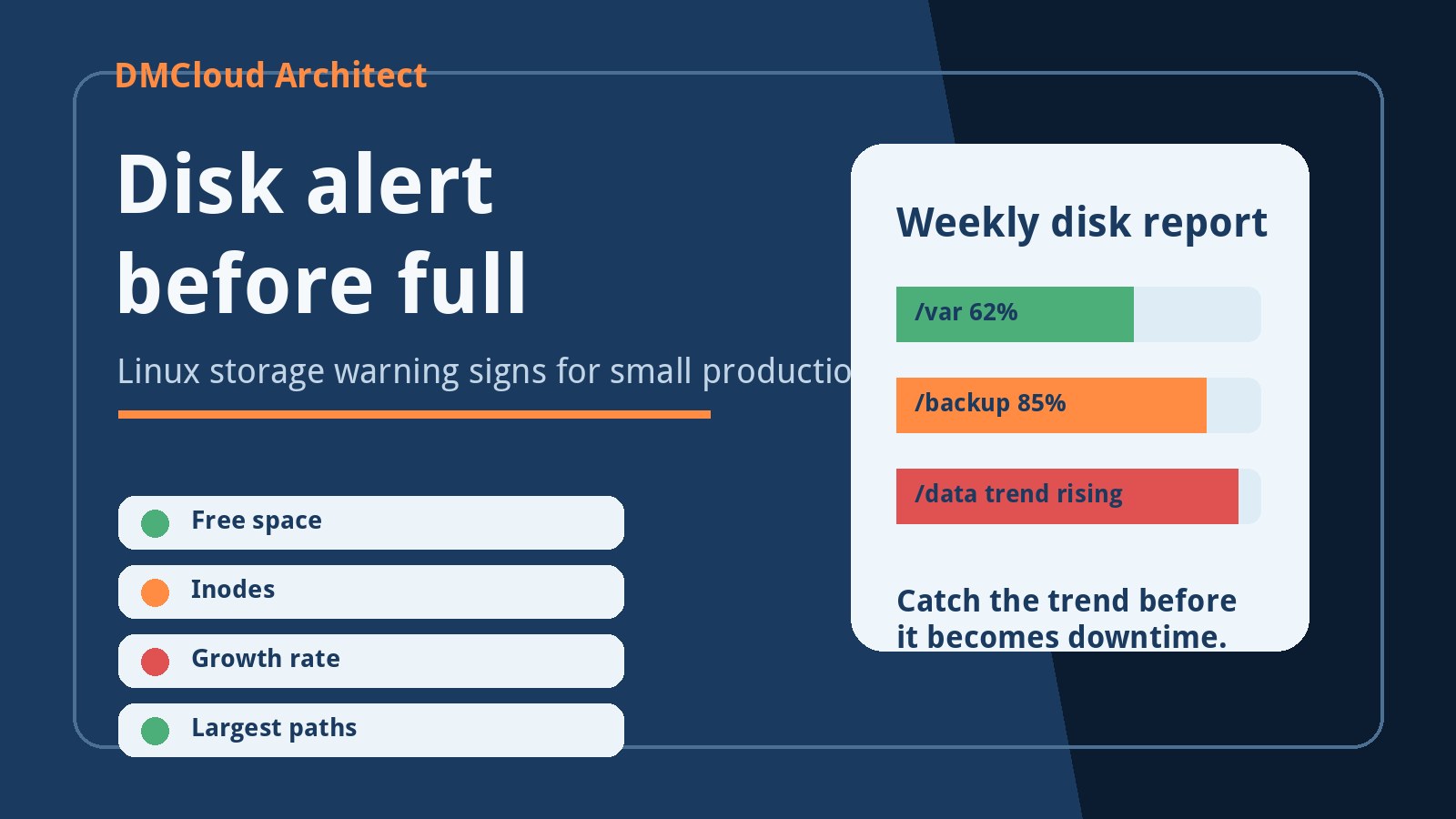
A Linux server rarely fills its disk without leaving warning signs first. This guide explains how developers and small business owners can create a practical disk alert before full Linux routine using free space, inode, growth-rate, and directory-size checks. The goal is to catch storage risk early, prevent avoidable outages, and turn disk health into a short weekly action report.

Read More
Monitoring Without Cloud Tools: A Practical Weekly Checklist for Small Servers

Monitoring Without Cloud Tools: A Practical Weekly Checklist for Small Servers

Sep 05, 2026    Mariusz Antonik    Automation    7 min read

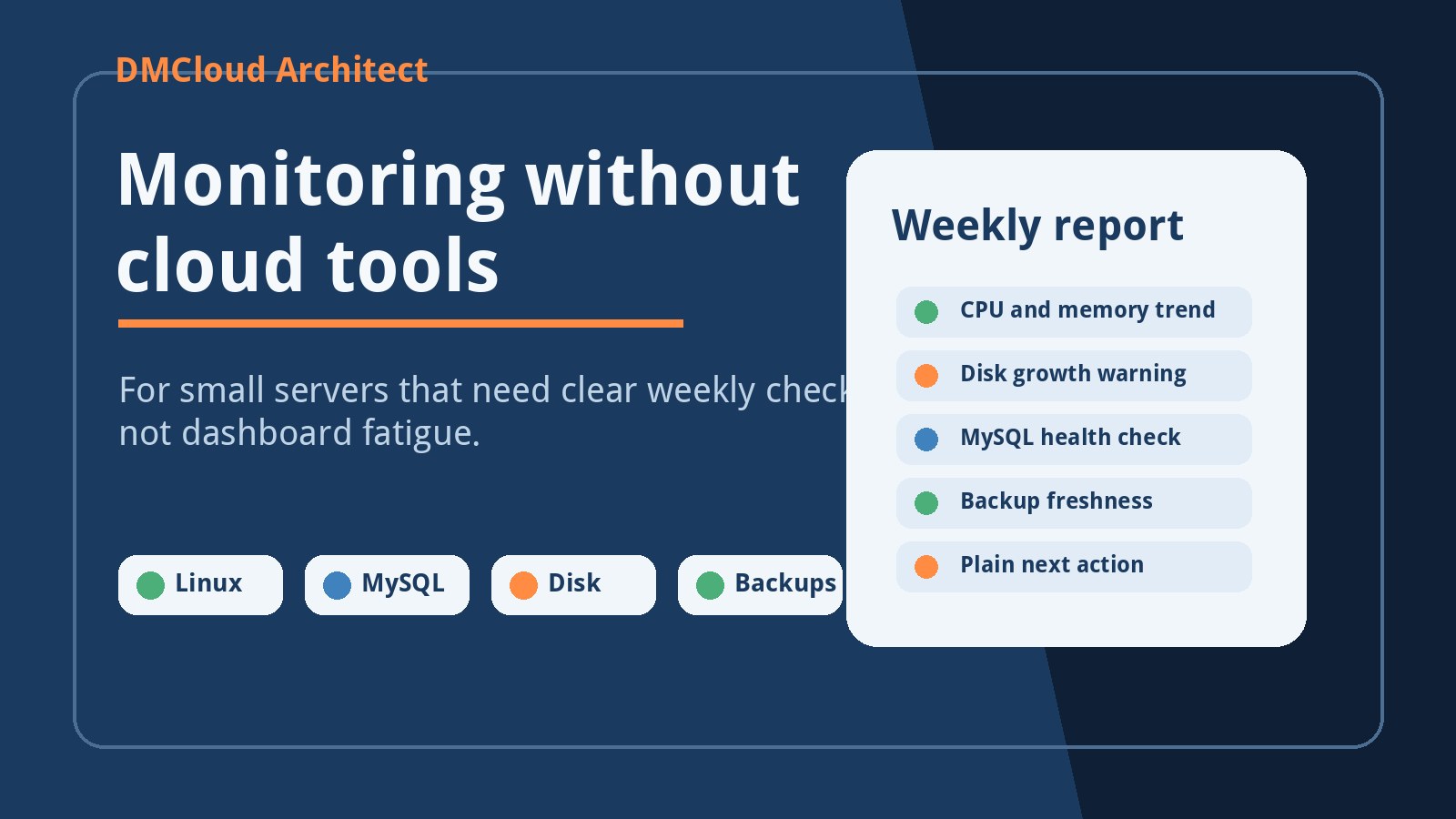
Small servers do not always need a large cloud monitoring platform, but they do need a reliable way to spot drift before customers notice problems. This guide gives developers and small business owners a weekly checklist for Linux, MySQL, disk, backups, and basic security signals. The goal is practical monitoring without cloud tools: clear evidence, a short report, and one sensible next action each week.

Read More
Source-Built Linux Server Monitoring Checklist for Small Teams

Source-Built Linux Server Monitoring Checklist for Small Teams

Jul 14, 2026    Mariusz Antonik    Automation    7 min read

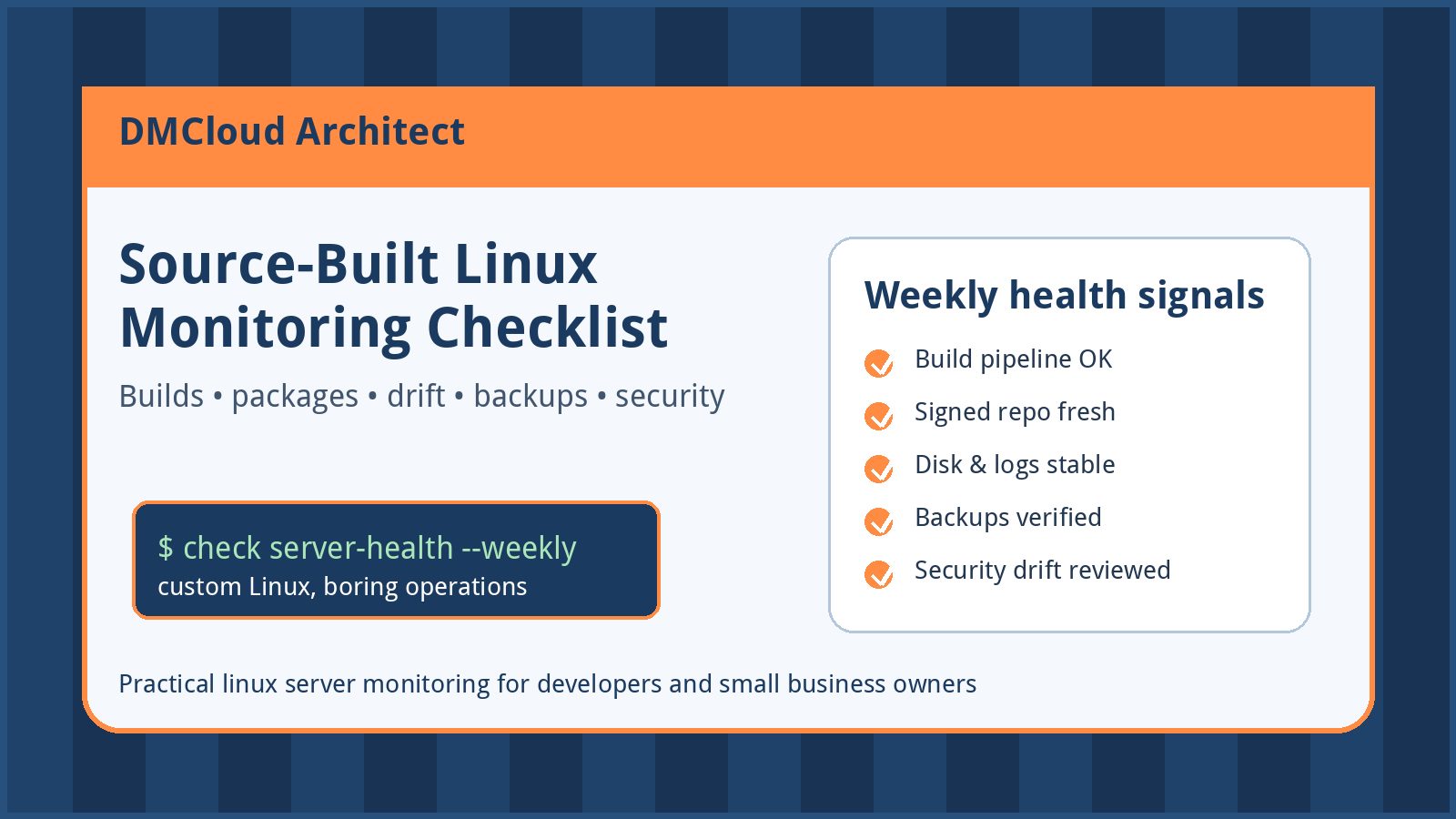
Source-built Linux systems can be a great fit for teams that want a minimal, auditable server stack, but they also move more operational responsibility onto the maintainer. Without upstream binary mirrors or vendor dashboards, small teams need a simple rhythm for checking builds, packages, logs, disk growth, backups, and security posture. This checklist shows where linux server monitoring matters most when you run a custom or source-built distribution in production.

Read More
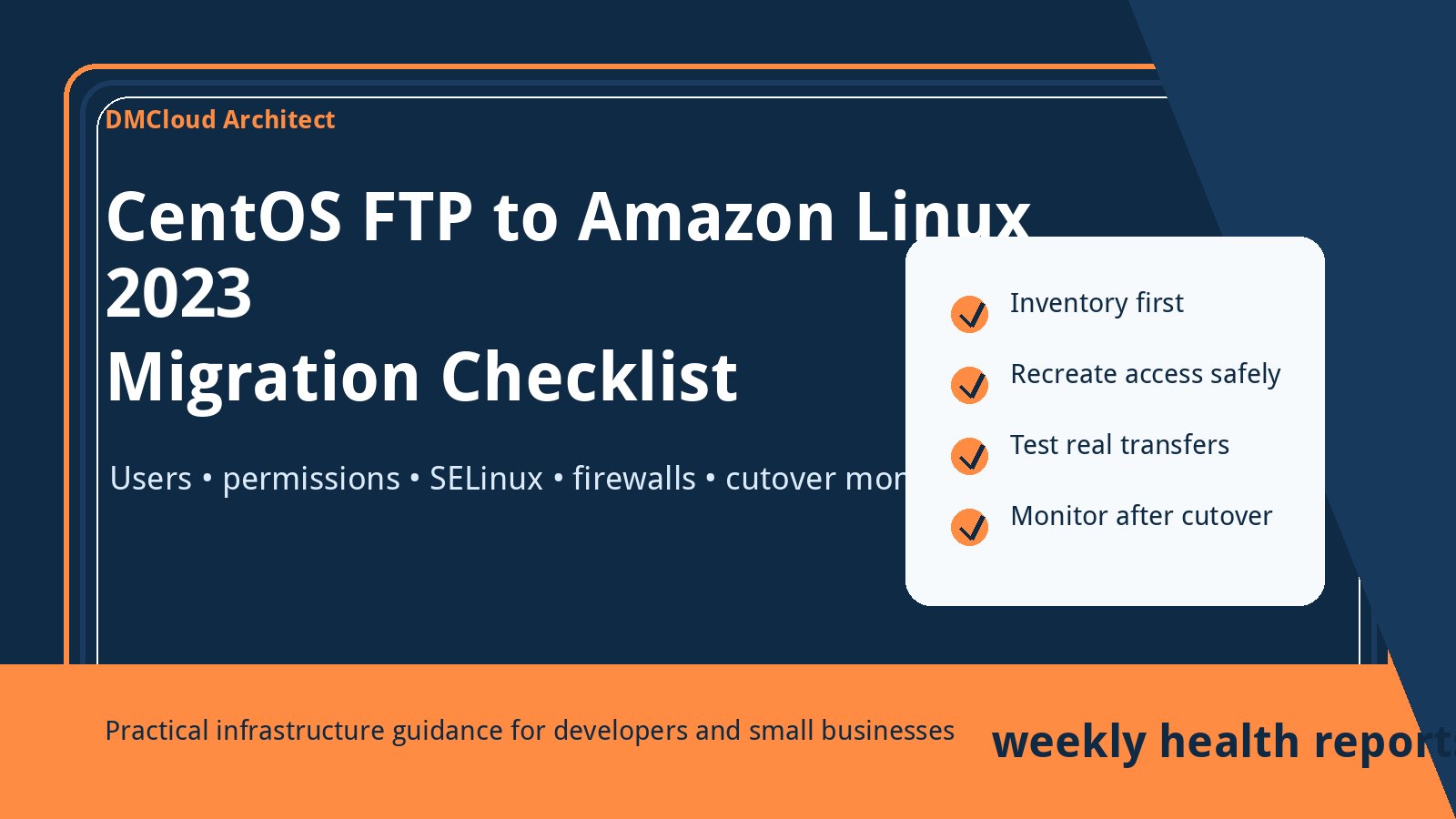
CentOS FTP to Amazon Linux 2023 Migration Checklist

CentOS FTP to Amazon Linux 2023 Migration Checklist

Jul 12, 2026    Mariusz Antonik    Automation    8 min read

Migrating an FTP server from CentOS to Amazon Linux 2023 is more than copying files to a new instance. You need to choose the right daemon, recreate users and permissions carefully, account for SELinux and firewalld differences, and validate transfers before changing DNS or firewall routes. This checklist gives small teams a practical migration path and highlights the linux server monitoring checks that reduce surprises after cutover.

Read More
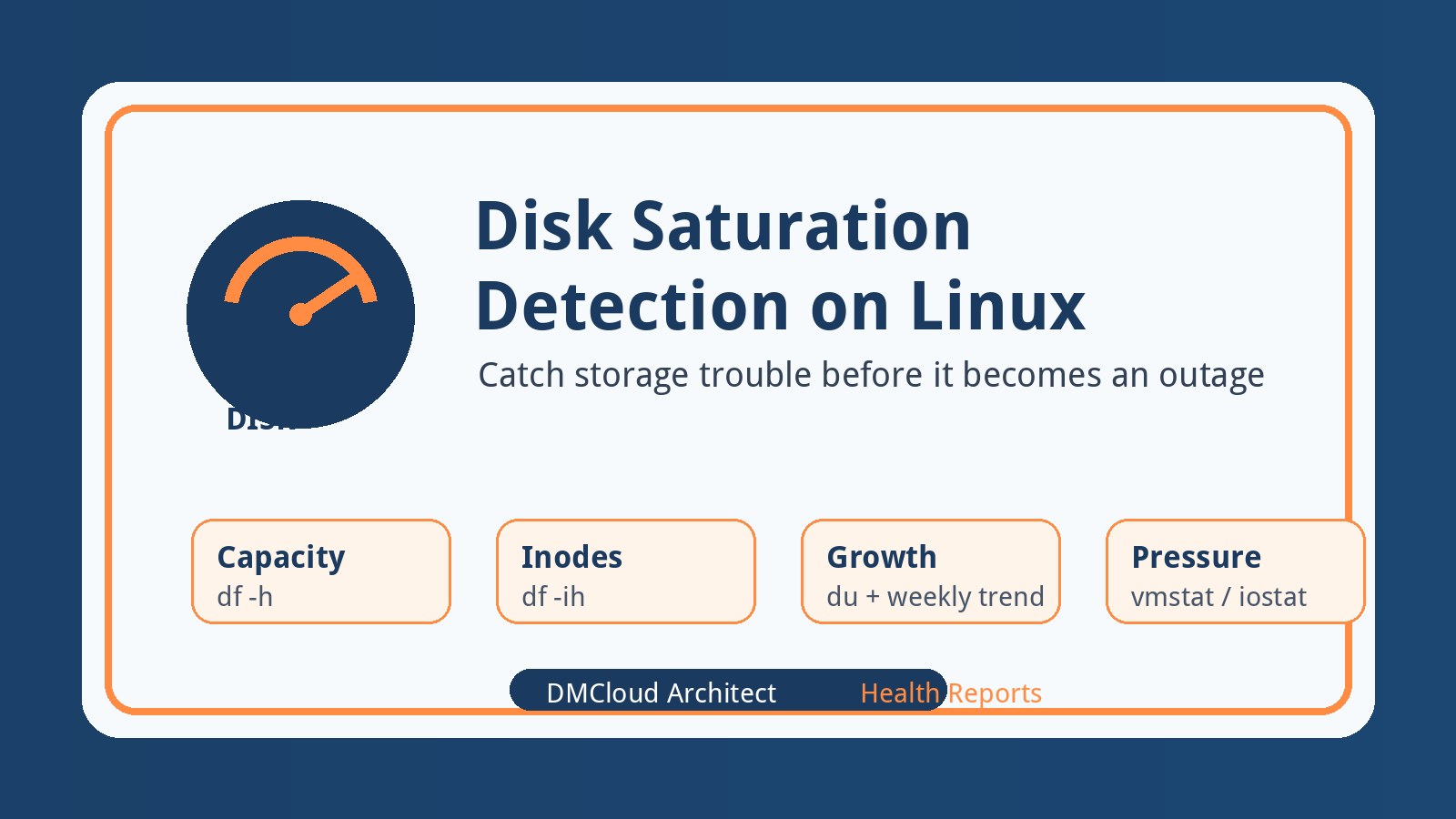
Disk Saturation Detection on Linux: Catch Storage Trouble Before It Becomes an Outage

Disk Saturation Detection on Linux: Catch Storage Trouble Before It Becomes an Outage

Jul 11, 2026    Mariusz Antonik    Automation    7 min read

Disk saturation detection on Linux helps small teams catch storage pressure before a full filesystem becomes downtime. This practical guide explains which disk signals to watch, how to spot early warning patterns with built-in commands, and how to turn simple checks into a weekly review habit. It is written for developers and small business owners who need reliable servers without adding unnecessary monitoring complexity.

Read More
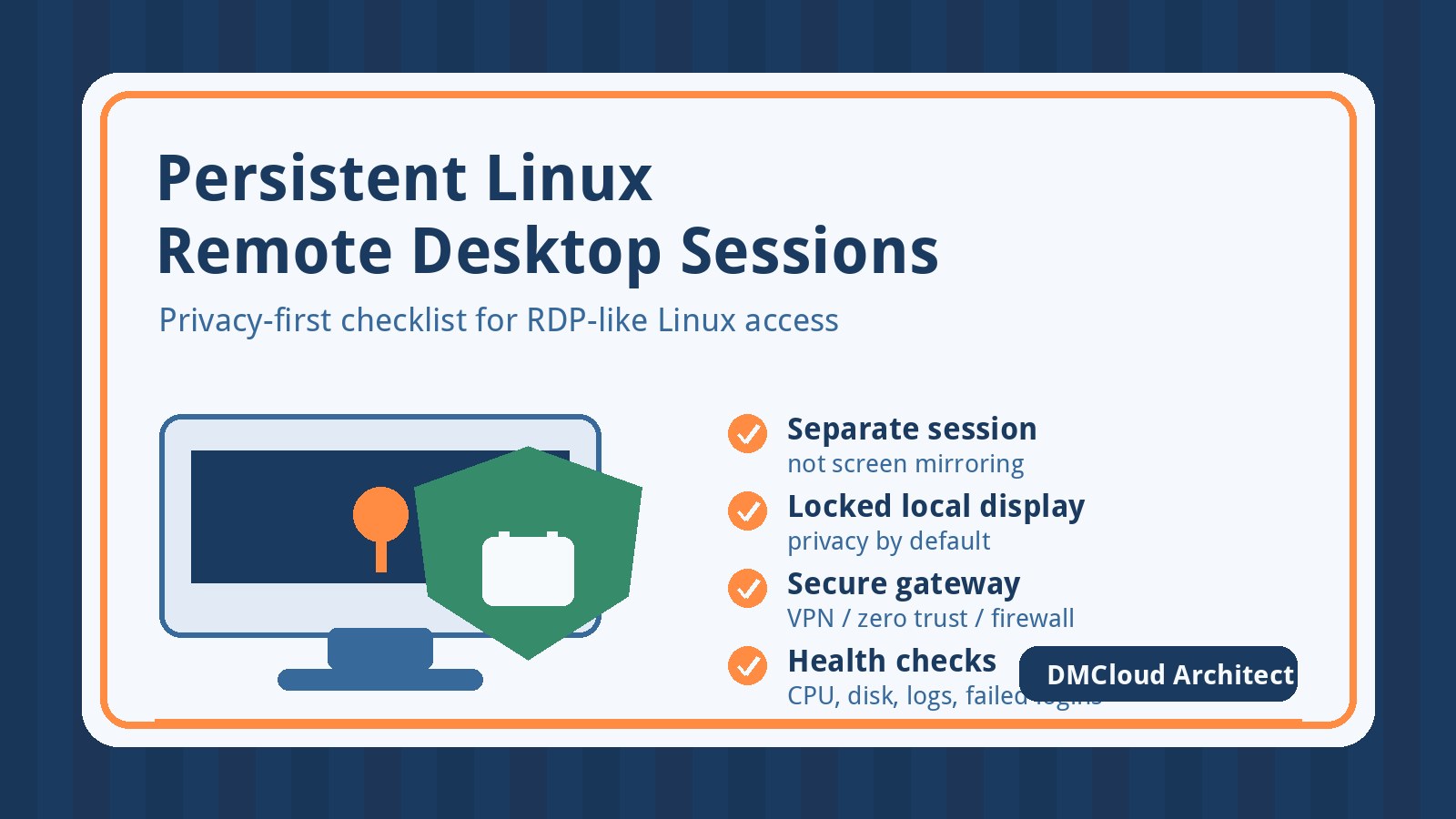
Persistent Linux Remote Desktop Sessions: A Small Business Checklist

Persistent Linux Remote Desktop Sessions: A Small Business Checklist

Jul 10, 2026    Mariusz Antonik    Security    7 min read

Moving from Windows RDP to Linux desktop support is not just a tooling choice. Small teams need persistent GUI sessions, a locked local display, secure access controls, and enough monitoring to know the workstation or jump host remains healthy. This checklist explains the practical options and the operational checks to put in place before relying on remote Linux desktop sessions for daily work.

Read More
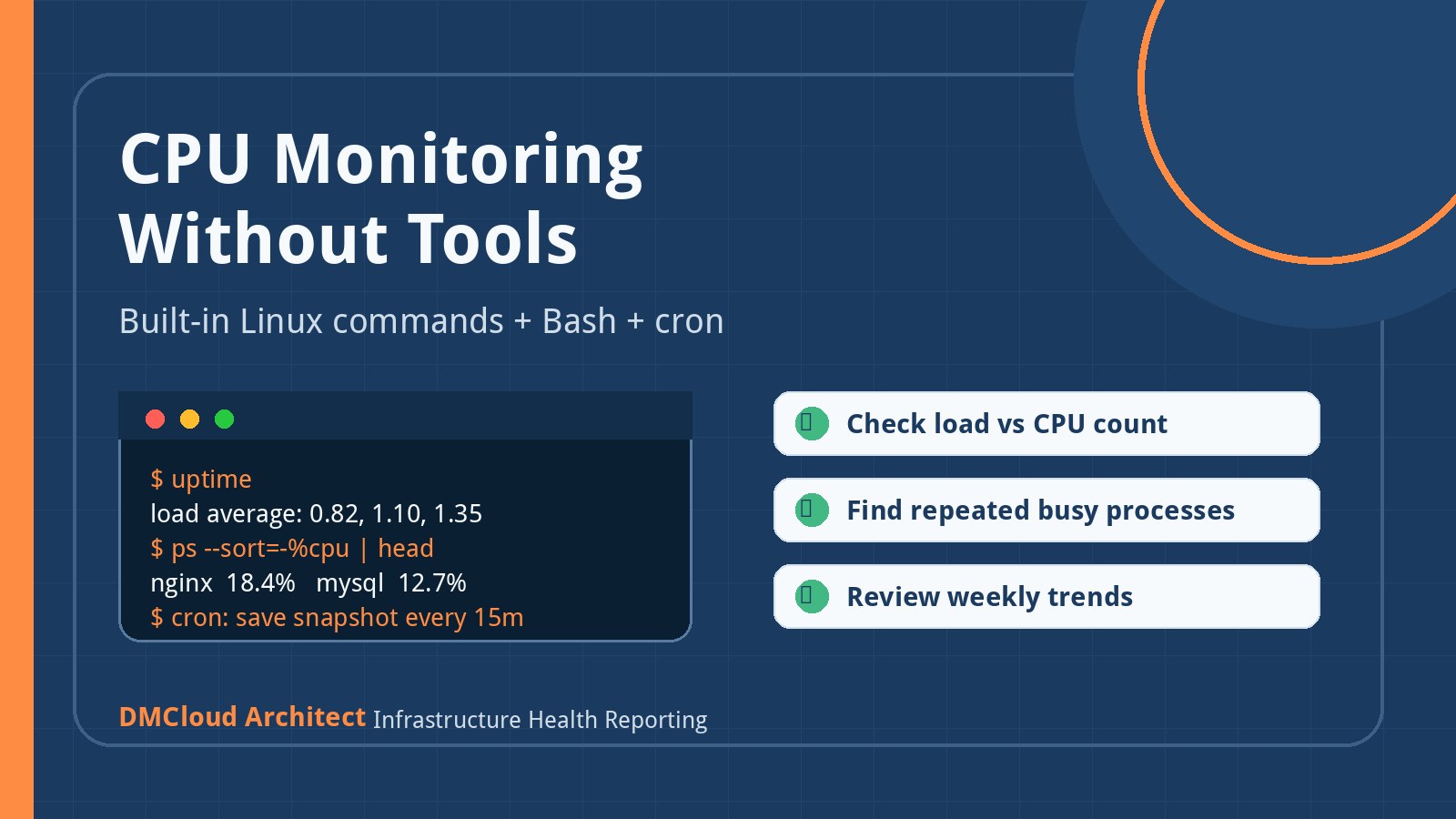
CPU Monitoring Without Tools: A Practical Linux Guide for Small Teams

CPU Monitoring Without Tools: A Practical Linux Guide for Small Teams

Jul 09, 2026    Mariusz Antonik    Automation    7 min read

CPU monitoring without tools is useful when you need quick visibility before installing a full observability stack. This guide shows small teams how to inspect CPU pressure with built-in Linux commands, save lightweight snapshots with Bash and cron, and review weekly trends before users feel slowdowns. It also explains when simple checks are enough and when to move toward a managed health-reporting workflow.

Read More
CPU Usage History in Linux: A Practical Guide for Small Teams

CPU Usage History in Linux: A Practical Guide for Small Teams

Jul 07, 2026    Mariusz Antonik    Automation    5 min read

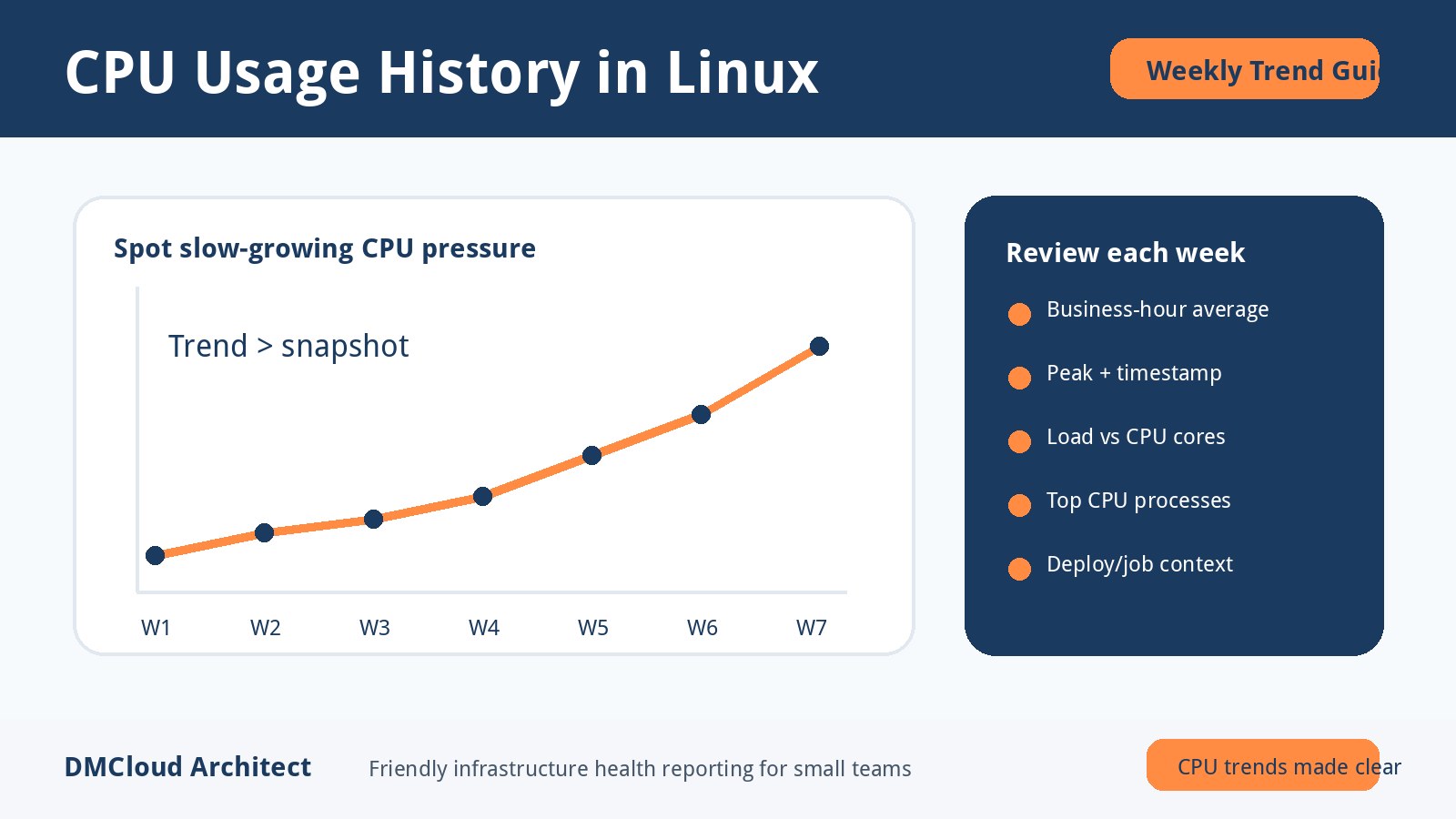
CPU usage history in Linux helps small teams see slow-growing performance pressure before customers feel it. This guide explains what to collect, which built-in commands help, and how to turn weekly CPU trends into practical capacity decisions. You will also get a simple cron-friendly workflow for keeping enough history to spot patterns without building a full observability platform.

Read More