Blog

Linux Disk Monitoring Command: A Practical Guide for Small Teams

Linux Disk Monitoring Command: A Practical Guide for Small Teams

Jul 05, 2026    Mariusz Antonik    Automation    7 min read

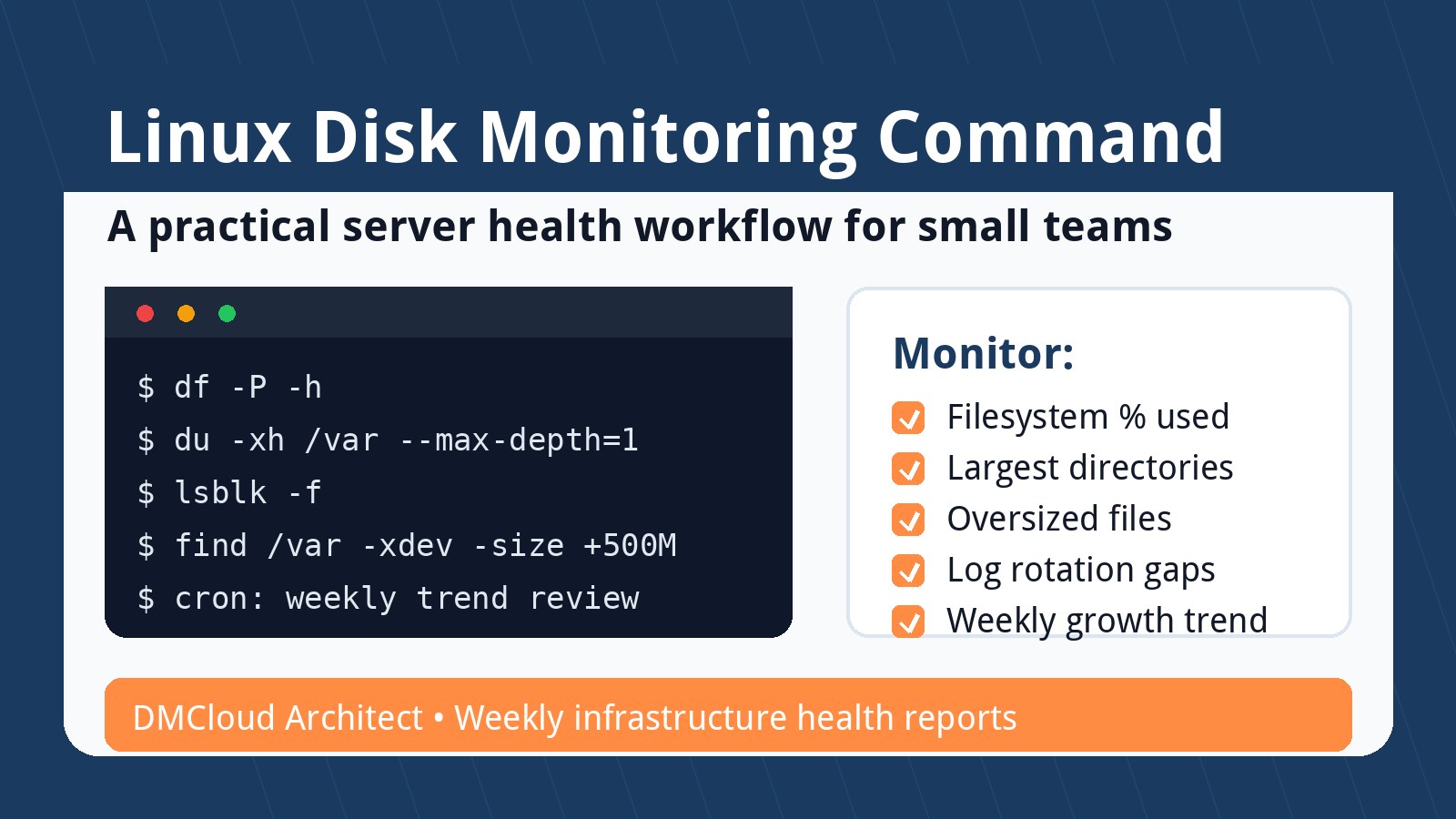
The best linux disk monitoring command is usually a small, repeatable set of checks rather than one magic command. This guide shows how to use df, du, lsblk, find, and a simple cron-friendly Bash script to catch disk pressure before it becomes an outage. Small teams can use the same workflow for weekly infrastructure reviews, alert cleanup, and practical capacity planning.

Read More
Long-Term Linux Log Retention Checklist for Busy Production Servers

Long-Term Linux Log Retention Checklist for Busy Production Servers

Jul 04, 2026    Mariusz Antonik    Automation    6 min read

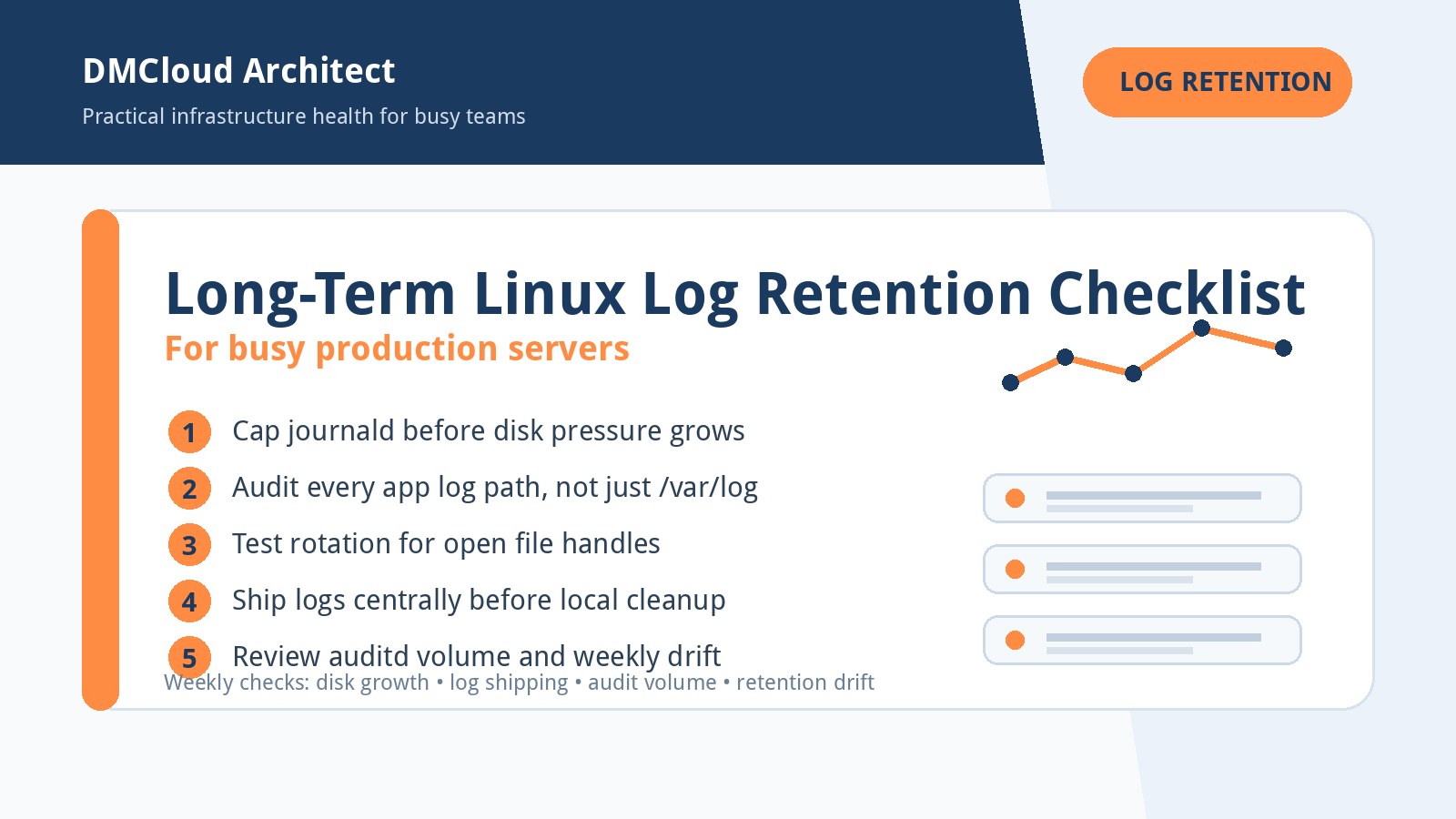
Busy production Linux servers need log retention rules that protect disk space without erasing the evidence teams need later. This checklist shows how to combine journald limits, logrotate hygiene, central shipping, archival storage, audit log controls, and weekly review signals. Use it to make linux server monitoring more predictable as traffic and compliance needs grow.

Read More
Historical Server Monitoring: Spot Infrastructure Trends Before They Become Outages

Historical Server Monitoring: Spot Infrastructure Trends Before They Become Outages

Jul 03, 2026    Mariusz Antonik    Automation    5 min read

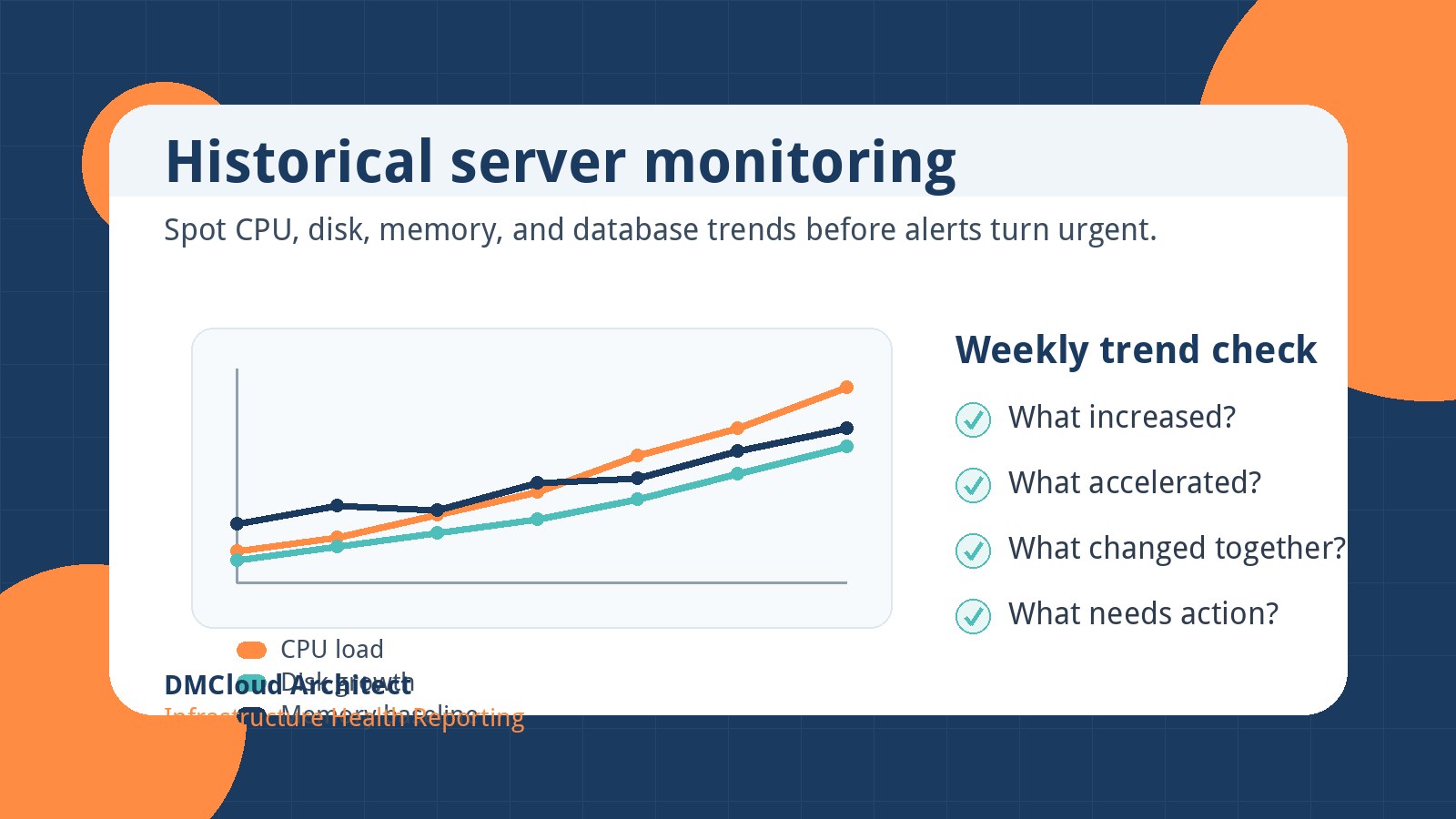
Historical server monitoring helps small teams see whether CPU, memory, disk, and database pressure are getting better or worse over time. Instead of reacting only when an alert fires, you can review weekly trends and catch slow-moving risks early. This guide explains which metrics to preserve, how to review them, and how to turn trend data into practical maintenance decisions.

Read More
Linux Log Management Checklist for Growing Server Fleets

Linux Log Management Checklist for Growing Server Fleets

Jul 02, 2026    Mariusz Antonik    Automation    8 min read

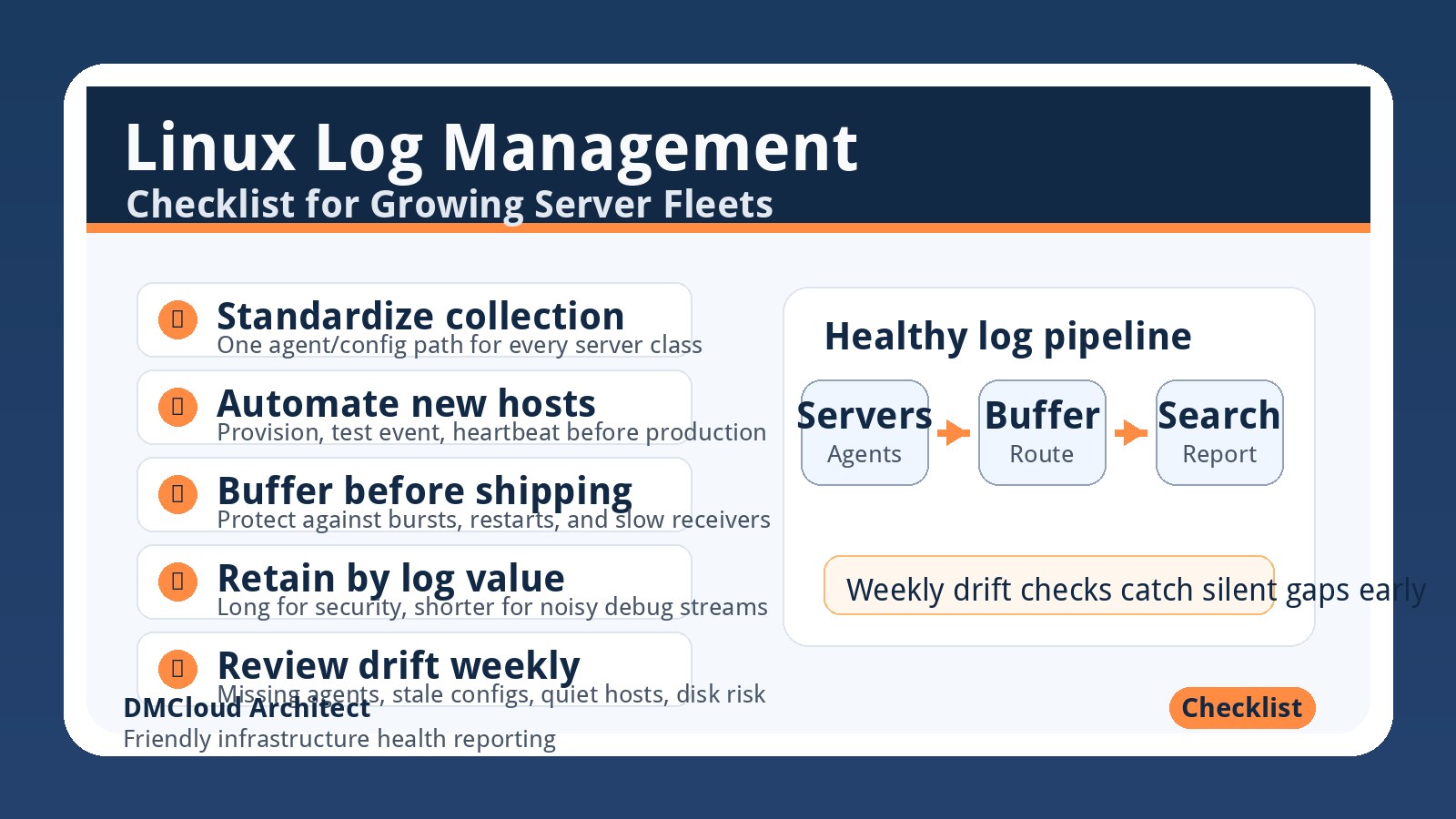
Growing Linux server fleets often outgrow host-by-host rsyslog and logrotate long before a full observability platform is ready. This checklist helps developers and small business infrastructure teams standardize collection, buffering, retention, rollout checks, and weekly drift reviews. Use it to make linux server monitoring calmer, more consistent, and easier to improve one step at a time.

Read More
How to Predict Disk Usage Growth Before Your Server Runs Out of Space

How to Predict Disk Usage Growth Before Your Server Runs Out of Space

Jul 01, 2026    Mariusz Antonik    Automation    7 min read

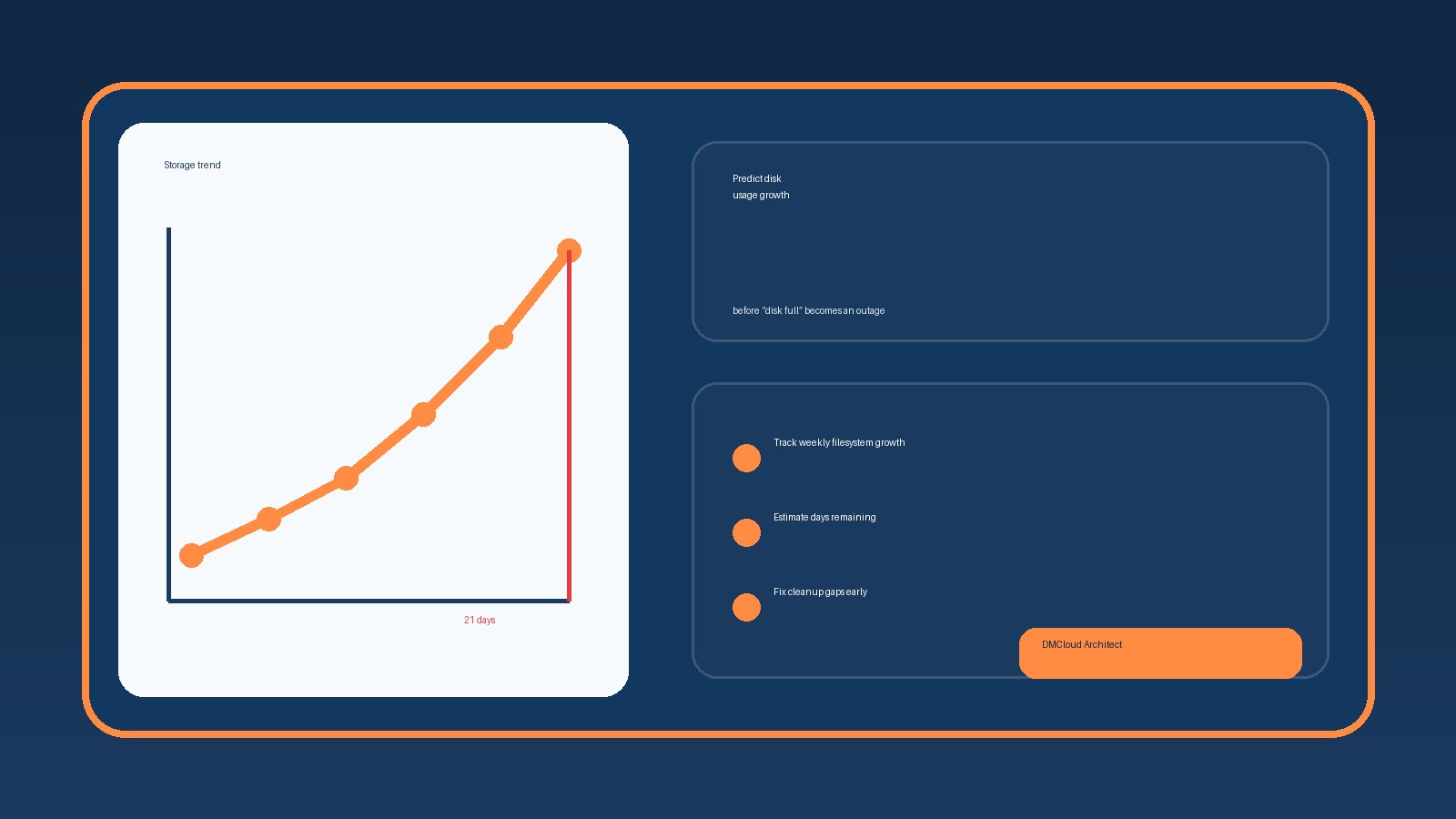
Disk alerts often arrive after the risky trend is already obvious in hindsight. This guide shows how to forecast storage growth with simple Linux checks, practical thresholds, and weekly review habits. You will learn how to spot fast-changing filesystems, estimate days remaining, and plan cleanup or expansion before outages happen. It is written for developers and small business owners who need reliable servers without living inside dashboards.

Read More
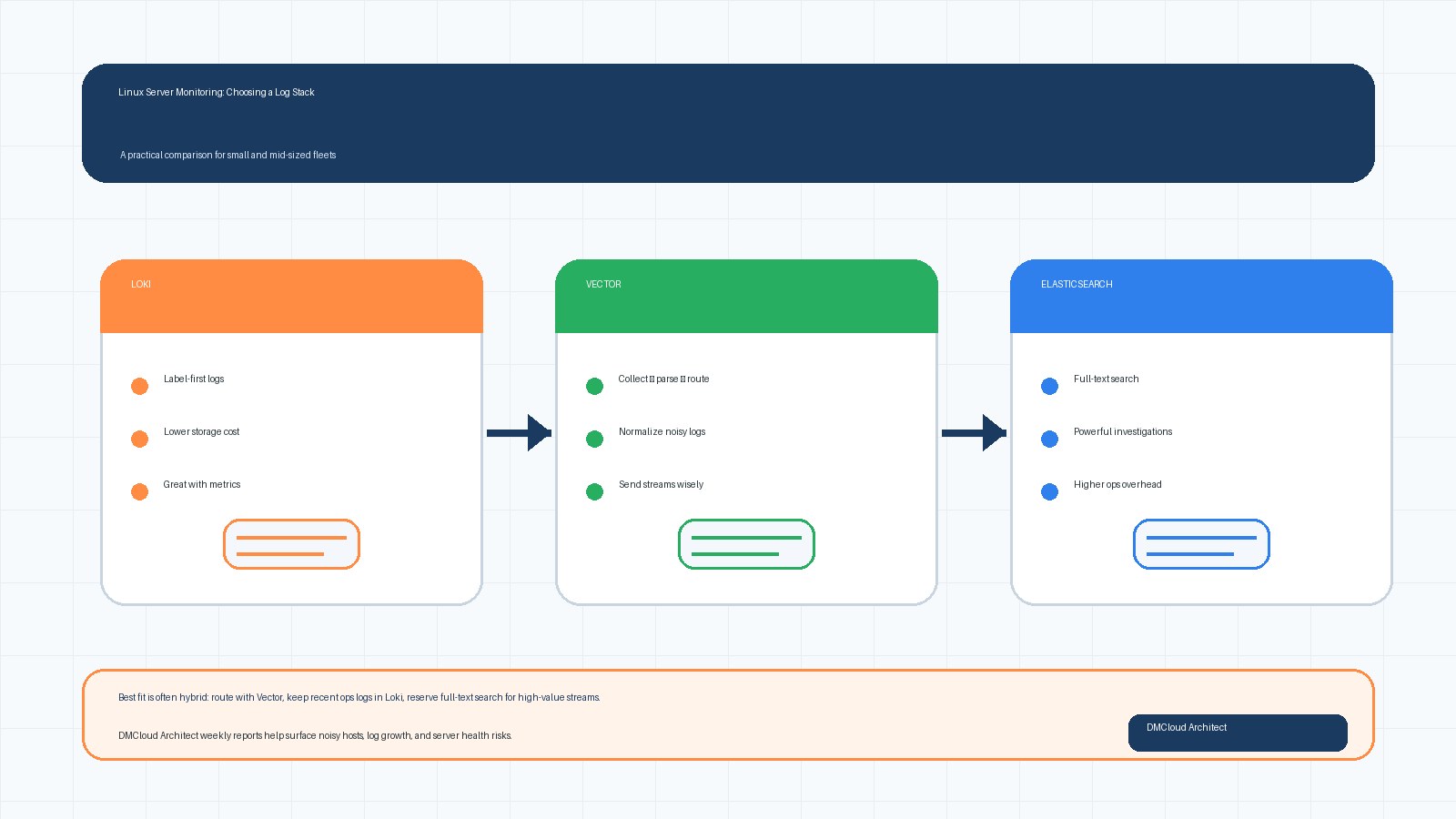
Loki vs Vector vs Elasticsearch for Linux Server Monitoring: A Practical Small Fleet Guide

Loki vs Vector vs Elasticsearch for Linux Server Monitoring: A Practical Small Fleet Guide

Jun 30, 2026    Mariusz Antonik    Automation    9 min read

Growing Linux fleets often outgrow a simple rsyslog-to-Elasticsearch setup once storage, parsing, and cluster maintenance become daily work. This practical comparison explains when Loki, Vector, Elasticsearch, or a hybrid pipeline makes sense for small and mid-sized teams. Use it to choose a logging architecture that supports incident response without turning linux server monitoring into another full-time platform project.

Read More
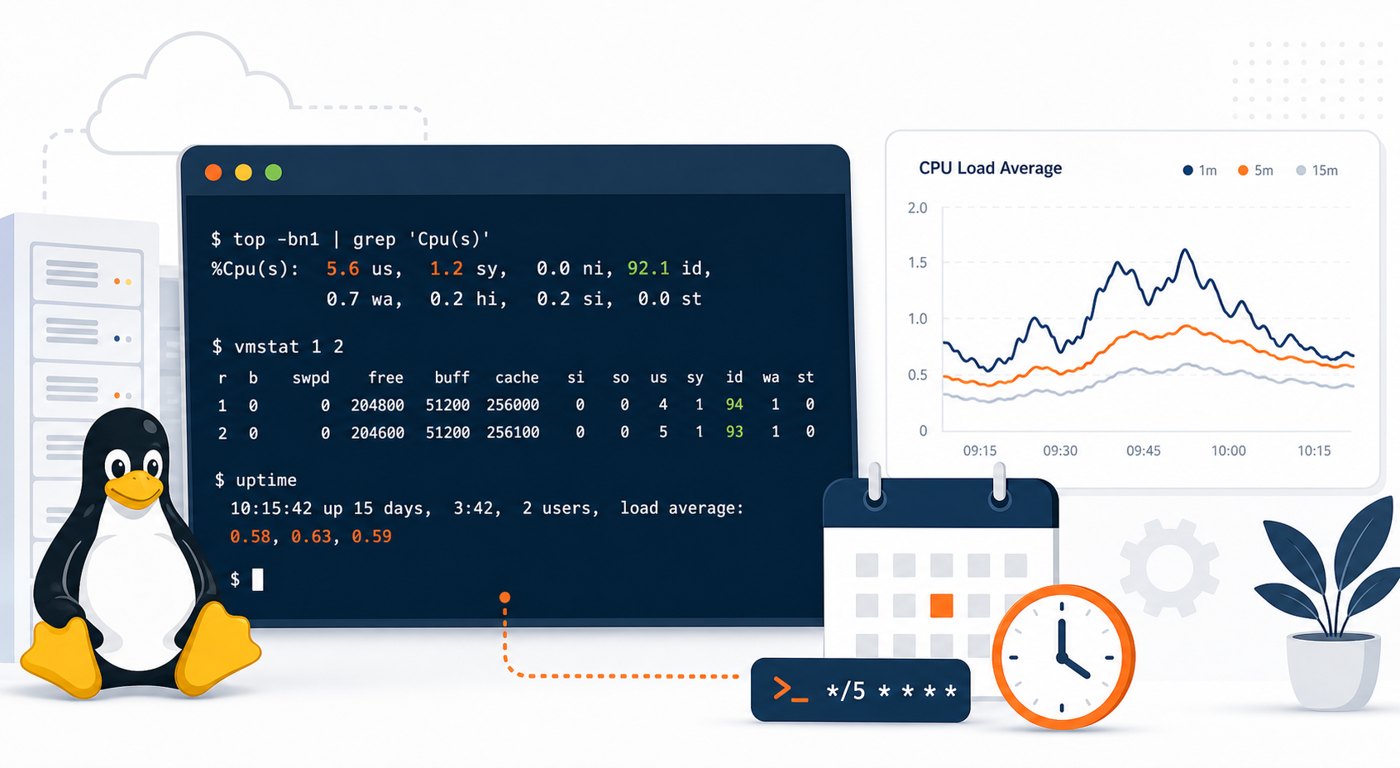
How to Monitor Linux CPU Usage with Cron

How to Monitor Linux CPU Usage with Cron

Jun 29, 2026    Mariusz Antonik    Automation    6 min read

Cron-based CPU monitoring is a simple way to catch resource pressure before users notice slow pages, stalled jobs, or surprise outages. A lightweight script can collect load average, CPU idle time, and top process snapshots on a schedule without adding a full dashboard. This guide shows what to measure, how often to run checks, and how to turn the results into practical weekly health signals. It is designed for developers and small business owners who need useful visibility without another tool to babysit.

Read More
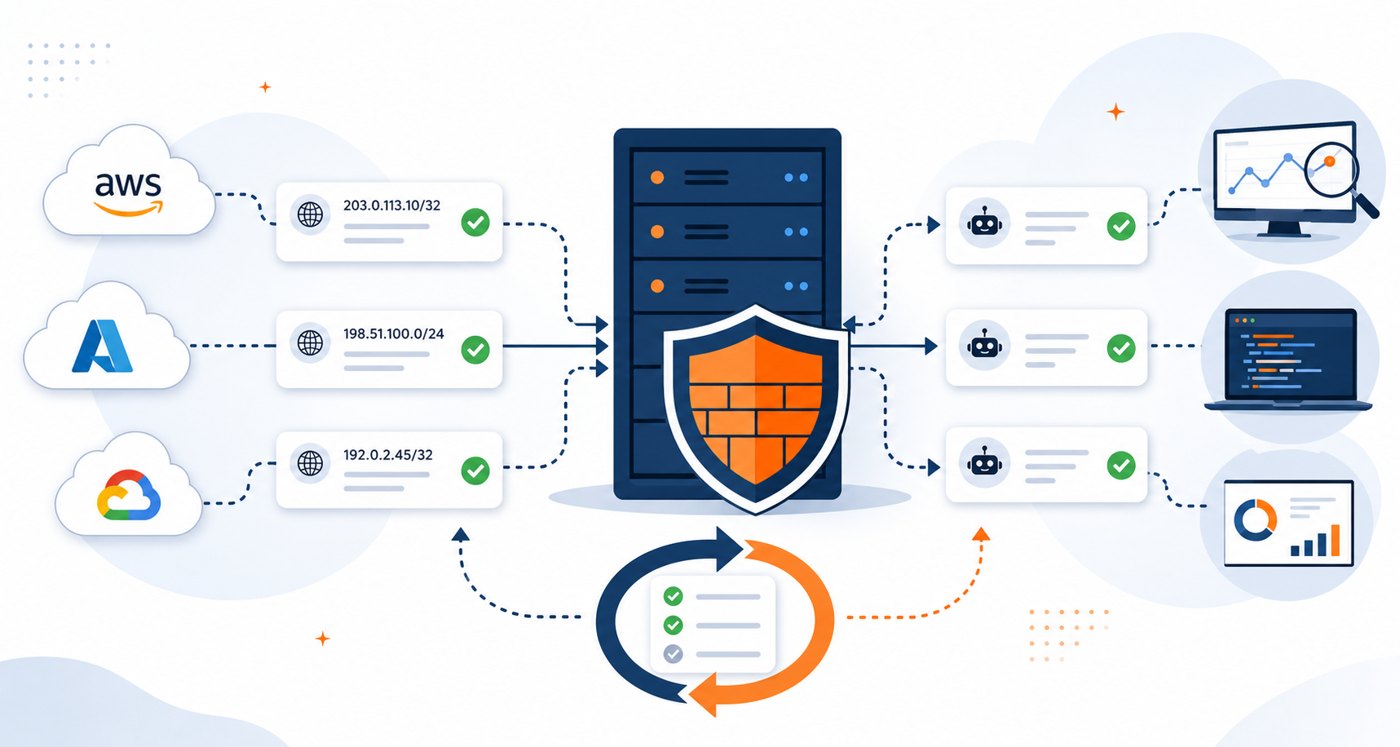
Cloud and Bot IP Allow Lists: How to Keep Server Access Rules Healthy

Cloud and Bot IP Allow Lists: How to Keep Server Access Rules Healthy

Jun 28, 2026    Mariusz Antonik    Security    7 min read

Auto-updated cloud and bot IP allow lists can save time, but they should not become blind production changes. This checklist explains how to keep Linux server access rules healthy with source review, staged rollout, validation, rollback, and weekly monitoring. Use it to reduce lockout risk while keeping trusted providers and uptime checks working.

Read More
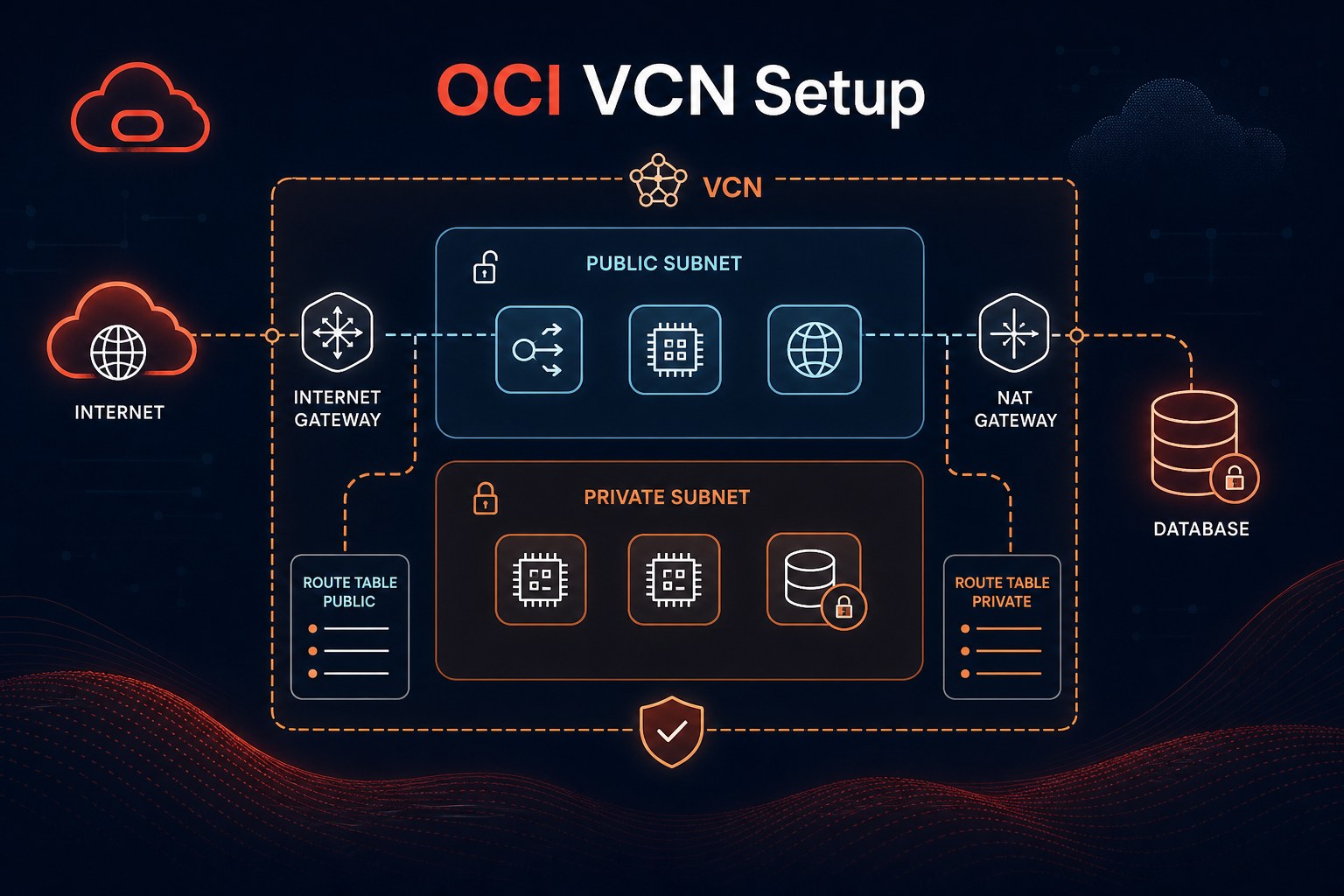
Oracle Cloud VCN Setup: A Practical First Network Guide

Oracle Cloud VCN Setup: A Practical First Network Guide

Jun 27, 2026    Mariusz Antonik    Oracle Cloud (OCI)    7 min read

A good Oracle Cloud VCN setup gives your servers, databases, and public endpoints a network foundation you can grow without constant rework. This guide explains the core pieces of an OCI VCN, including CIDR planning, public and private subnets, gateways, route tables, security lists, and NSGs. You will learn a practical setup flow and the common mistakes that make early OCI environments harder to maintain later.

Read More
Oracle Cloud MySQL Setup: A Practical OCI Guide

Oracle Cloud MySQL Setup: A Practical OCI Guide

Jun 26, 2026    Mariusz Antonik    Automation    7 min read

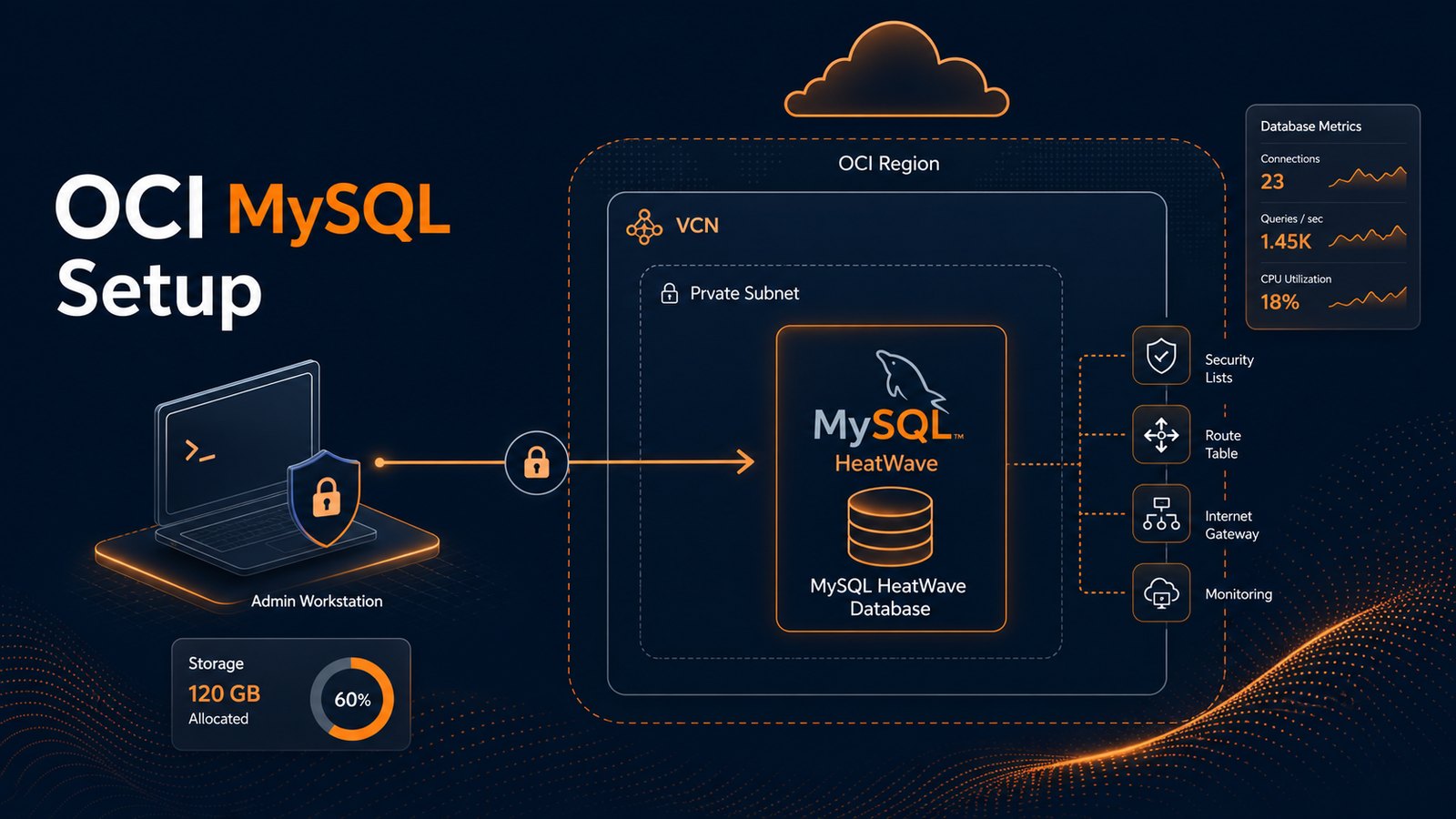
Setting up MySQL in Oracle Cloud is easier when you make the network, access, backup, and sizing decisions before clicking through the console. This guide walks through the practical choices behind an Oracle Cloud MySQL setup, including VCN placement, security rules, backup policy, and when HeatWave matters. It is written for builders and small infrastructure teams that want a clean first deployment instead of a fragile test system that accidentally becomes production.

Read More