Blog - Automation

How to Learn Linux Administration: A Structured Operations Roadmap

How to Learn Linux Administration: A Structured Operations Roadmap

Oct 29, 2026    Mariusz Antonik    Automation    11 min read

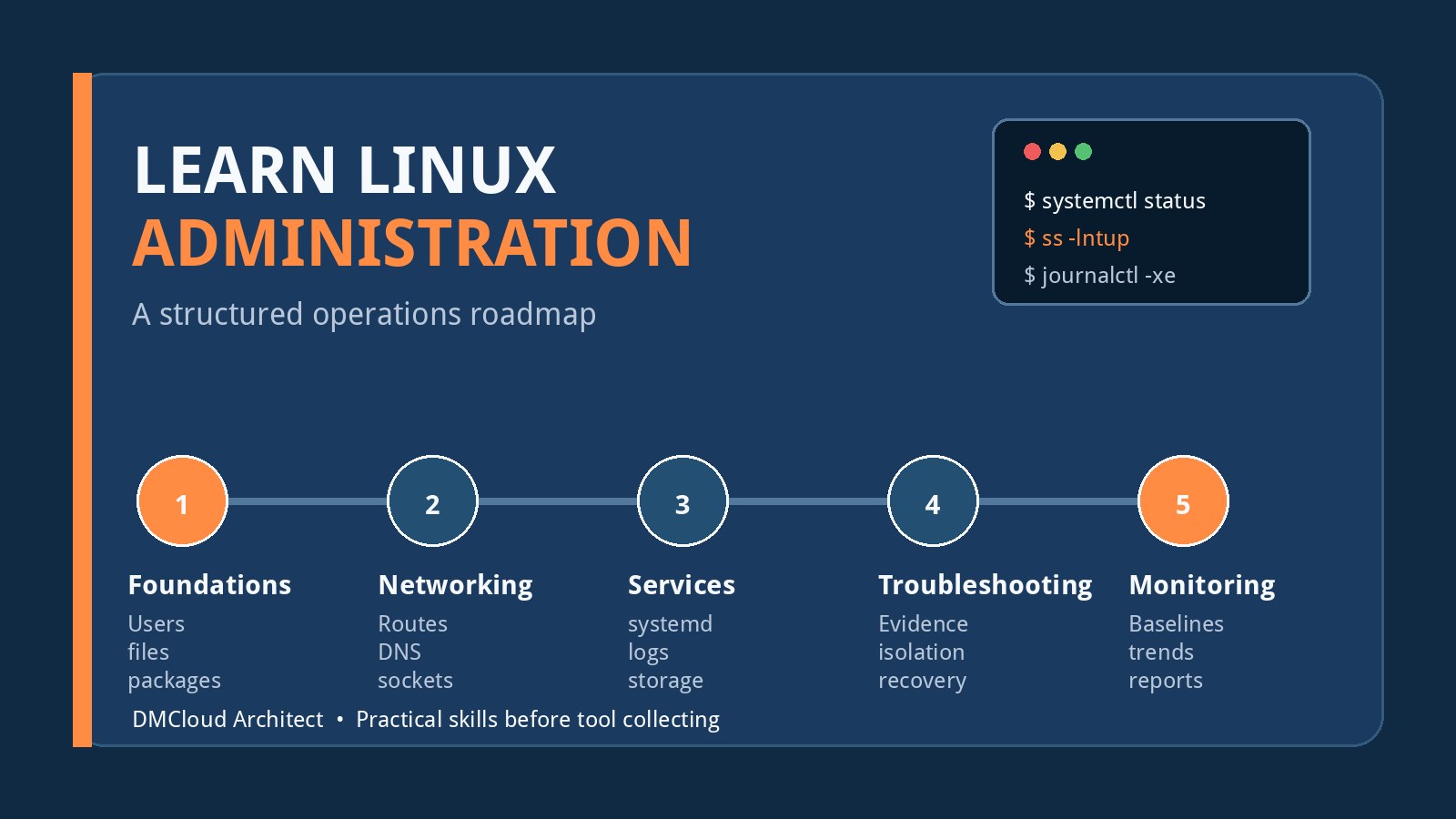
Moving from comfortable Linux user to capable administrator takes a structured practice loop, not an endless playlist of disconnected commands. This roadmap organizes fundamentals, networking, services, security, troubleshooting, and Linux server monitoring into hands-on stages. It also explains how to judge courses and certifications without treating any credential as a substitute for operational practice.

Read More
Server Health Summary: What a Useful Weekly Report Should Include

Server Health Summary: What a Useful Weekly Report Should Include

Oct 28, 2026    Mariusz Antonik    Automation    8 min read

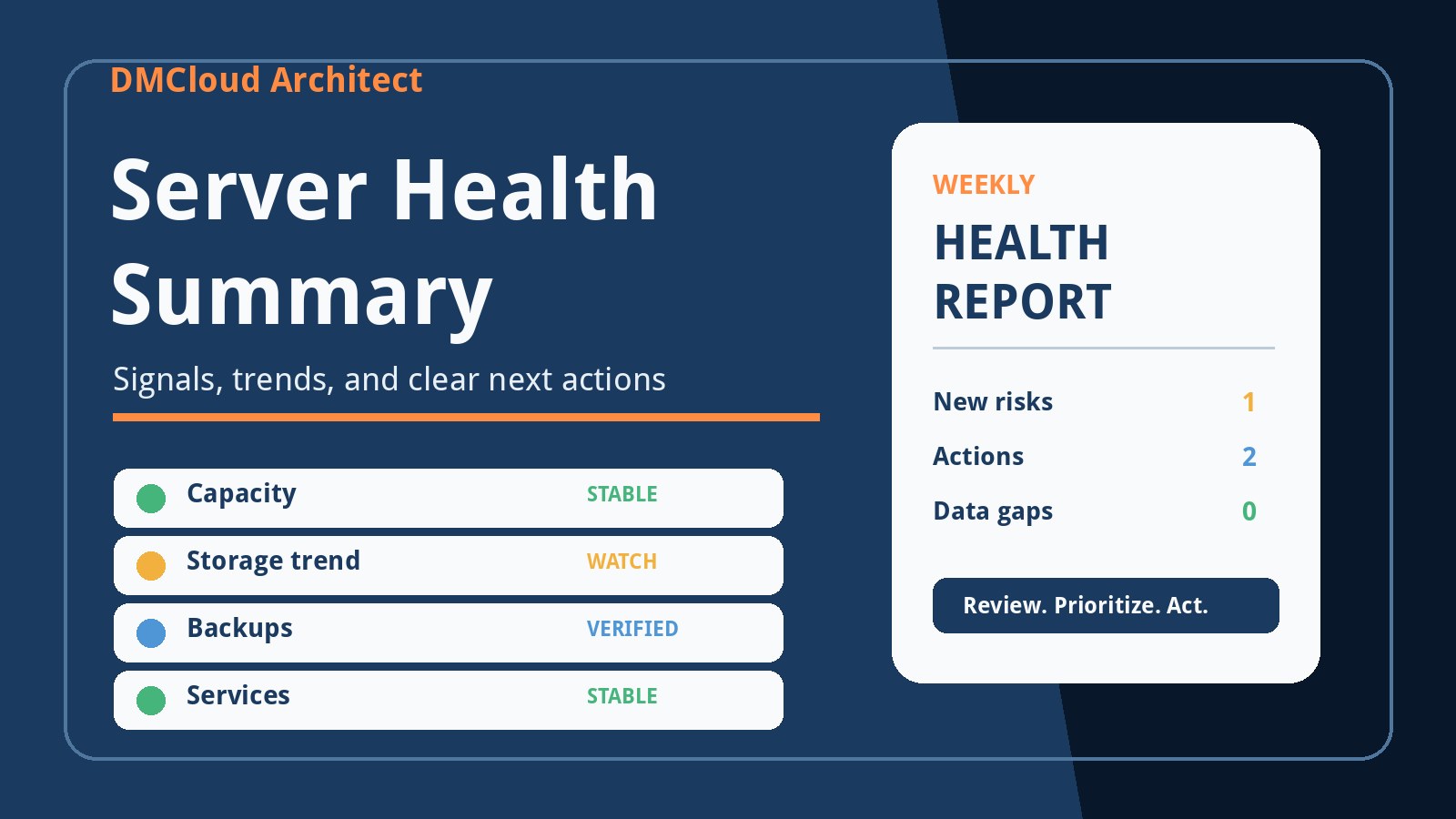
A server health summary should turn Linux, database, service, and backup evidence into a short list of risks and next actions. This guide explains which sections belong in a useful weekly report, how to add trend context, and how to avoid noisy metric dumps. It also provides a practical status model that developers and small business owners can review quickly. Use it to make routine infrastructure reviews consistent and actionable.

Read More
Baseline-Delta Linux Server Monitoring: Exposure and Process Checklist

Baseline-Delta Linux Server Monitoring: Exposure and Process Checklist

Oct 27, 2026    Mariusz Antonik    Automation    9 min read

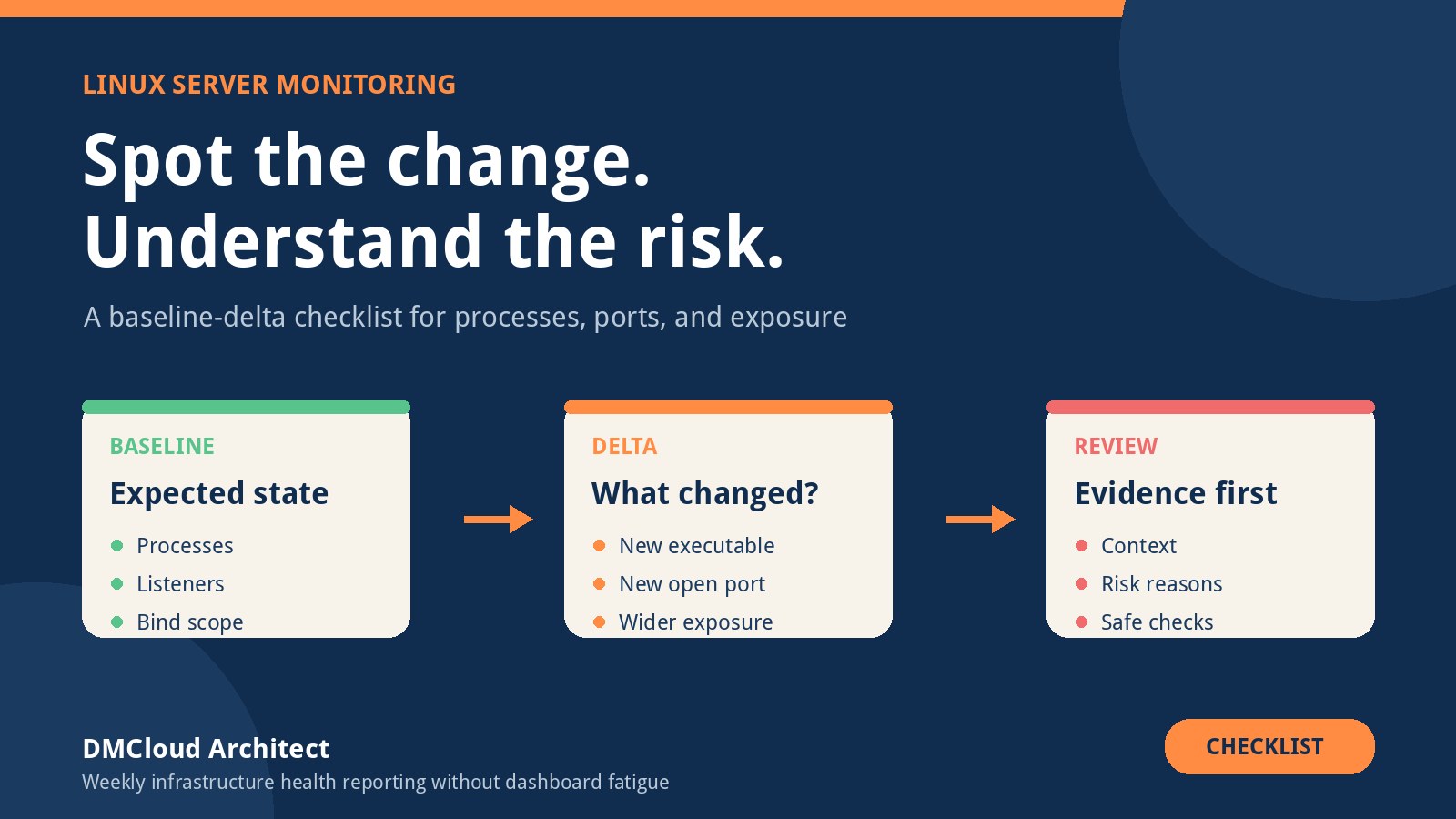
A baseline-delta monitor can reveal newly opened ports, unfamiliar processes, and exposure changes without burying operators in raw logs. This practical checklist explains what to capture, how to classify changes, and how to avoid noisy or misleading alerts. It also shows where real-time change detection, conventional alerts, and weekly health reports each fit.

Read More
Infrastructure Reporting Tools: How to Choose Useful Weekly Reports

Infrastructure Reporting Tools: How to Choose Useful Weekly Reports

Oct 26, 2026    Mariusz Antonik    Automation    9 min read

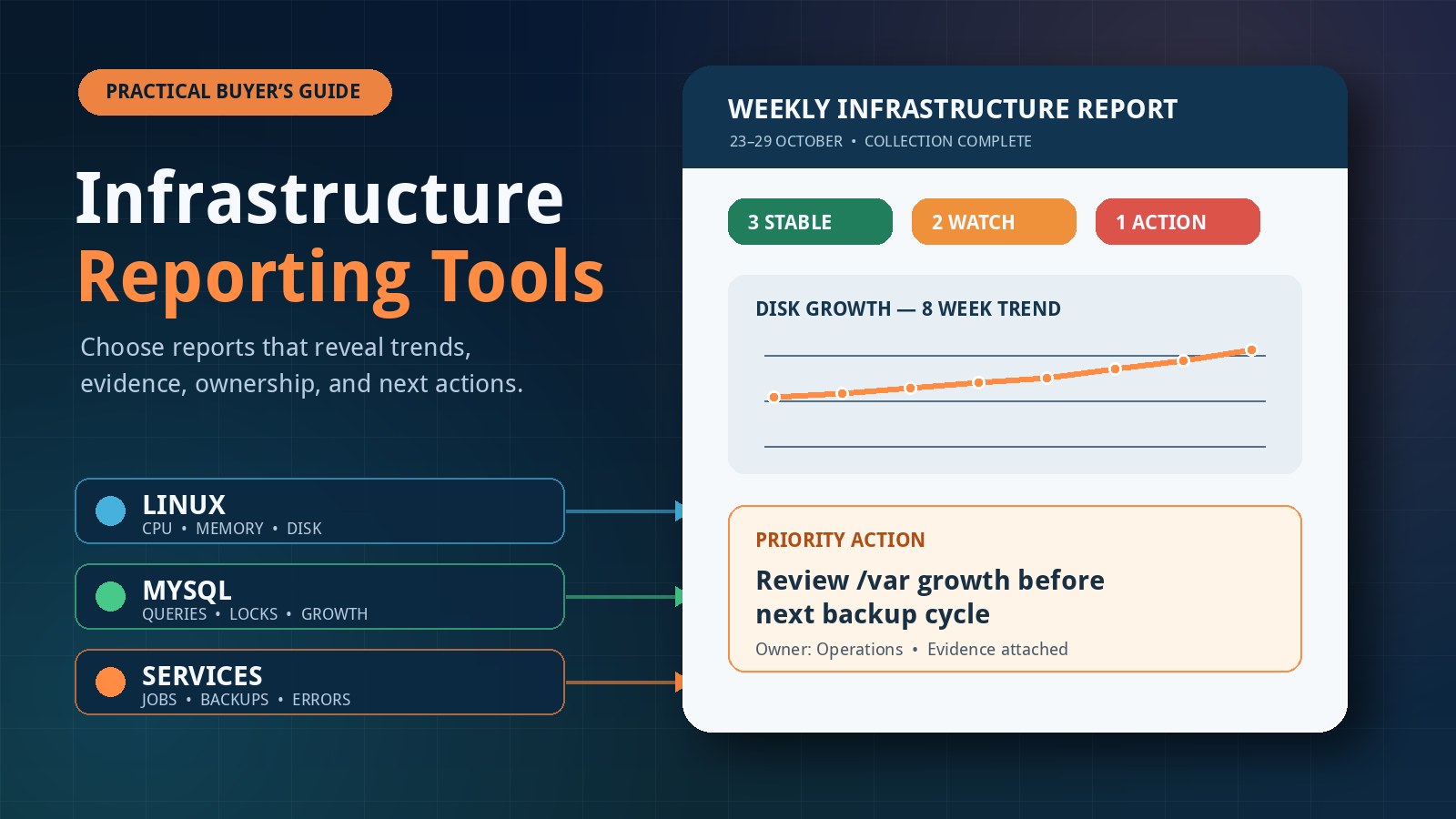
Infrastructure reporting tools turn Linux, database, and service data into evidence a small team can review and act on. This guide explains how reporting differs from monitoring, which signals belong in a useful weekly report, and how to compare products without buying another noisy dashboard. It includes an evaluation scorecard, a practical trial plan, and common warning signs. Use it to choose a reporting workflow that surfaces trends, ownership, and next actions.

Read More
Linux Support Engineer Interview: 12 Troubleshooting Scenarios to Practise

Linux Support Engineer Interview: 12 Troubleshooting Scenarios to Practise

Oct 25, 2026    Mariusz Antonik    Automation    11 min read

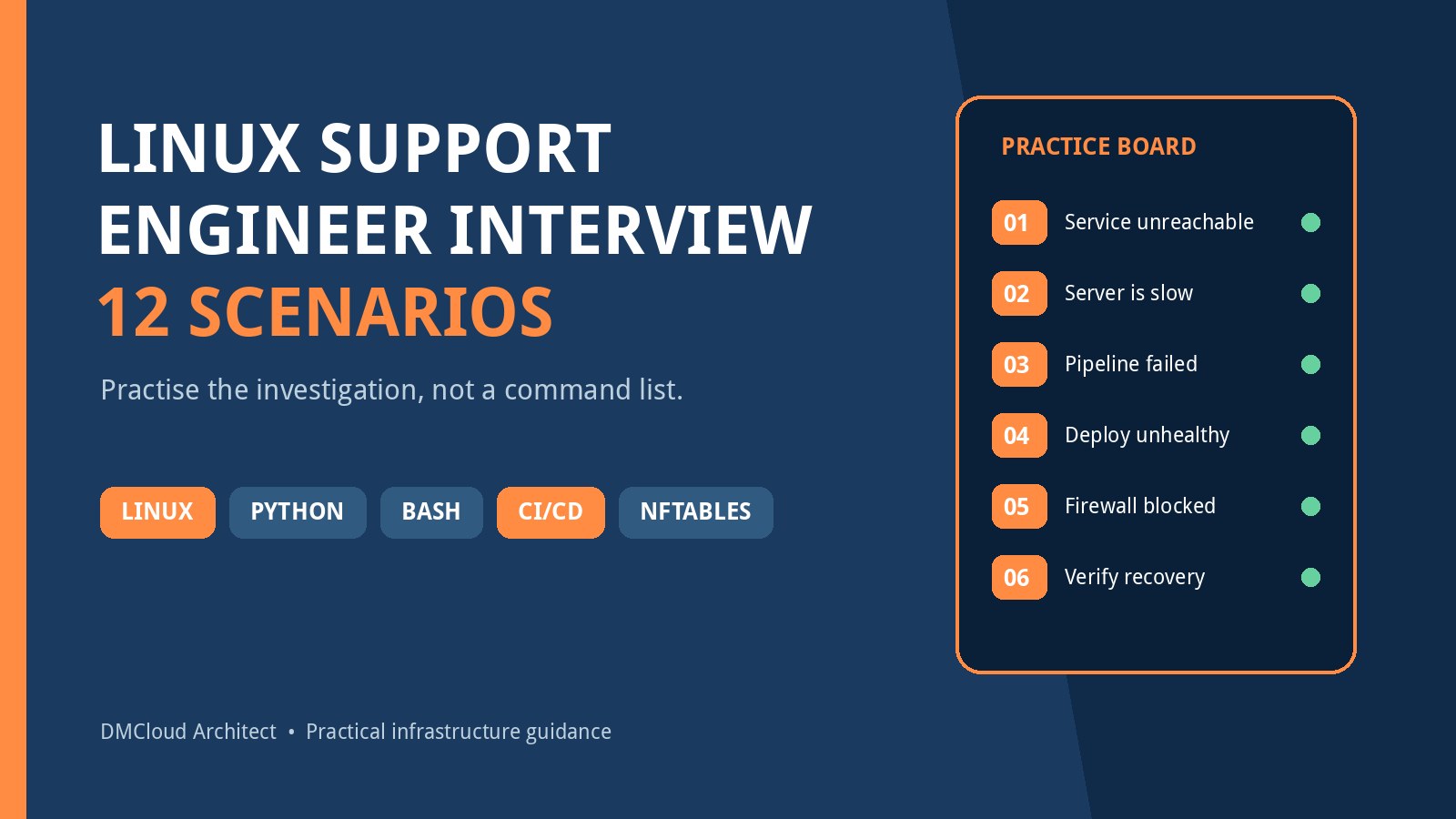
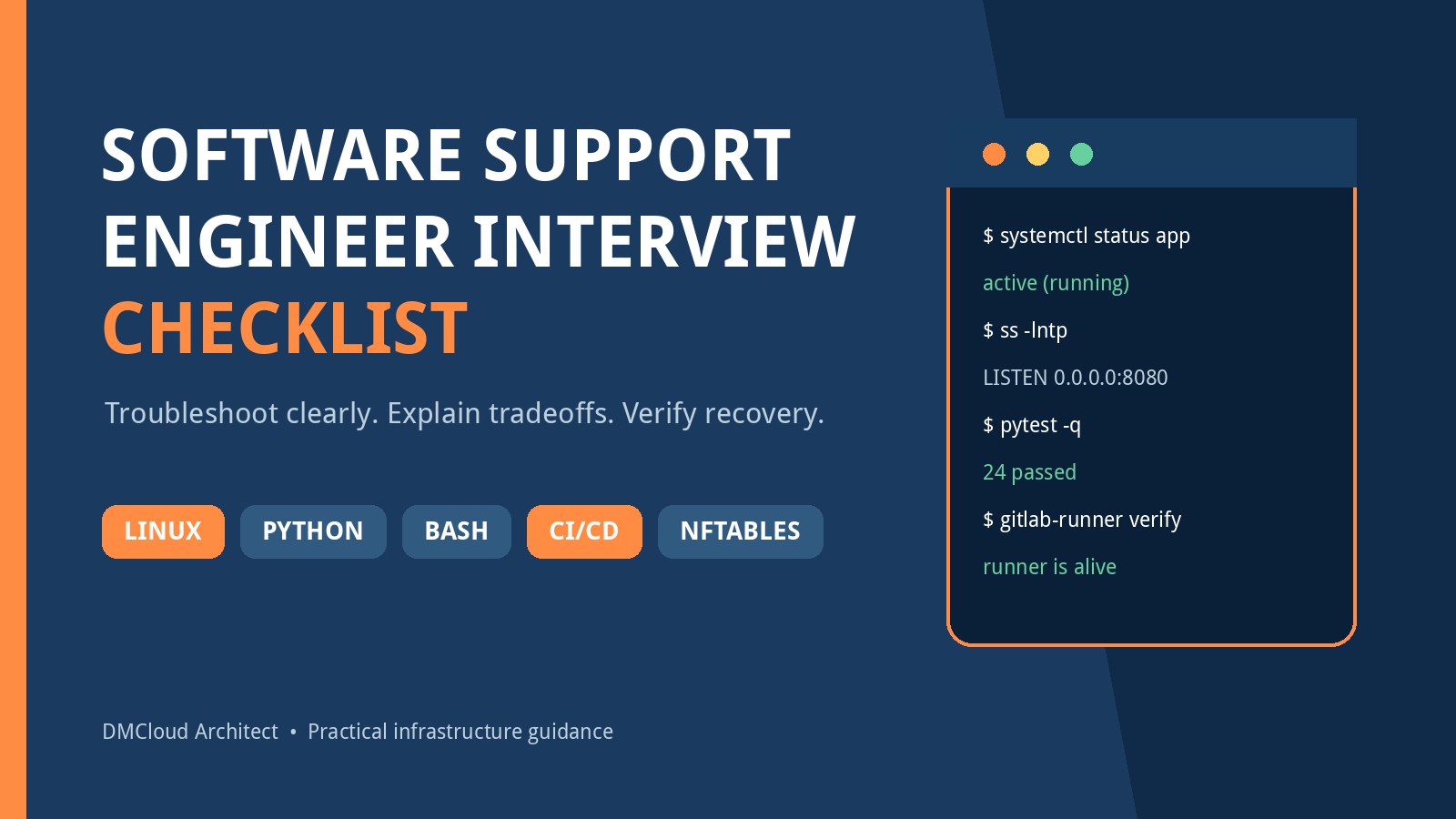
Technical interviews for software support roles often test how you investigate uncertainty, not how many commands you can recite. These 12 realistic scenarios cover Linux, Python, Bash, GitLab CI/CD, deployments, testing, and NFTables with a repeatable answer structure. Use them to demonstrate sound judgement, safe troubleshooting, and clear verification.

Read More
Software Support Engineer Interview Prep: Linux, Python, Bash, and CI/CD Checklist

Software Support Engineer Interview Prep: Linux, Python, Bash, and CI/CD Checklist

Oct 23, 2026    Mariusz Antonik    Automation    10 min read

A software support engineer interview usually tests structured troubleshooting more than memorized commands. This checklist covers realistic Linux, Python, Bash, GitLab CI/CD, testing, deployment, and NFTables questions, plus a practical framework for explaining your decisions. It also shows how Linux server monitoring evidence can turn an ambiguous incident into a clear technical story.

Read More
CPU Pressure Detection on Linux: Spot Saturation Before Performance Drops

CPU Pressure Detection on Linux: Spot Saturation Before Performance Drops

Oct 22, 2026    Mariusz Antonik    Automation    8 min read

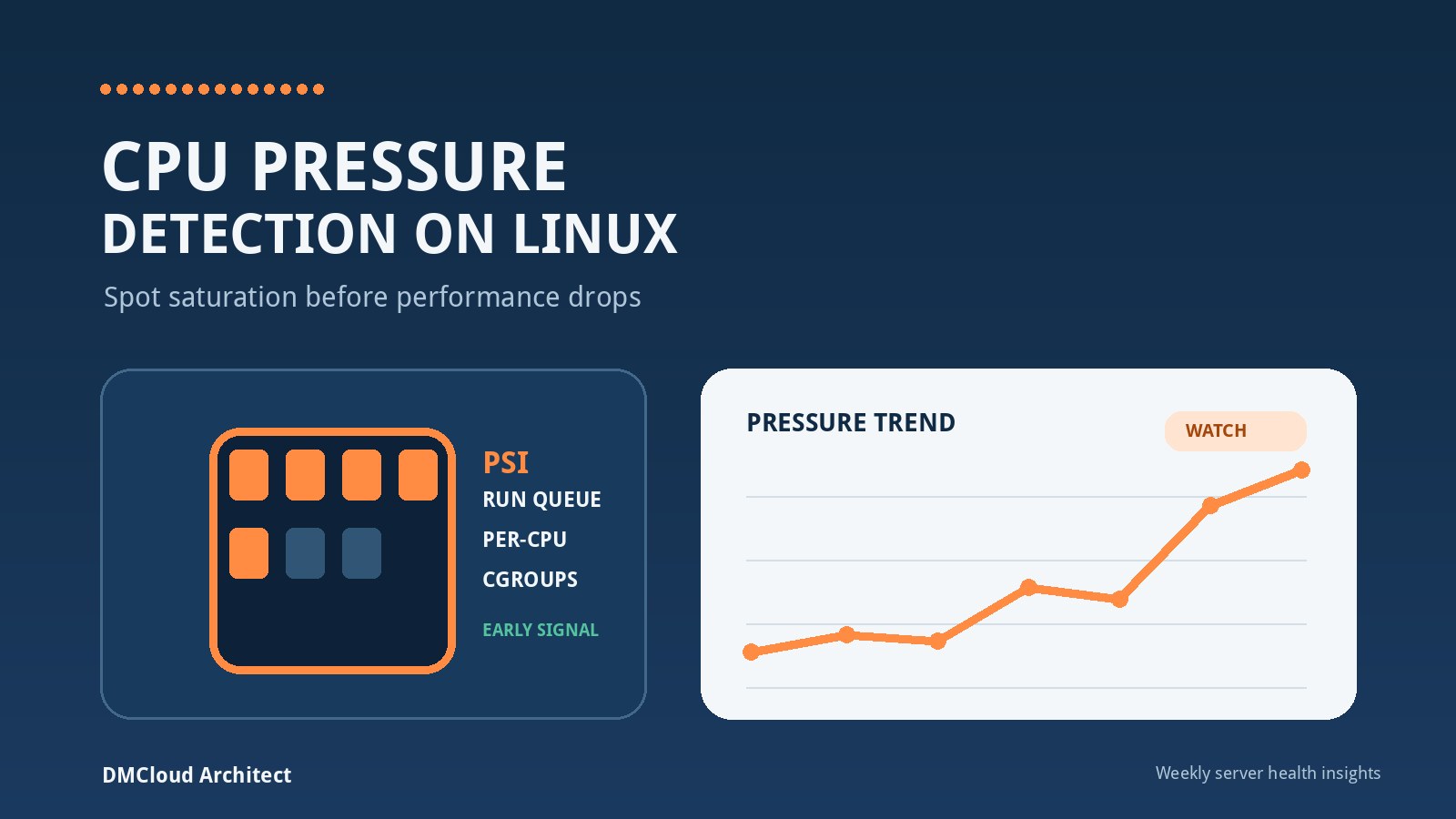
CPU pressure detection on Linux helps distinguish harmless utilization spikes from workloads that are actually waiting for processor time. This guide combines PSI, run-queue, per-CPU, process, and cgroup evidence to identify saturation early. It also shows how small teams can turn recurring samples into practical warning levels and weekly actions.

Read More
Practical Linux Monitoring for Small Teams: A Minimal Weekly System

Practical Linux Monitoring for Small Teams: A Minimal Weekly System

Oct 20, 2026    Mariusz Antonik    Automation    9 min read

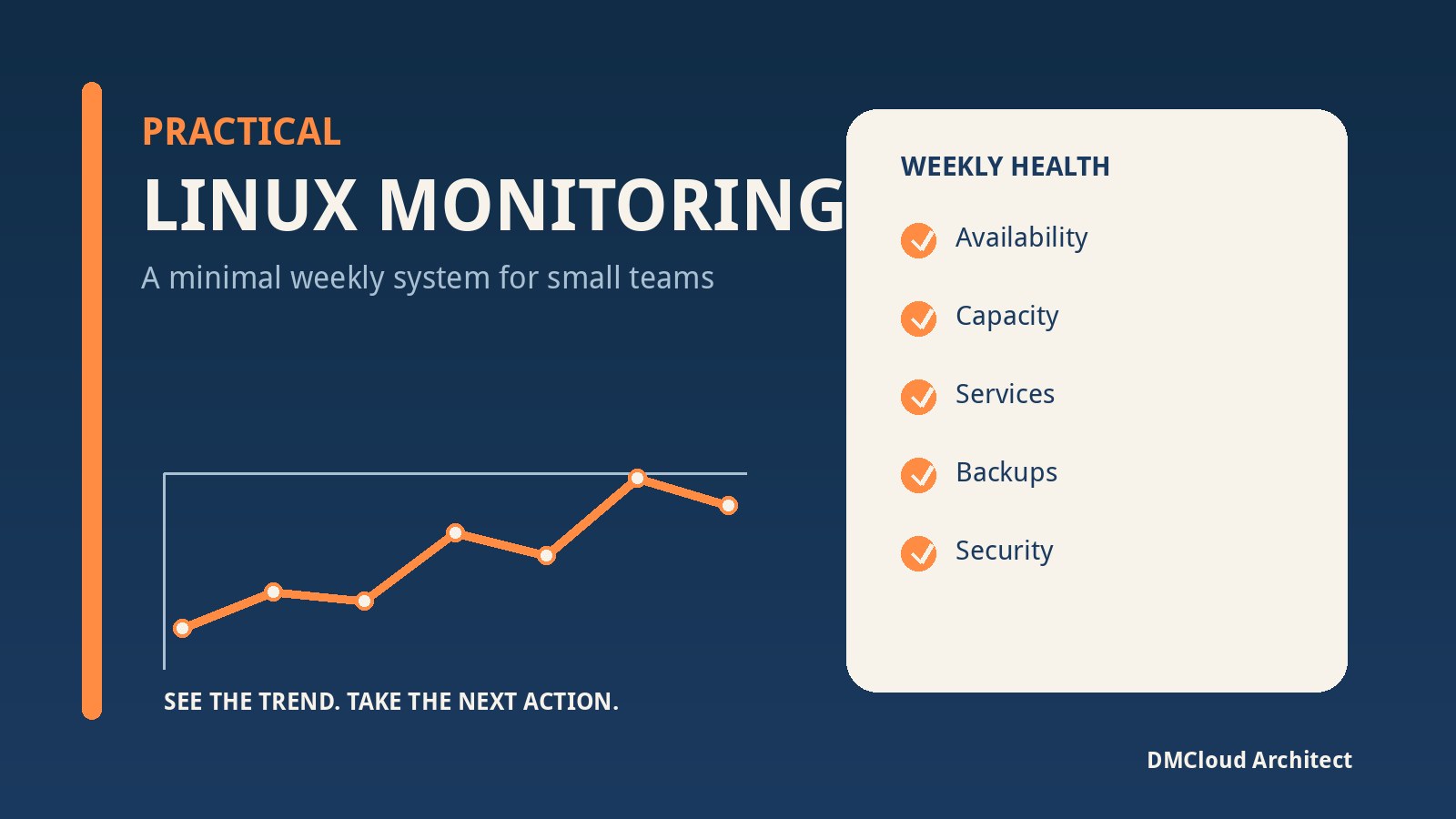
Practical Linux monitoring gives small teams enough evidence to spot risk without maintaining a complex observability stack. This guide builds a minimal weekly system around availability, capacity, services, logs, security, and recovery checks. It also shows how to turn command output into trends and clear actions instead of dashboard noise.

Read More
Linux Bandwidth Monitoring: A Process-Level Traffic Checklist

Linux Bandwidth Monitoring: A Process-Level Traffic Checklist

Oct 19, 2026    Mariusz Antonik    Automation    8 min read

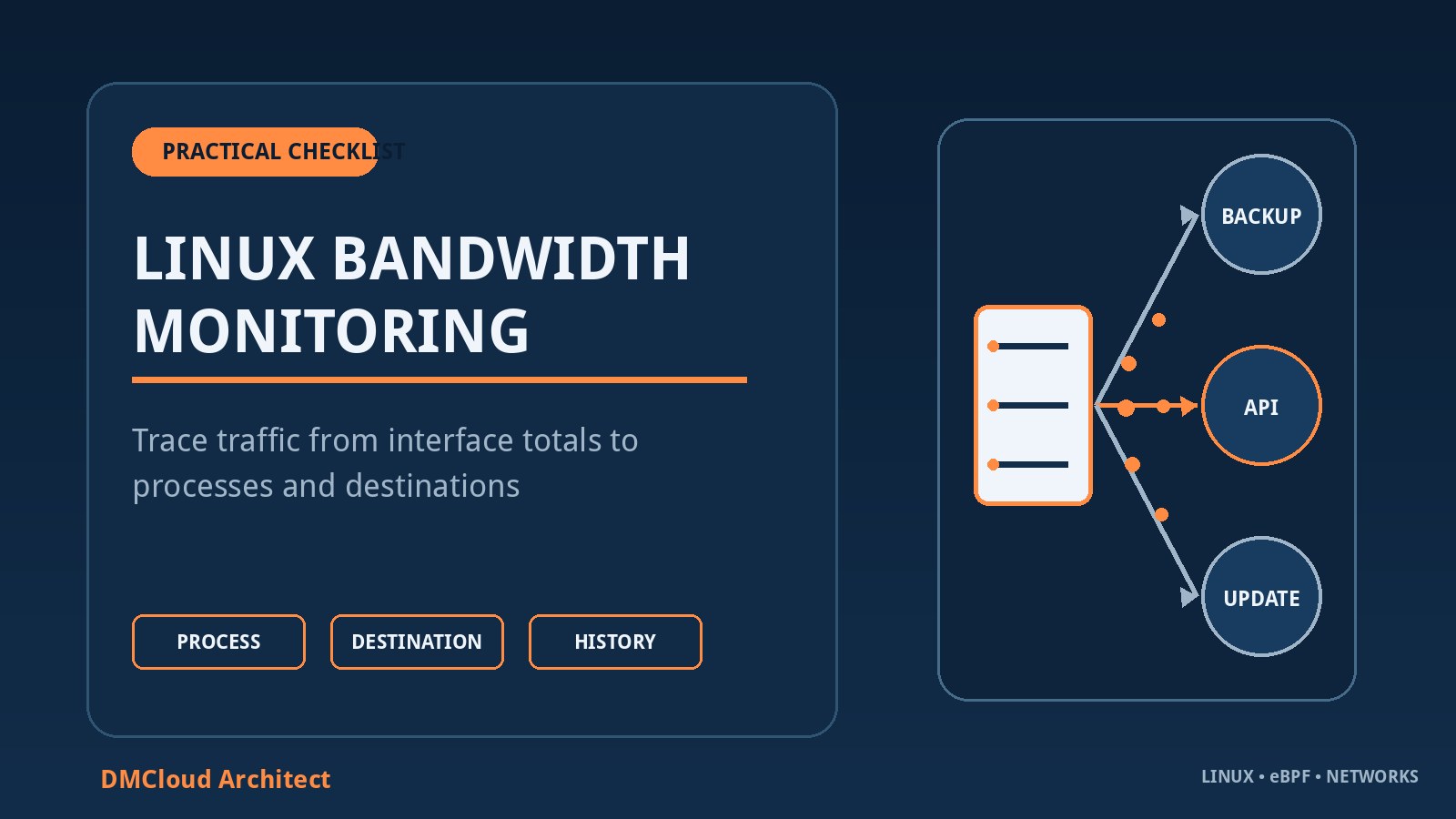
A bandwidth graph can confirm that a Linux server is busy, but it cannot tell you which process created the traffic or where the data went. This checklist shows how to move from interface totals to process, destination, protocol, and historical evidence without deploying a heavyweight monitoring stack. It also explains where eBPF fits, what to validate before installing a collector, and how to add bandwidth evidence to practical Linux server monitoring.

Read More
Linux Server Health Checks: A Practical Weekly Checklist

Linux Server Health Checks: A Practical Weekly Checklist

Oct 18, 2026    Mariusz Antonik    Automation    8 min read

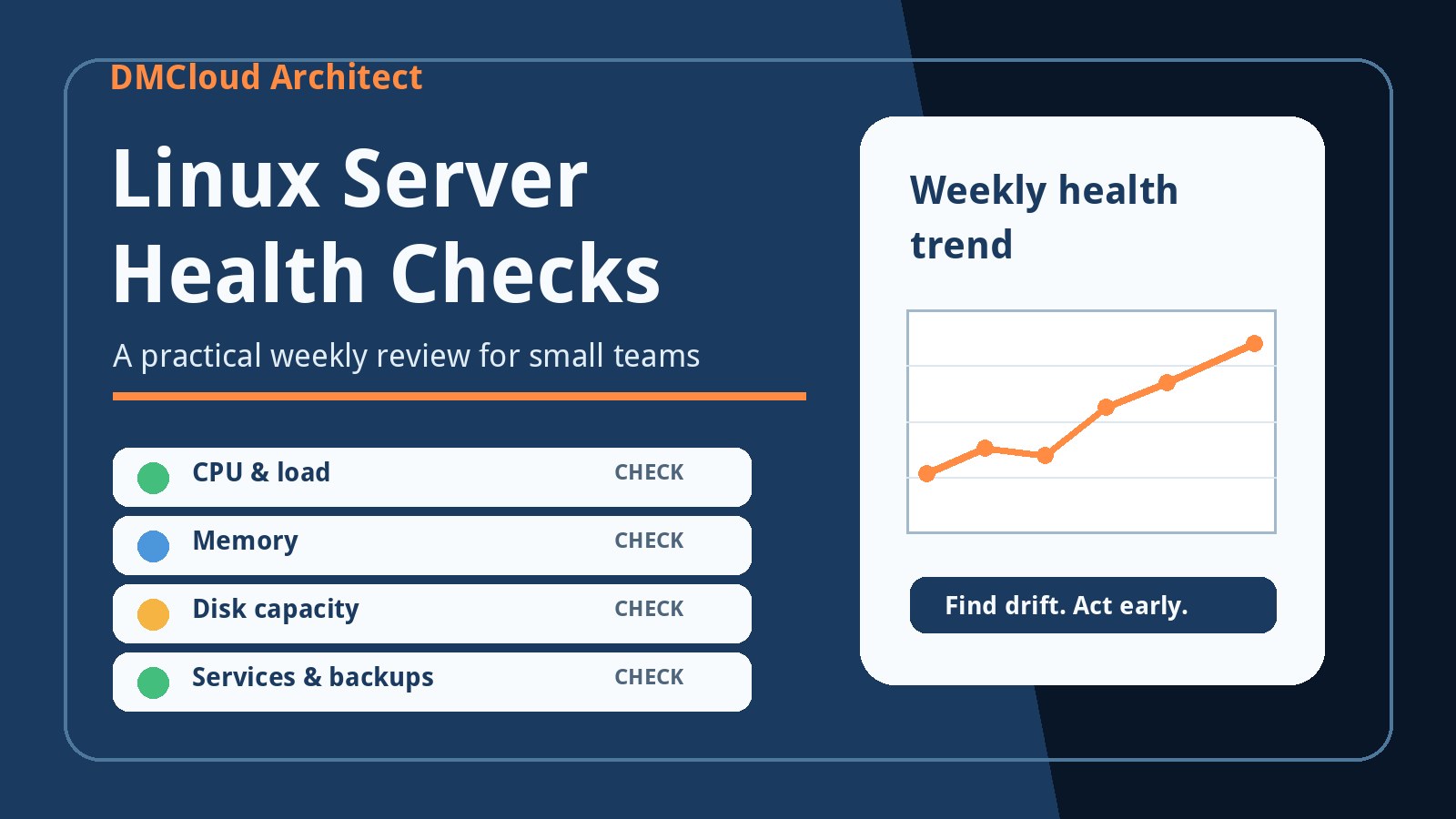
Linux server health checks help small teams find capacity, service, storage, and backup risks before users report a problem. This practical weekly checklist explains what to review, which commands provide useful evidence, and how to compare results over time. It keeps Linux monitoring focused on clear decisions instead of another noisy dashboard.

Read More