Blog - Automation

Disk Monitoring Without Tools: A Practical Linux Checklist for Small Teams

Disk Monitoring Without Tools: A Practical Linux Checklist for Small Teams

Oct 04, 2026    Mariusz Antonik    Automation    6 min read

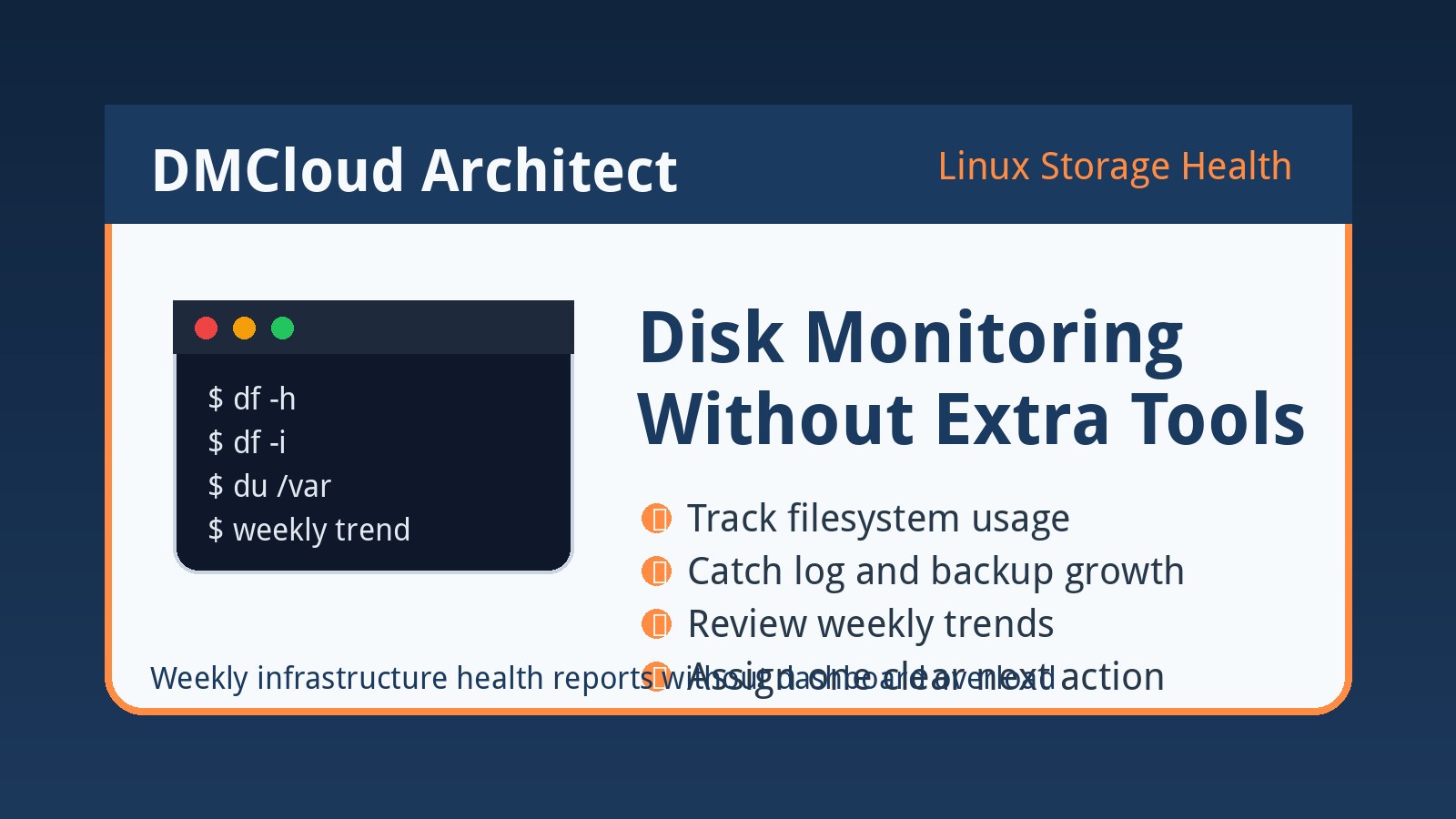
Disk monitoring without tools is possible when you record the right Linux signals every week. This guide shows a practical checklist for filesystem usage, growth rate, logs, databases, backups, and simple cron-based checks. Use it to catch disk risk early without adding another dashboard to a small team’s workload.

Read More
Storage Growth Tracking Linux: How to Spot Disk Risk Before It Becomes an Outage

Storage Growth Tracking Linux: How to Spot Disk Risk Before It Becomes an Outage

Oct 02, 2026    Mariusz Antonik    Automation    7 min read

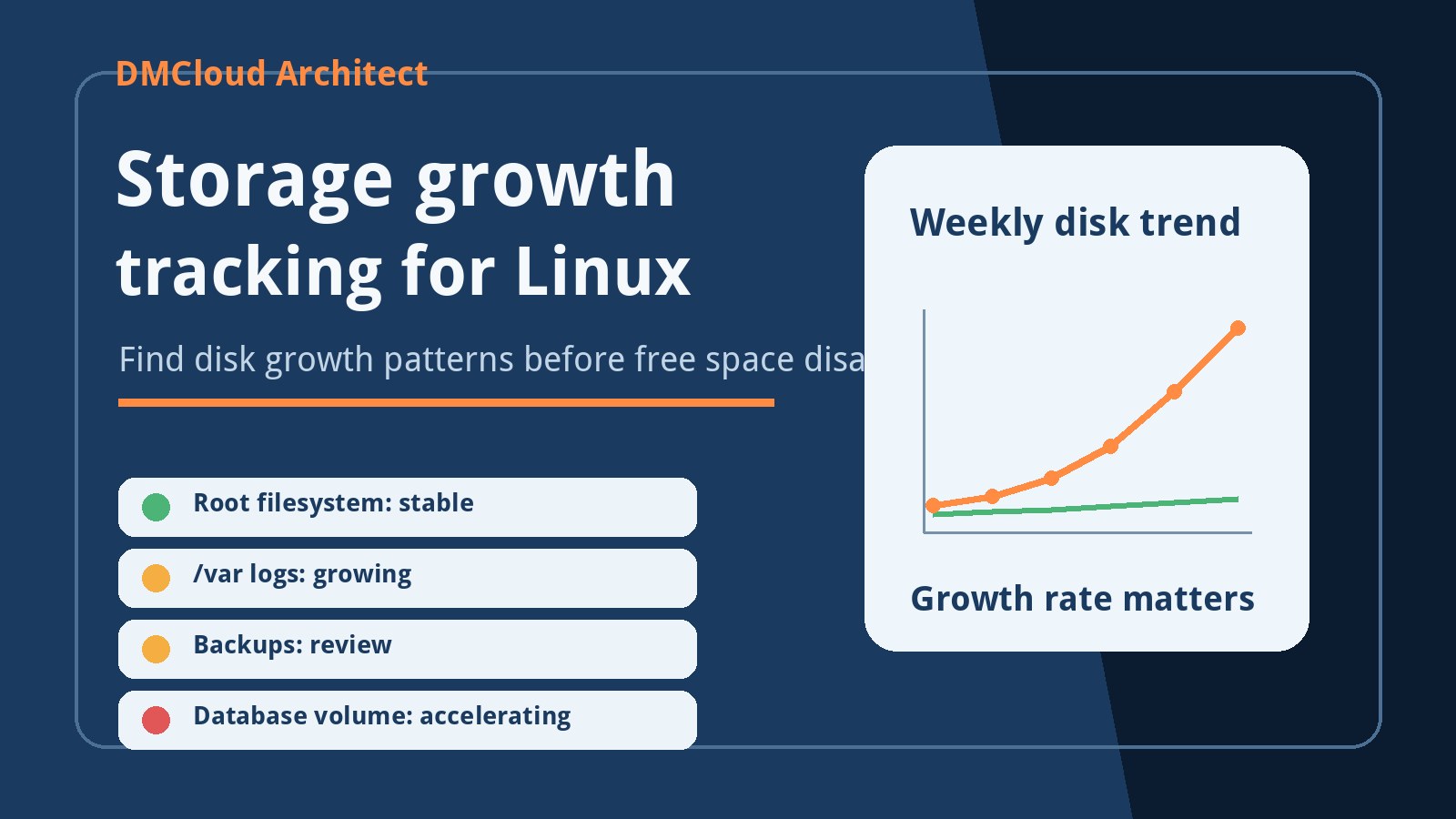
Storage growth tracking on Linux helps small teams see disk risk before a server runs out of space. This guide explains how to measure disk usage trends, growth rate, log expansion, database files, backups, and alert thresholds over time. Use it to turn weekly server checks into clear storage decisions instead of last-minute cleanup during an outage.

Read More
Invoice Line Items for Freelance Sysadmins: A Practical Server Work Checklist

Invoice Line Items for Freelance Sysadmins: A Practical Server Work Checklist

Oct 01, 2026    Mariusz Antonik    Automation    6 min read

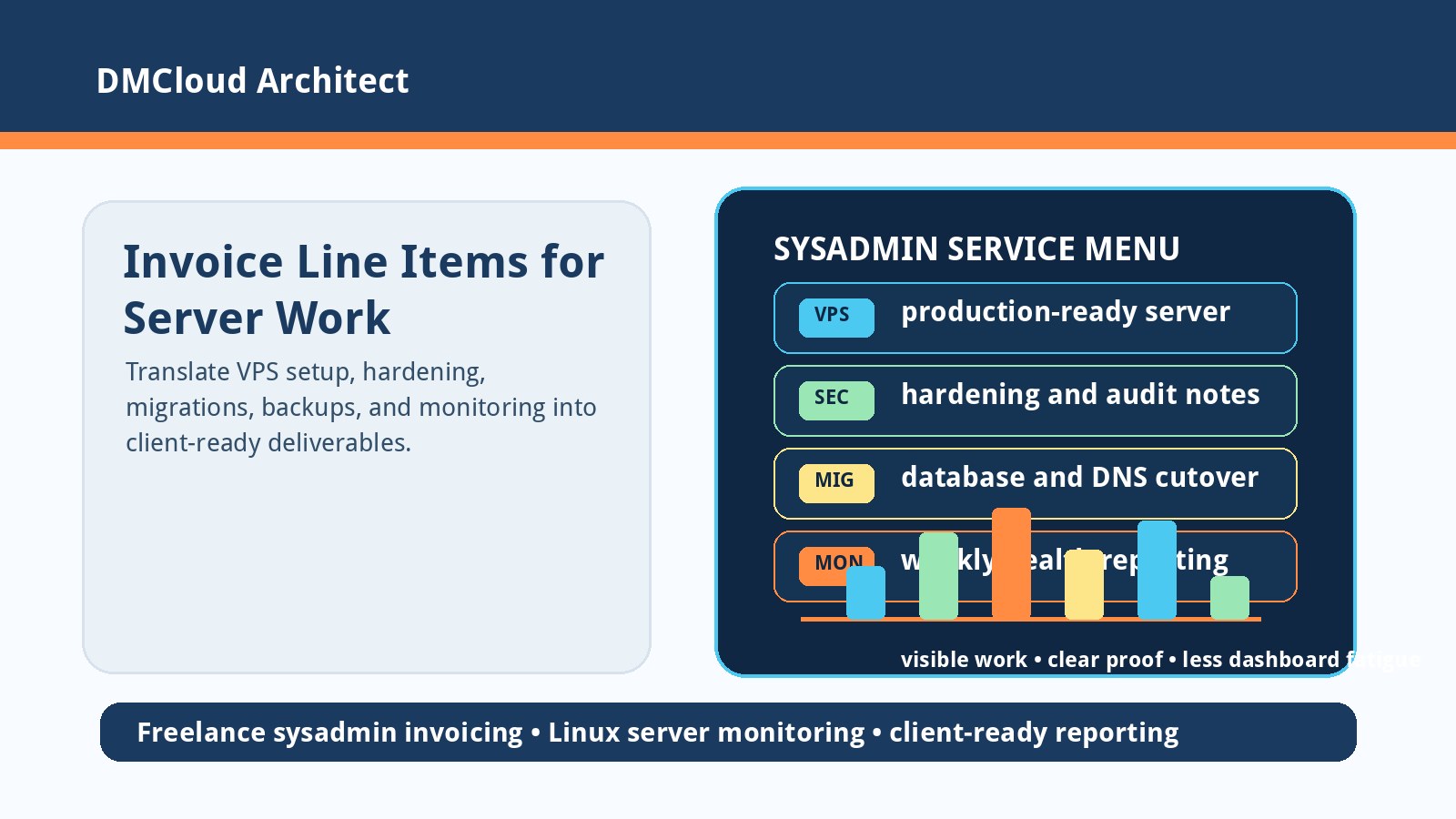
Freelance sysadmin work is easier to bill when clients can see the business result behind each technical task. This checklist turns VPS setup, security hardening, DNS, SSL, backups, database migration, and linux server monitoring into plain-language invoice line items. It helps developers and small business owners document proof, reduce awkward billing conversations, and position weekly server health reporting as ongoing care.

Read More
Disk Alert Before Full Linux: Catch Storage Problems Before Downtime

Disk Alert Before Full Linux: Catch Storage Problems Before Downtime

Sep 28, 2026    Mariusz Antonik    Automation    7 min read

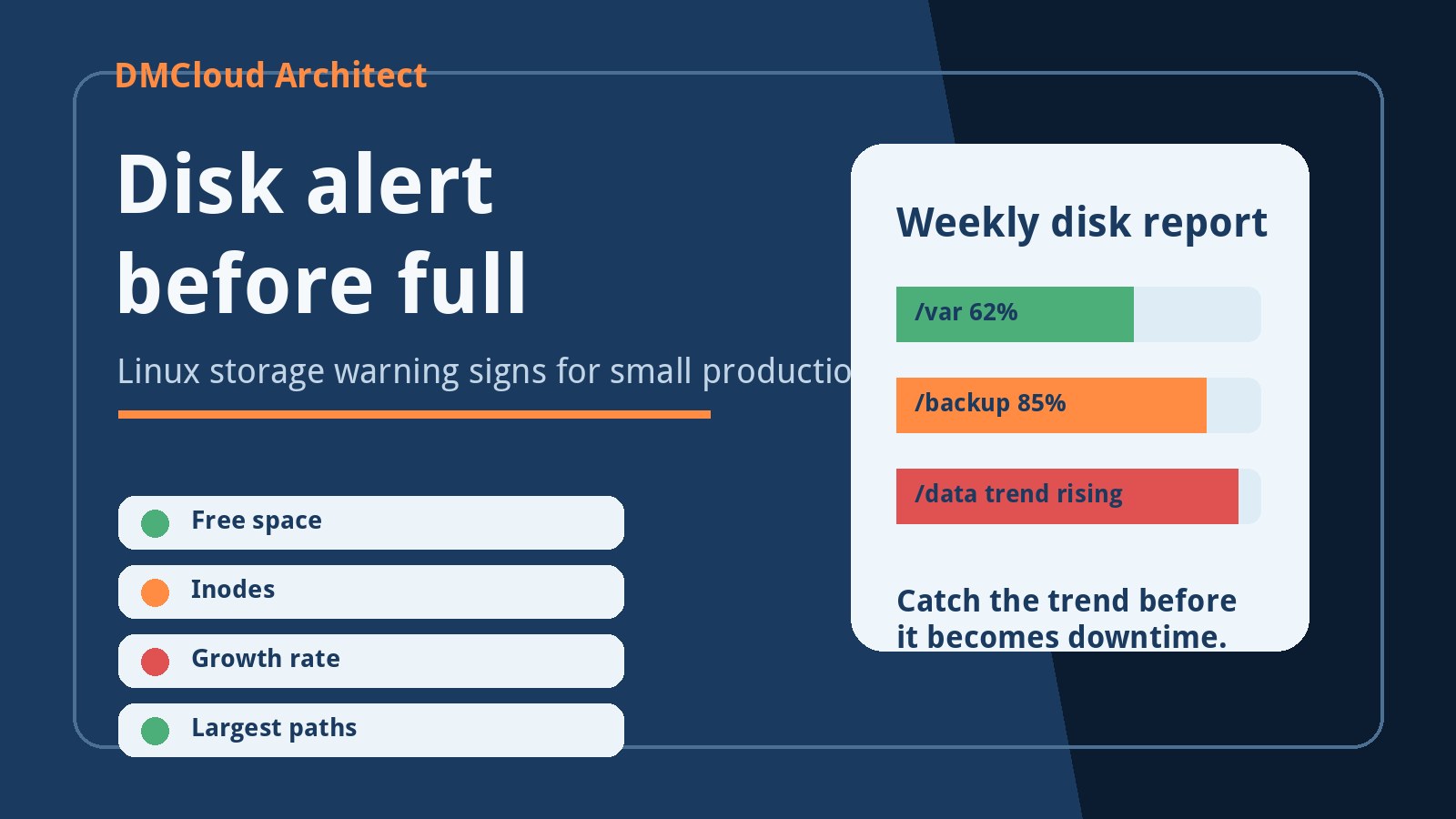
A Linux server rarely fills its disk without leaving warning signs first. This guide explains how developers and small business owners can create a practical disk alert before full Linux routine using free space, inode, growth-rate, and directory-size checks. The goal is to catch storage risk early, prevent avoidable outages, and turn disk health into a short weekly action report.

Read More
Linux Samba Server and Client Checklist for Small Business File Shares

Linux Samba Server and Client Checklist for Small Business File Shares

Sep 14, 2026    Mariusz Antonik    Automation    7 min read

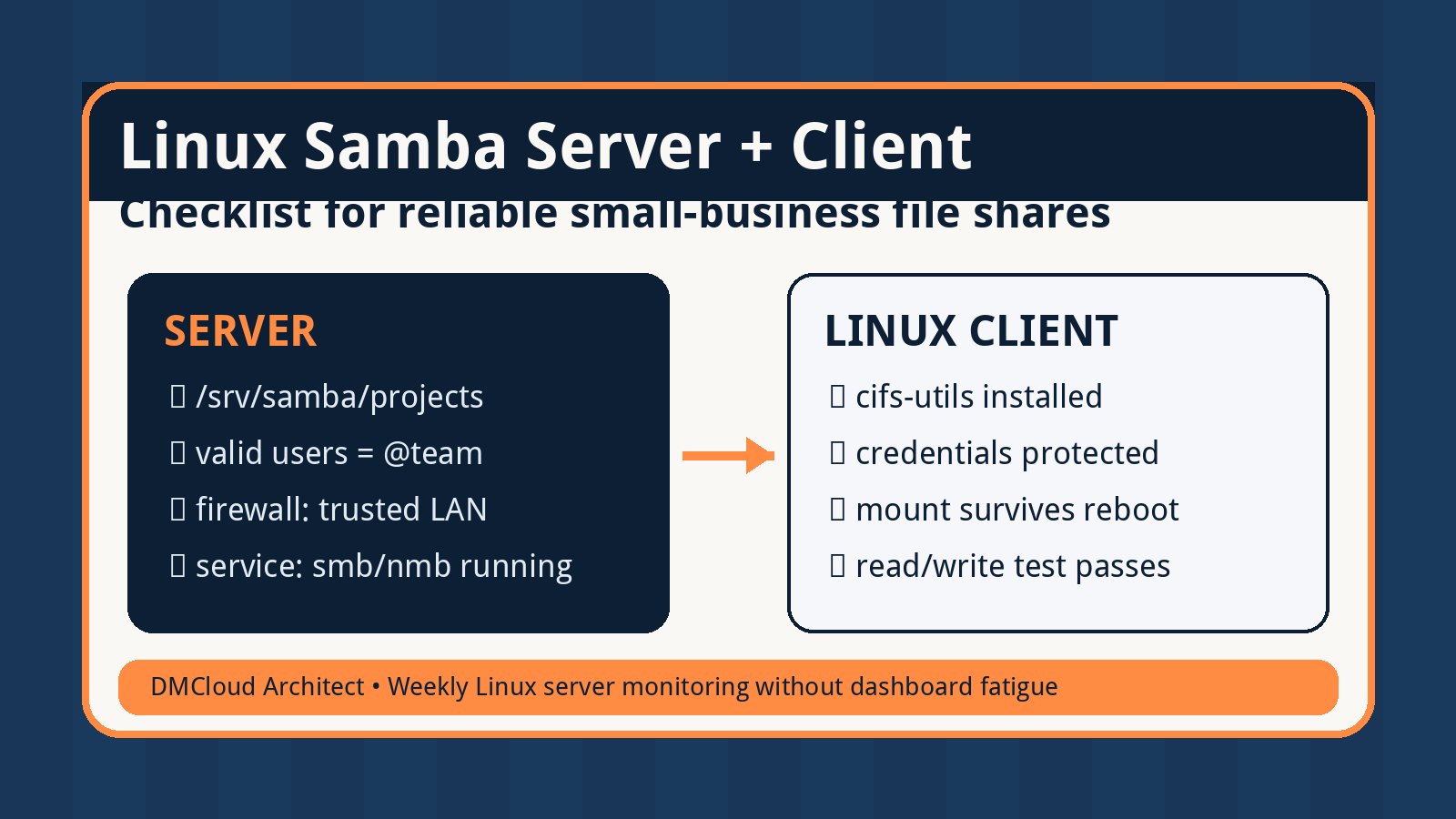
A Samba file share can look simple until Linux clients, user permissions, firewalls, and name resolution all meet in production. This checklist walks through the safe setup path: define the share, configure server permissions, connect Linux clients, test access, and watch the health signals that catch problems early. It is written for developers and small business owners who need practical Linux file sharing without turning the server into another dashboard to babysit.

Read More
Monitoring Without Cloud Tools: A Practical Weekly Checklist for Small Servers

Monitoring Without Cloud Tools: A Practical Weekly Checklist for Small Servers

Sep 05, 2026    Mariusz Antonik    Automation    7 min read

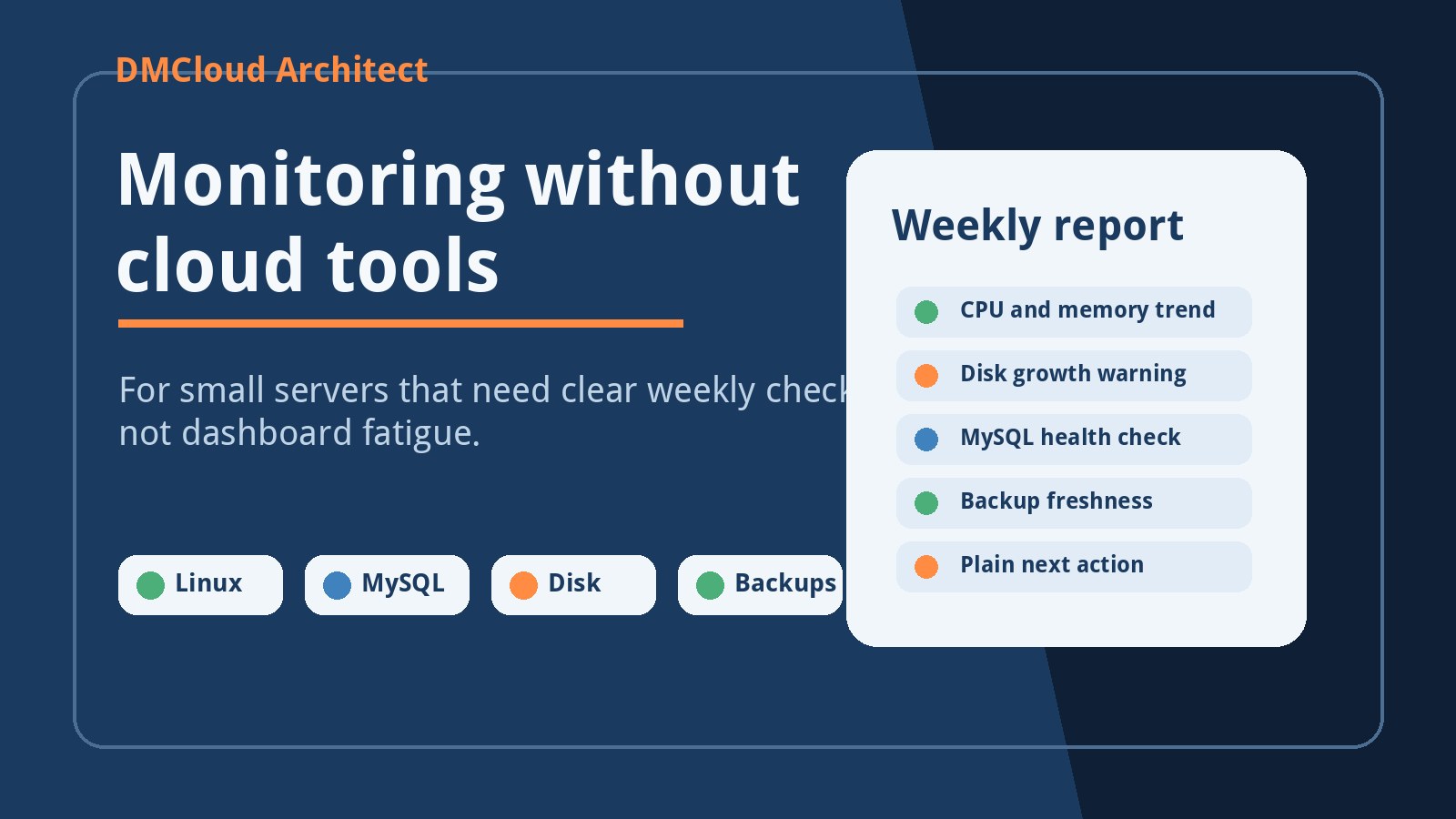
Small servers do not always need a large cloud monitoring platform, but they do need a reliable way to spot drift before customers notice problems. This guide gives developers and small business owners a weekly checklist for Linux, MySQL, disk, backups, and basic security signals. The goal is practical monitoring without cloud tools: clear evidence, a short report, and one sensible next action each week.

Read More
How to Track CPU Growth Trends on a Linux Server Before Users Notice

How to Track CPU Growth Trends on a Linux Server Before Users Notice

Sep 01, 2026    Mariusz Antonik    Automation    6 min read

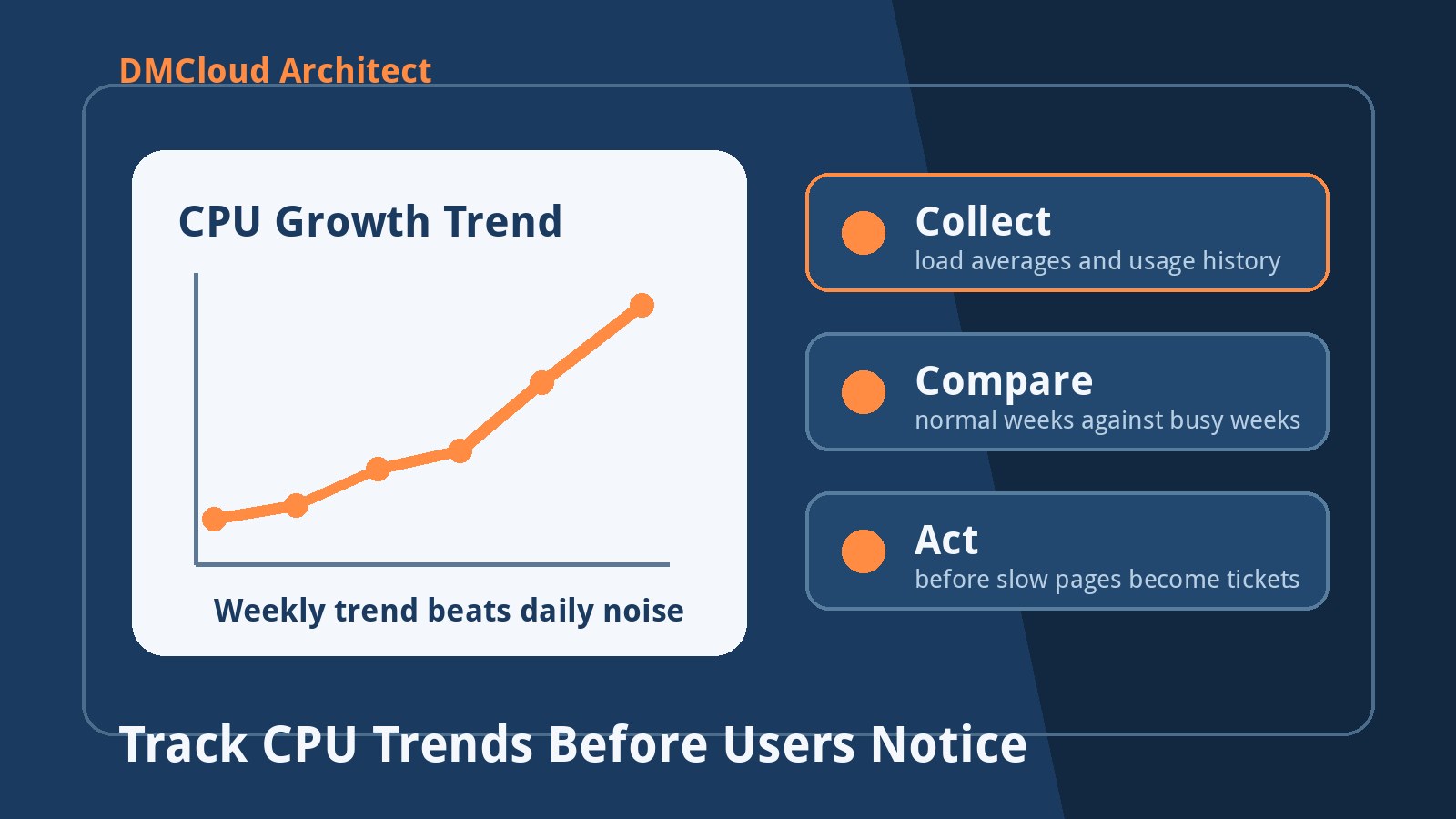
A CPU spike is easy to dismiss, but a steady upward trend is often the first sign that a Linux server is outgrowing its current workload. This guide explains how to track CPU usage over time, separate noise from real capacity risk, and turn weekly trend data into practical maintenance decisions. It is written for developers and small business owners who need early warning without adding another dashboard to watch all day.

Read More
Network Monitoring Dense View Checklist for Small Business Servers

Network Monitoring Dense View Checklist for Small Business Servers

Aug 31, 2026    Mariusz Antonik    Automation    5 min read

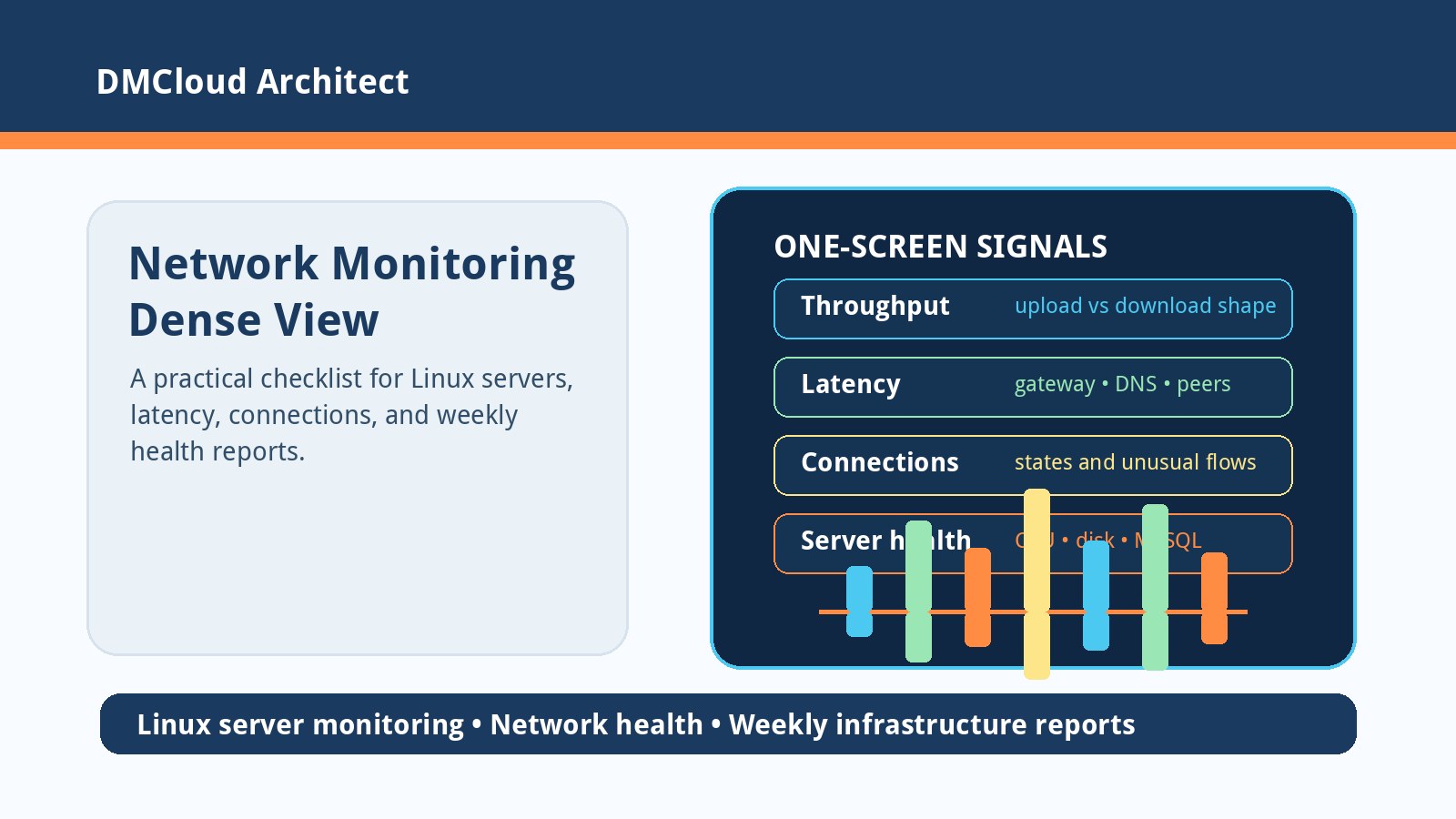
A dense network monitor can show throughput, latency, and connection state in one place, but small teams need those signals translated into practical health checks. This checklist explains how to track traffic shape, split latency into useful hops, review connection changes, and compare network clues with CPU, disk, and MySQL health. It shows how weekly linux server monitoring reports can catch risk early without forcing developers or business owners to watch another dashboard all day.

Read More
Monitoring Without a DevOps Team: A Practical Guide for Small Businesses

Monitoring Without a DevOps Team: A Practical Guide for Small Businesses

Aug 30, 2026    Mariusz Antonik    Automation    6 min read

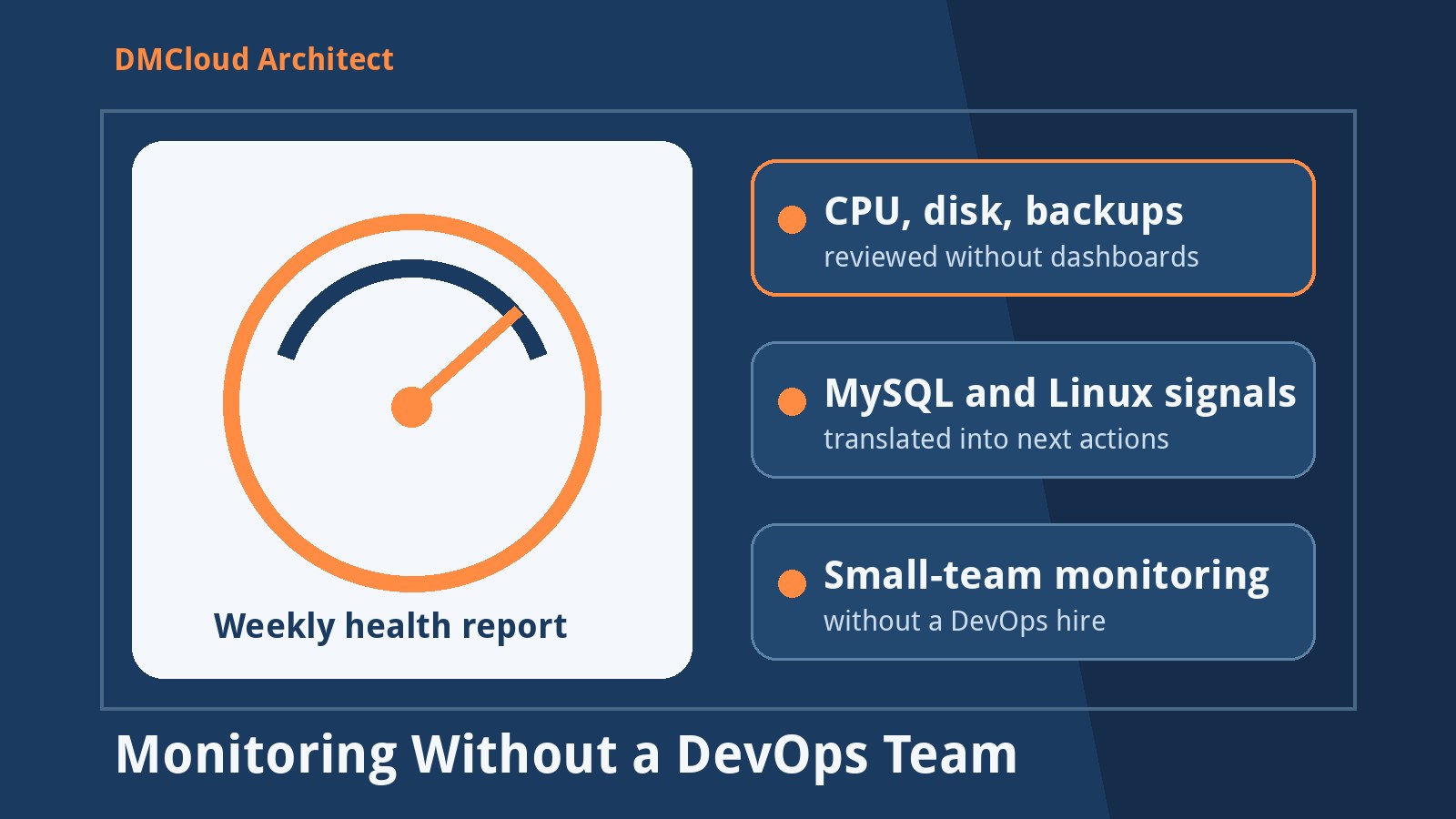
Small production servers still need monitoring even when there is no dedicated DevOps team watching dashboards. The practical path is to track a short list of Linux, MySQL, backup, and certificate signals, then review them on a steady rhythm. This guide shows how small businesses can build lightweight monitoring that creates useful maintenance actions instead of alert fatigue.

Read More
Chromebook Linux as a Server: Local Wi-Fi Connectivity Checklist

Chromebook Linux as a Server: Local Wi-Fi Connectivity Checklist

Aug 29, 2026    Mariusz Antonik    Automation    5 min read

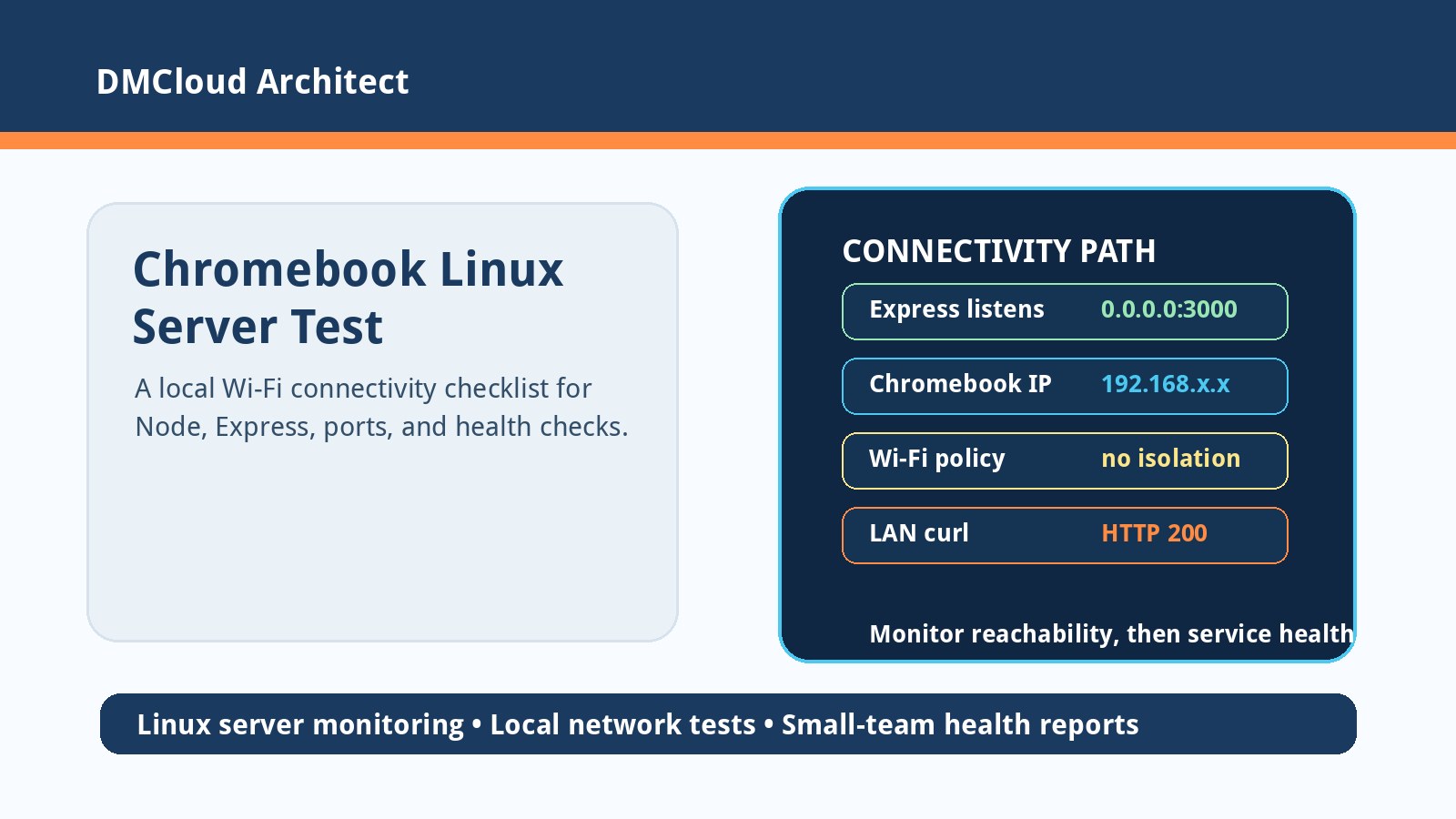
A Chromebook Linux container can run Node and Express, but local Wi-Fi access often fails because of binding, container networking, firewall, or router isolation issues. This checklist shows how to verify the listener, IP address, port reachability, and application response before assuming the server is down. It also explains how lightweight linux server monitoring turns one-off troubleshooting into a repeatable health routine for small teams.

Read More