Blog - Tag: linux server monitoring

Linux Performance Tuning Checklist for Small Teams

Linux Performance Tuning Checklist for Small Teams

Jul 18, 2026    Mariusz Antonik    Automation    6 min read

Linux performance tuning works best when it starts with the workload, not with random kernel changes copied from a forum. RHEL tuned profiles can help, but small teams still need a safe checklist for choosing a profile, validating the impact, and avoiding changes that hide a capacity problem. This guide shows how to use tuned-adm alongside practical linux server monitoring so performance improvements are measurable and reversible.

Read More
Argo CD Repo-Server Exposure Checklist for Small Teams

Argo CD Repo-Server Exposure Checklist for Small Teams

Jul 16, 2026    Mariusz Antonik    Security    7 min read

A repo-server vulnerability in a GitOps platform is not just another patch notice; it is a reminder to verify which internal services can talk to each other. Small teams running Kubernetes need a short checklist for exposure, NetworkPolicies, Redis access, patch status, and follow-up monitoring. This guide turns that concern into practical checks you can run without building a full security operations program.

Read More
Source-Built Linux Server Monitoring Checklist for Small Teams

Source-Built Linux Server Monitoring Checklist for Small Teams

Jul 14, 2026    Mariusz Antonik    Automation    7 min read

Source-built Linux systems can be a great fit for teams that want a minimal, auditable server stack, but they also move more operational responsibility onto the maintainer. Without upstream binary mirrors or vendor dashboards, small teams need a simple rhythm for checking builds, packages, logs, disk growth, backups, and security posture. This checklist shows where linux server monitoring matters most when you run a custom or source-built distribution in production.

Read More
CentOS FTP to Amazon Linux 2023 Migration Checklist

CentOS FTP to Amazon Linux 2023 Migration Checklist

Jul 12, 2026    Mariusz Antonik    Automation    8 min read

Migrating an FTP server from CentOS to Amazon Linux 2023 is more than copying files to a new instance. You need to choose the right daemon, recreate users and permissions carefully, account for SELinux and firewalld differences, and validate transfers before changing DNS or firewall routes. This checklist gives small teams a practical migration path and highlights the linux server monitoring checks that reduce surprises after cutover.

Read More
Persistent Linux Remote Desktop Sessions: A Small Business Checklist

Persistent Linux Remote Desktop Sessions: A Small Business Checklist

Jul 10, 2026    Mariusz Antonik    Security    7 min read

Moving from Windows RDP to Linux desktop support is not just a tooling choice. Small teams need persistent GUI sessions, a locked local display, secure access controls, and enough monitoring to know the workstation or jump host remains healthy. This checklist explains the practical options and the operational checks to put in place before relying on remote Linux desktop sessions for daily work.

Read More
Linux Server Monitoring Checklist Before You Hire Backend or DevOps Help

Linux Server Monitoring Checklist Before You Hire Backend or DevOps Help

Jul 08, 2026    Mariusz Antonik    Automation    6 min read

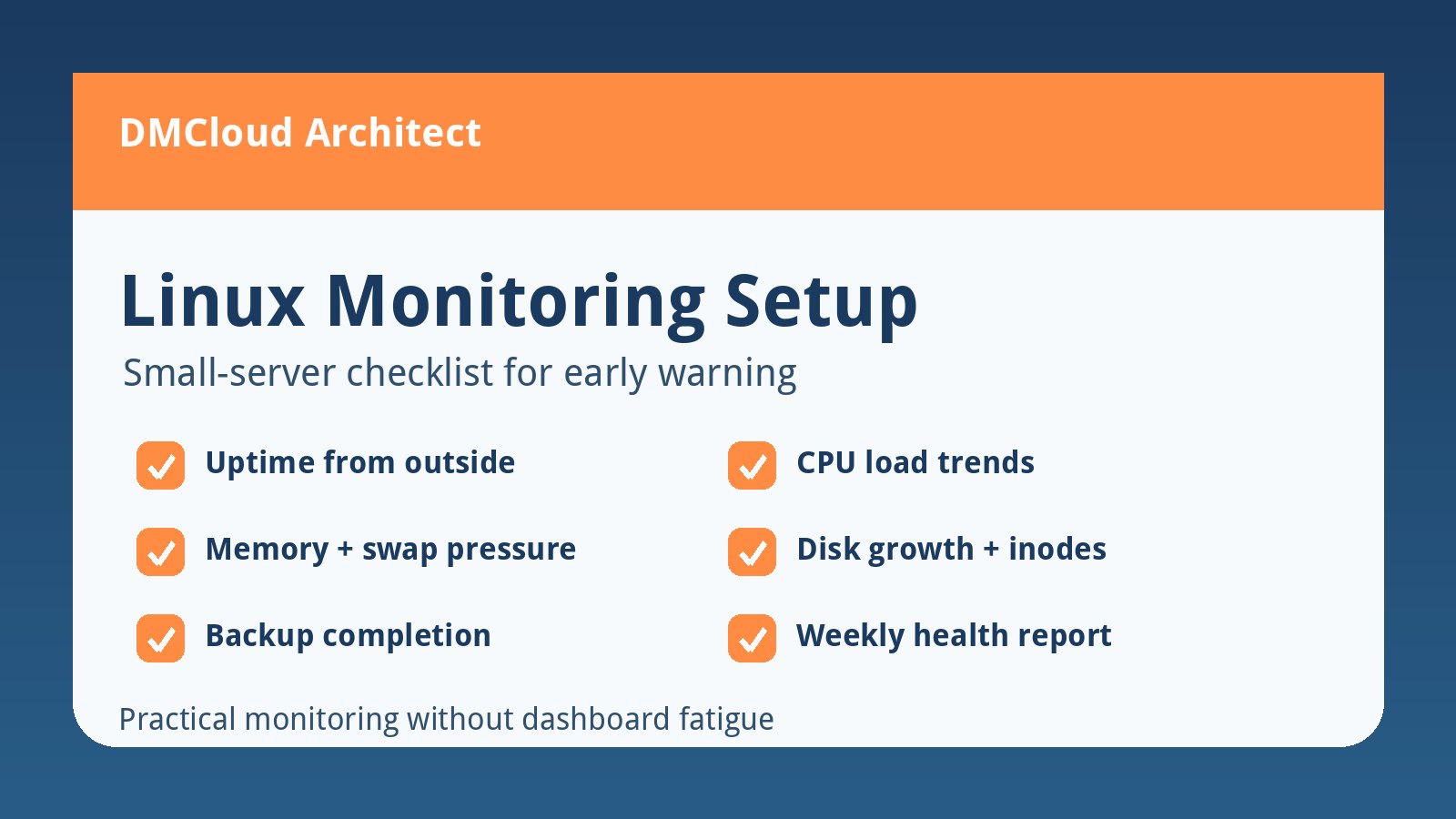
When a small team needs backend, DevOps, or AI infrastructure help, the fastest win is often better visibility into the Linux servers already running production. This checklist helps you separate urgent engineering work from routine monitoring gaps, so you can hire specialists for the right reasons. Use it to review CPU, memory, disk, logs, security, and backup signals before committing to a monthly engagement or a new dashboard project.

Read More
Linux Fleet Ops Interview Prep: Real Scenarios Every Admin Should Know

Linux Fleet Ops Interview Prep: Real Scenarios Every Admin Should Know

Jul 06, 2026    Mariusz Antonik    Automation    7 min read

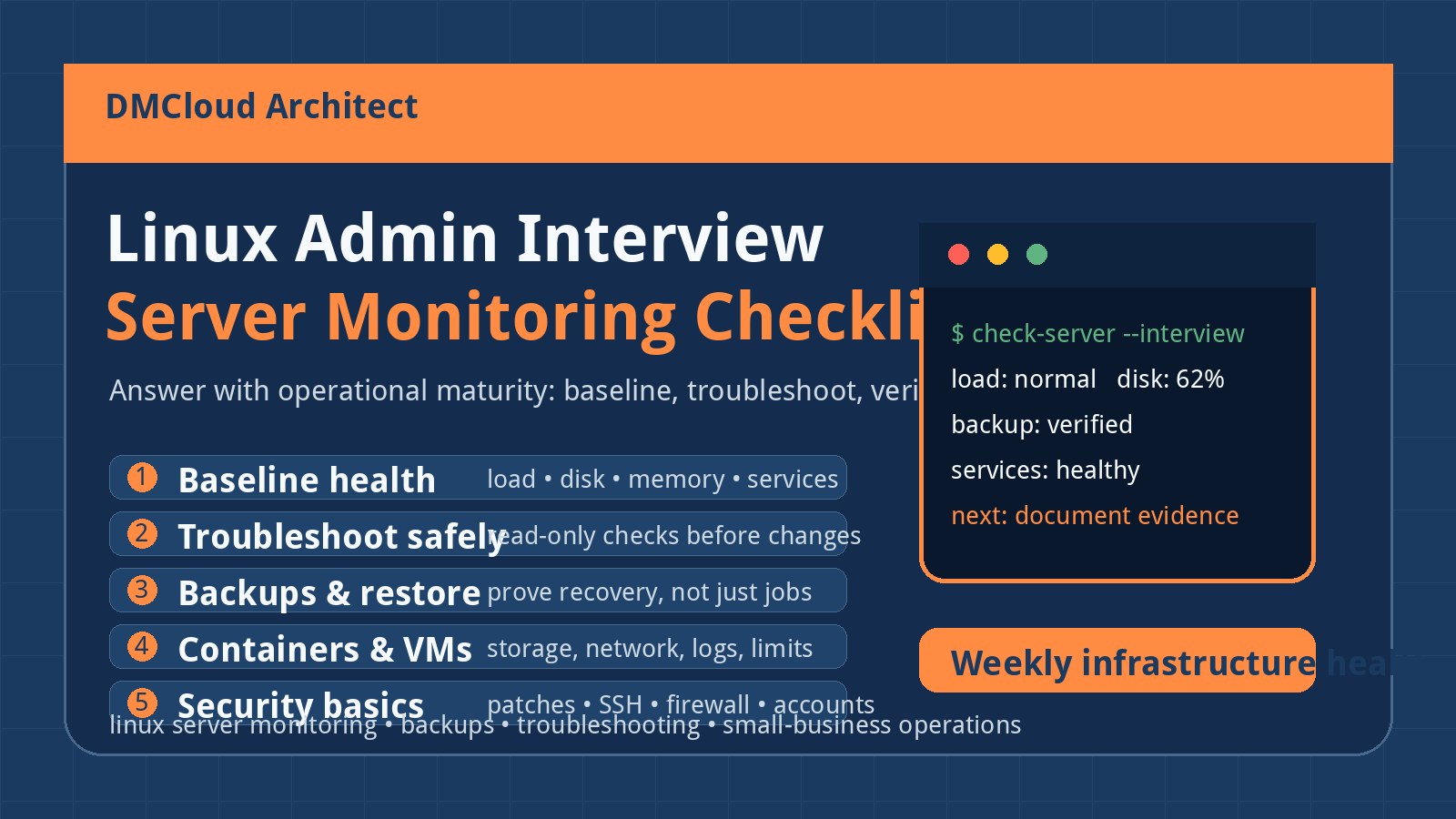
Preparing for an early-career Linux or fleet operations interview is easier when you focus on practical scenarios instead of memorizing commands. This checklist covers the Linux, networking, storage, scripting, and monitoring situations that show real operational judgment. Use it to practice explaining what you would check first, what evidence matters, and when dashboards or weekly reports can support faster troubleshooting.

Read More
Long-Term Linux Log Retention Checklist for Busy Production Servers

Long-Term Linux Log Retention Checklist for Busy Production Servers

Jul 04, 2026    Mariusz Antonik    Automation    6 min read

Busy production Linux servers need log retention rules that protect disk space without erasing the evidence teams need later. This checklist shows how to combine journald limits, logrotate hygiene, central shipping, archival storage, audit log controls, and weekly review signals. Use it to make linux server monitoring more predictable as traffic and compliance needs grow.

Read More
Linux Log Management Checklist for Growing Server Fleets

Linux Log Management Checklist for Growing Server Fleets

Jul 02, 2026    Mariusz Antonik    Automation    8 min read

Growing Linux server fleets often outgrow host-by-host rsyslog and logrotate long before a full observability platform is ready. This checklist helps developers and small business infrastructure teams standardize collection, buffering, retention, rollout checks, and weekly drift reviews. Use it to make linux server monitoring calmer, more consistent, and easier to improve one step at a time.

Read More
Loki vs Vector vs Elasticsearch for Linux Server Monitoring: A Practical Small Fleet Guide

Loki vs Vector vs Elasticsearch for Linux Server Monitoring: A Practical Small Fleet Guide

Jun 30, 2026    Mariusz Antonik    Automation    9 min read

Growing Linux fleets often outgrow a simple rsyslog-to-Elasticsearch setup once storage, parsing, and cluster maintenance become daily work. This practical comparison explains when Loki, Vector, Elasticsearch, or a hybrid pipeline makes sense for small and mid-sized teams. Use it to choose a logging architecture that supports incident response without turning linux server monitoring into another full-time platform project.

Read More