Blog - Tag: server health

How to Predict Disk Usage Growth Before Your Server Runs Out of Space

How to Predict Disk Usage Growth Before Your Server Runs Out of Space

Jul 01, 2026    Mariusz Antonik    Automation    7 min read

Disk alerts often arrive after the risky trend is already obvious in hindsight. This guide shows how to forecast storage growth with simple Linux checks, practical thresholds, and weekly review habits. You will learn how to spot fast-changing filesystems, estimate days remaining, and plan cleanup or expansion before outages happen. It is written for developers and small business owners who need reliable servers without living inside dashboards.

Read More
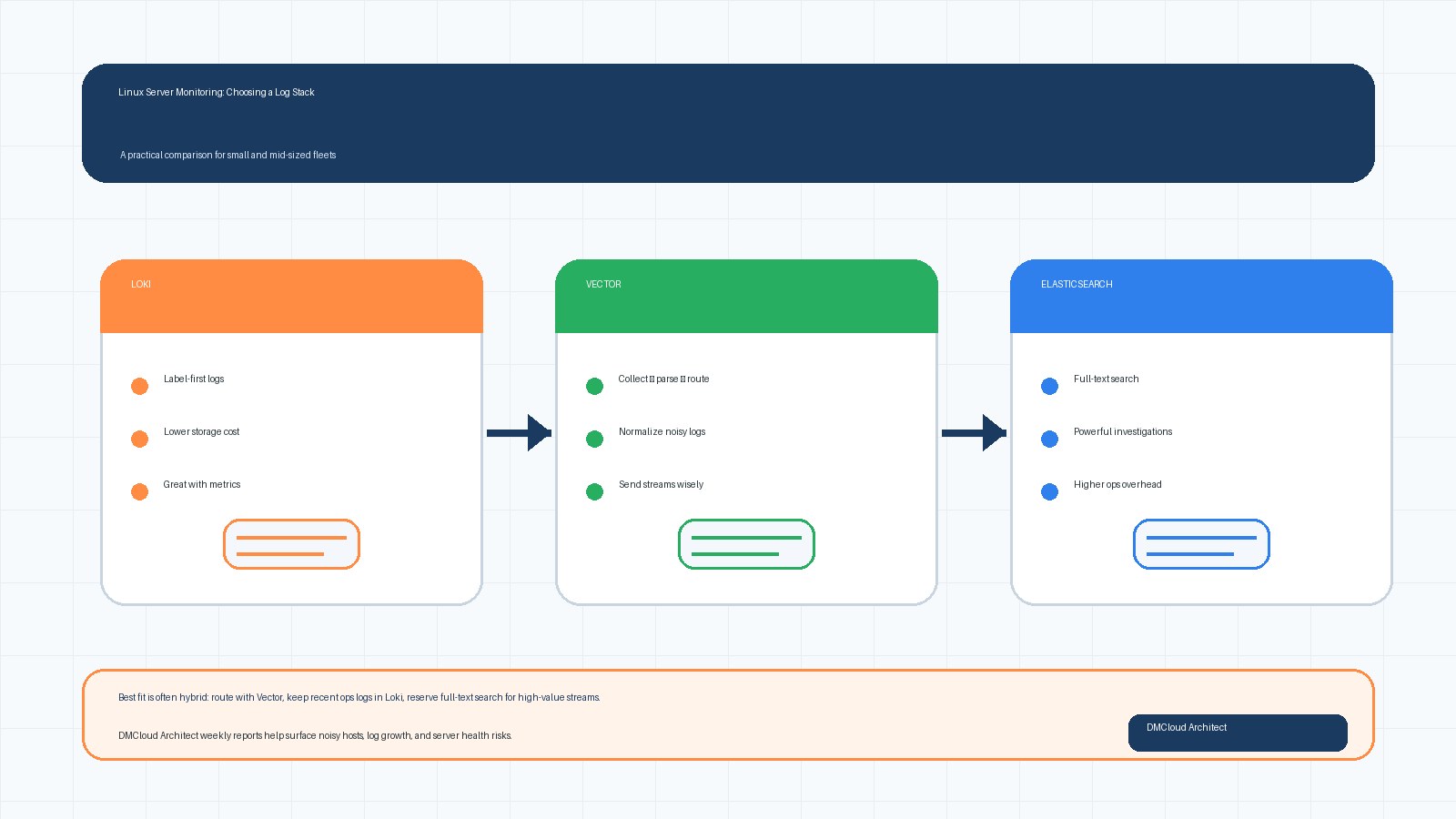
Loki vs Vector vs Elasticsearch for Linux Server Monitoring: A Practical Small Fleet Guide

Loki vs Vector vs Elasticsearch for Linux Server Monitoring: A Practical Small Fleet Guide

Jun 30, 2026    Mariusz Antonik    Automation    9 min read

Growing Linux fleets often outgrow a simple rsyslog-to-Elasticsearch setup once storage, parsing, and cluster maintenance become daily work. This practical comparison explains when Loki, Vector, Elasticsearch, or a hybrid pipeline makes sense for small and mid-sized teams. Use it to choose a logging architecture that supports incident response without turning linux server monitoring into another full-time platform project.

Read More
How to Monitor Linux CPU Usage with Cron

How to Monitor Linux CPU Usage with Cron

Jun 29, 2026    Mariusz Antonik    Automation    6 min read

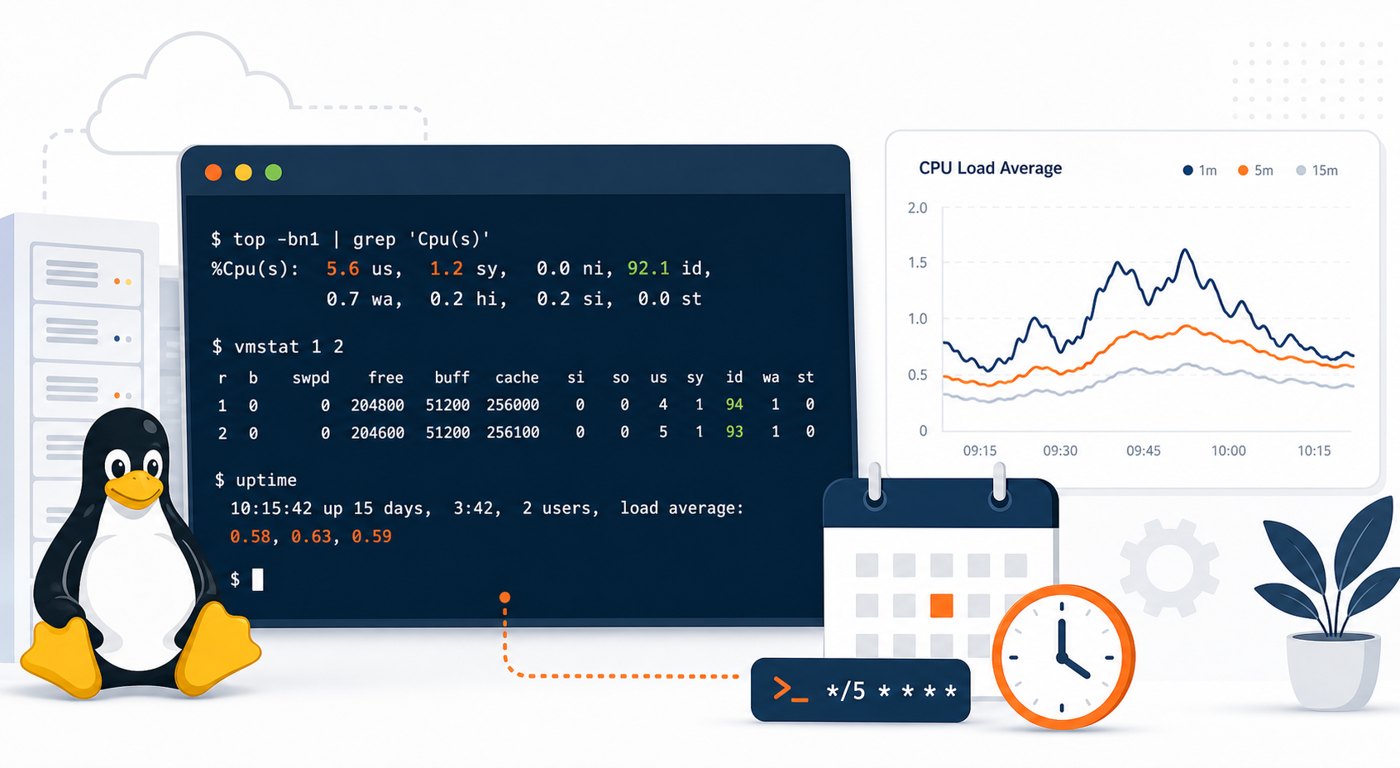
Cron-based CPU monitoring is a simple way to catch resource pressure before users notice slow pages, stalled jobs, or surprise outages. A lightweight script can collect load average, CPU idle time, and top process snapshots on a schedule without adding a full dashboard. This guide shows what to measure, how often to run checks, and how to turn the results into practical weekly health signals. It is designed for developers and small business owners who need useful visibility without another tool to babysit.

Read More
CPU Saturation Warning on Linux: Detect Trouble Before Slowdowns

CPU Saturation Warning on Linux: Detect Trouble Before Slowdowns

May 23, 2026    Mariusz Antonik    Server Health    3 min read

CPU saturation on Linux often becomes visible only after applications slow down. This article explains how to detect early warning signs using practical Linux commands, realistic thresholds, and operational troubleshooting patterns. It helps administrators distinguish harmless spikes from sustained contention. You'll also see how to identify likely causes before outages develop.

Read More
System Health Reporting: Why Trend Visibility Matters

System Health Reporting: Why Trend Visibility Matters

May 09, 2026    Mariusz Antonik    Server Health    7 min read

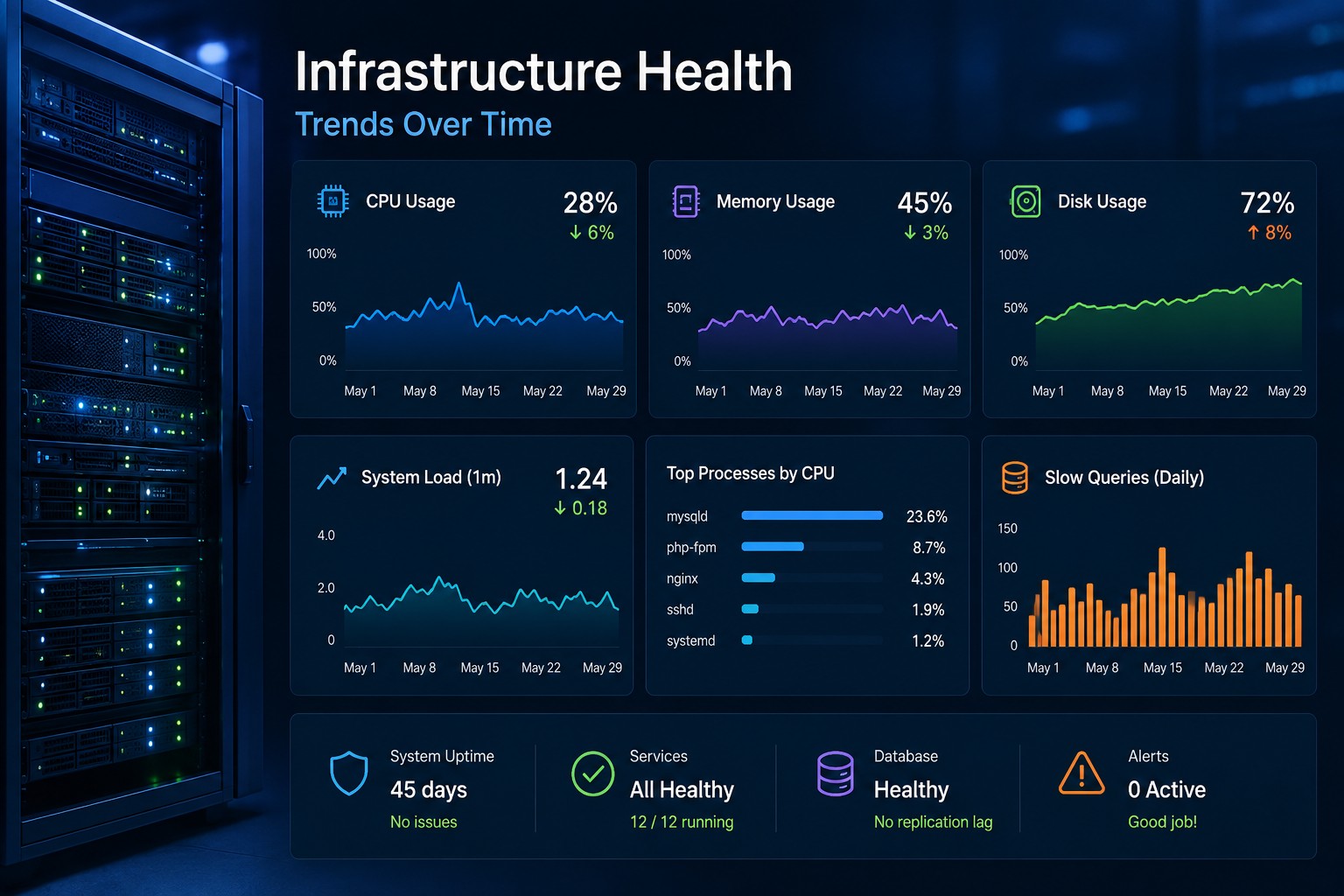
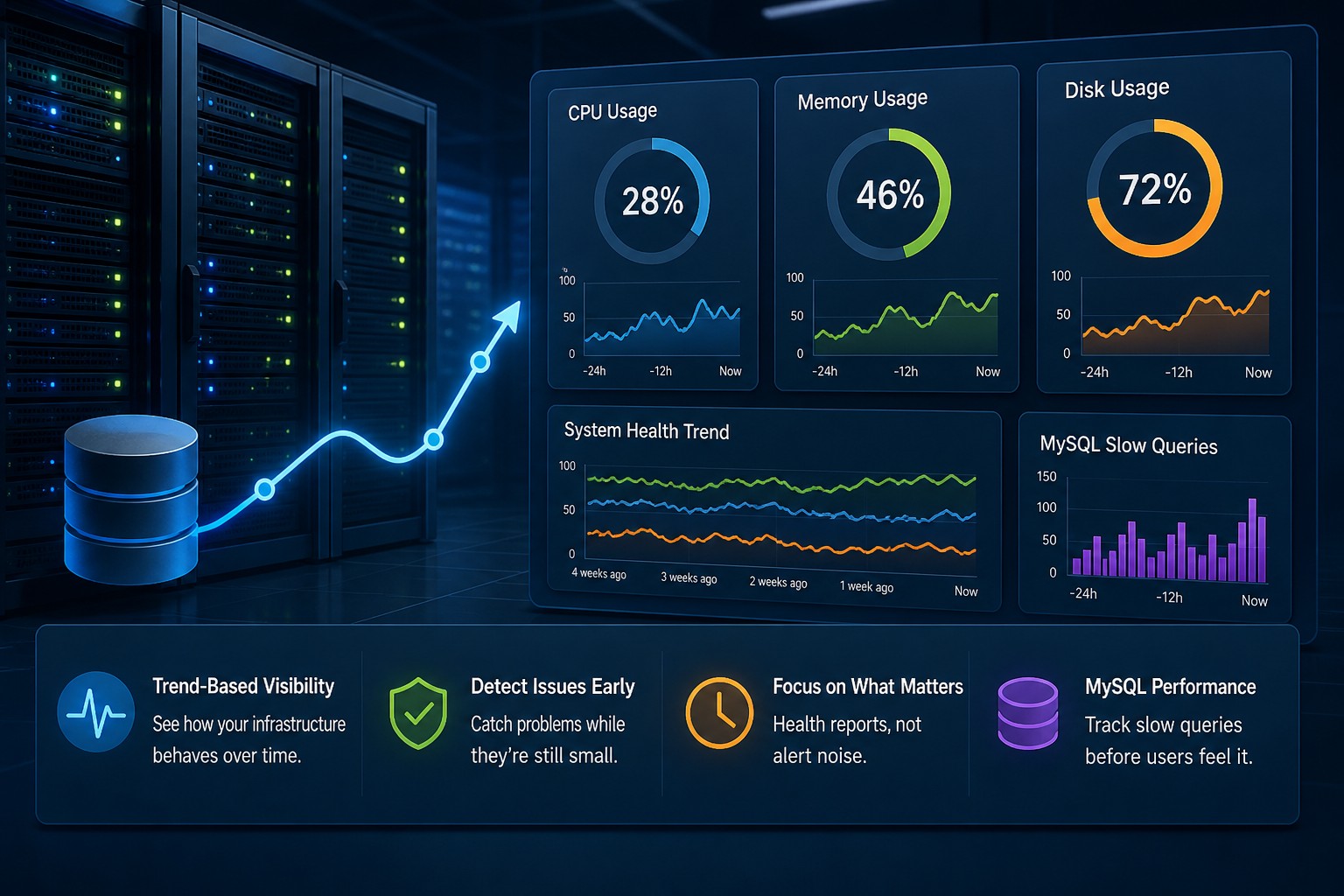
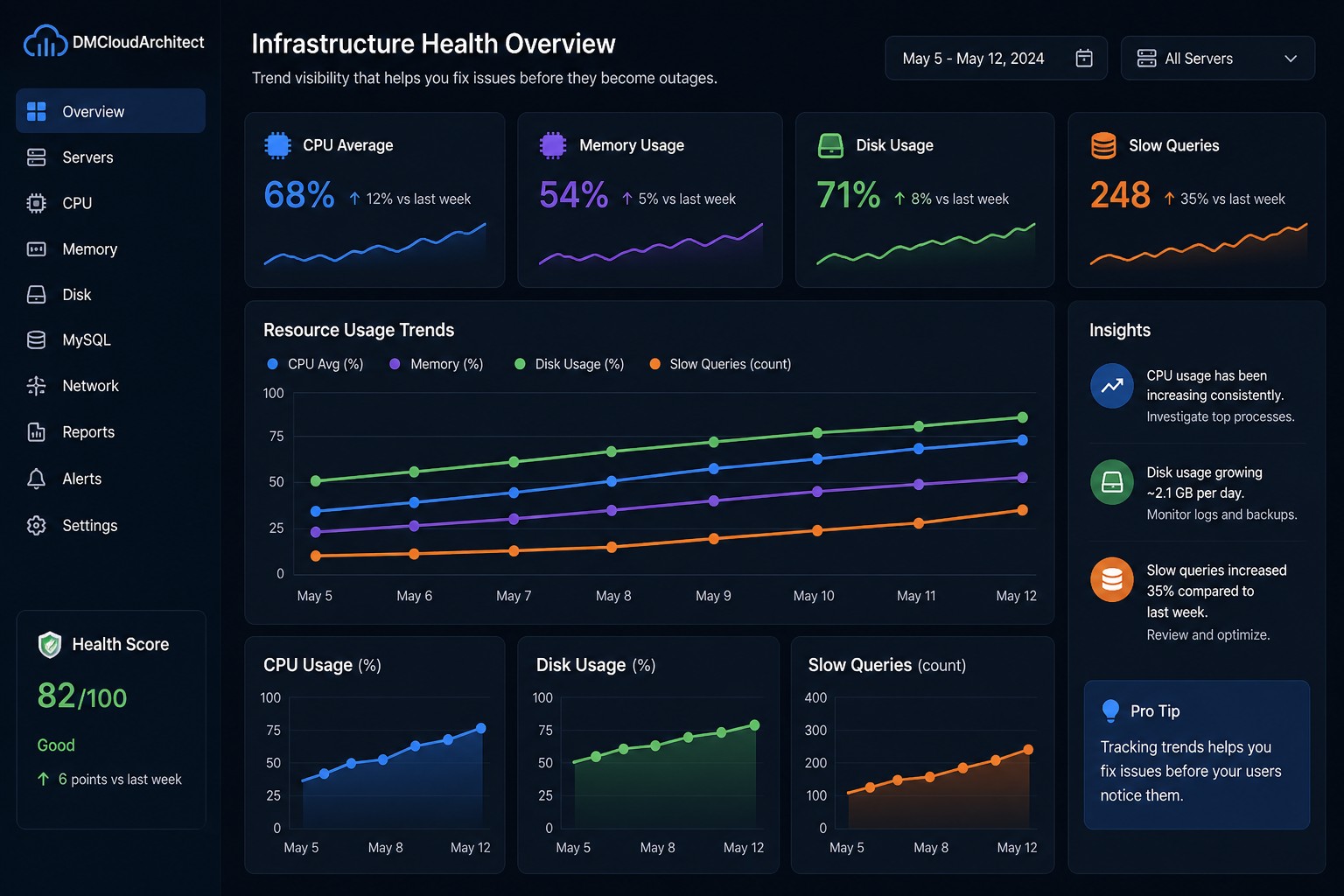
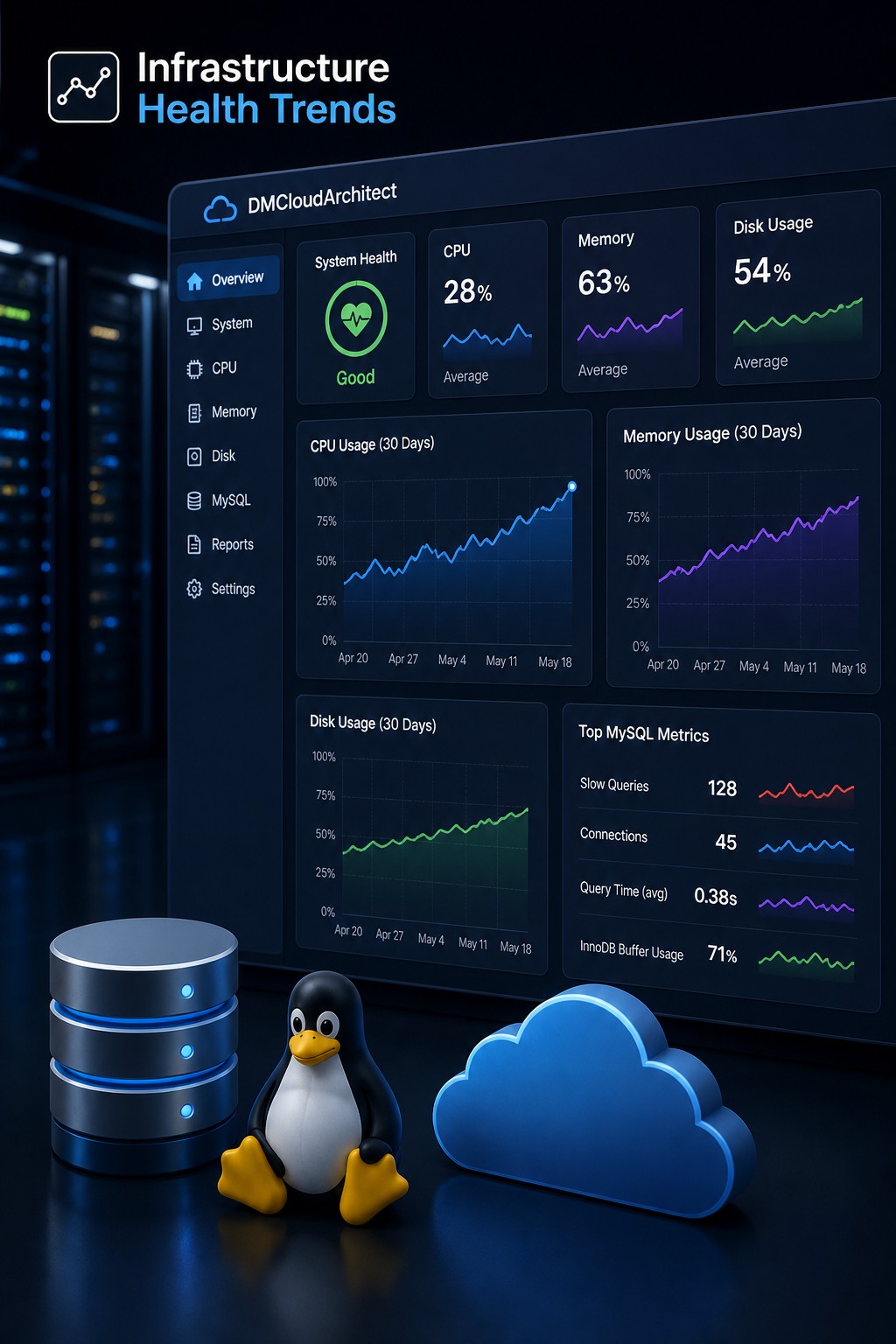
System health reporting helps infrastructure teams understand long-term server and database behavior instead of reacting only to alerts. By tracking trends like CPU growth, disk usage, memory pressure, and query performance, teams can identify problems before they become outages. This article explains how infrastructure health reporting works, what metrics matter most, and why trend visibility is essential for smaller operations teams. It also explores practical examples of how reporting-focused monitoring improves operational stability and reduces alert fatigue.

Read More
Cron Disk Monitoring Linux: Simple Automated Disk Checks

Cron Disk Monitoring Linux: Simple Automated Disk Checks

May 06, 2026    Mariusz Antonik    Server Health    6 min read

Disk usage problems in Linux environments often grow slowly before causing outages or performance issues. This guide explains how to automate disk monitoring with cron jobs, lightweight Bash scripts, and scheduled reporting. You’ll learn practical ways to track storage growth, identify trends, and reduce alert fatigue across Linux servers. The article also covers real-world operational examples and best practices for long-term infrastructure visibility.

Read More
Detect Storage Issues Early in Linux Systems

Detect Storage Issues Early in Linux Systems

May 05, 2026    Mariusz Antonik    Server Health    4 min read

Storage issues in Linux rarely happen instantly—they build over time. This article explains how to detect early warning signs like disk growth, I/O wait, and log accumulation before they cause outages. Learn practical commands and strategies to identify disk problems early. Prevent failures by focusing on trends instead of alerts.

Read More
How to Detect Slow Infrastructure Issues Before They Become Outages

How to Detect Slow Infrastructure Issues Before They Become Outages

May 02, 2026    Mariusz Antonik    General    4 min read

Most infrastructure problems don’t start as outages—they grow slowly over time. This article explains how to detect early warning signs like CPU creep, disk growth, and query slowdown before they become critical. You’ll learn practical ways to shift from reactive alerts to proactive visibility. Ideal for teams tired of firefighting and looking for real control over system health.

Read More
Disk Growth Trend Linux: How to Track and Prevent Disk Issues Early

Disk Growth Trend Linux: How to Track and Prevent Disk Issues Early

May 01, 2026    Mariusz Antonik    Server Health    4 min read

Disk space issues rarely happen suddenly—they build up over time. This article explains how to track disk growth trends in Linux and why it matters for preventing outages. You’ll learn simple ways to monitor disk usage over time and identify hidden growth patterns. Practical examples show how small trends can lead to major problems if ignored.

Read More

Infrastructure Trends vs Alerts: How to Prevent Server Outages Early

Apr 27, 2026    Mariusz Antonik    General    4 min read

Alerts tell you when something is already wrong, but they rarely explain how it got there. This article explores why infrastructure trends provide earlier and more actionable insights than real-time alerts. You’ll see how gradual changes in CPU, disk, and performance lead to outages—and how to catch them early. For teams managing servers without complex monitoring tools, this approach offers a simpler, more proactive way to maintain stability.

Read More