Blog - Tag: server health

Linux Server Monitoring Checklist for Learning Real DevOps

Linux Server Monitoring Checklist for Learning Real DevOps

Aug 15, 2026    Mariusz Antonik    Automation    7 min read

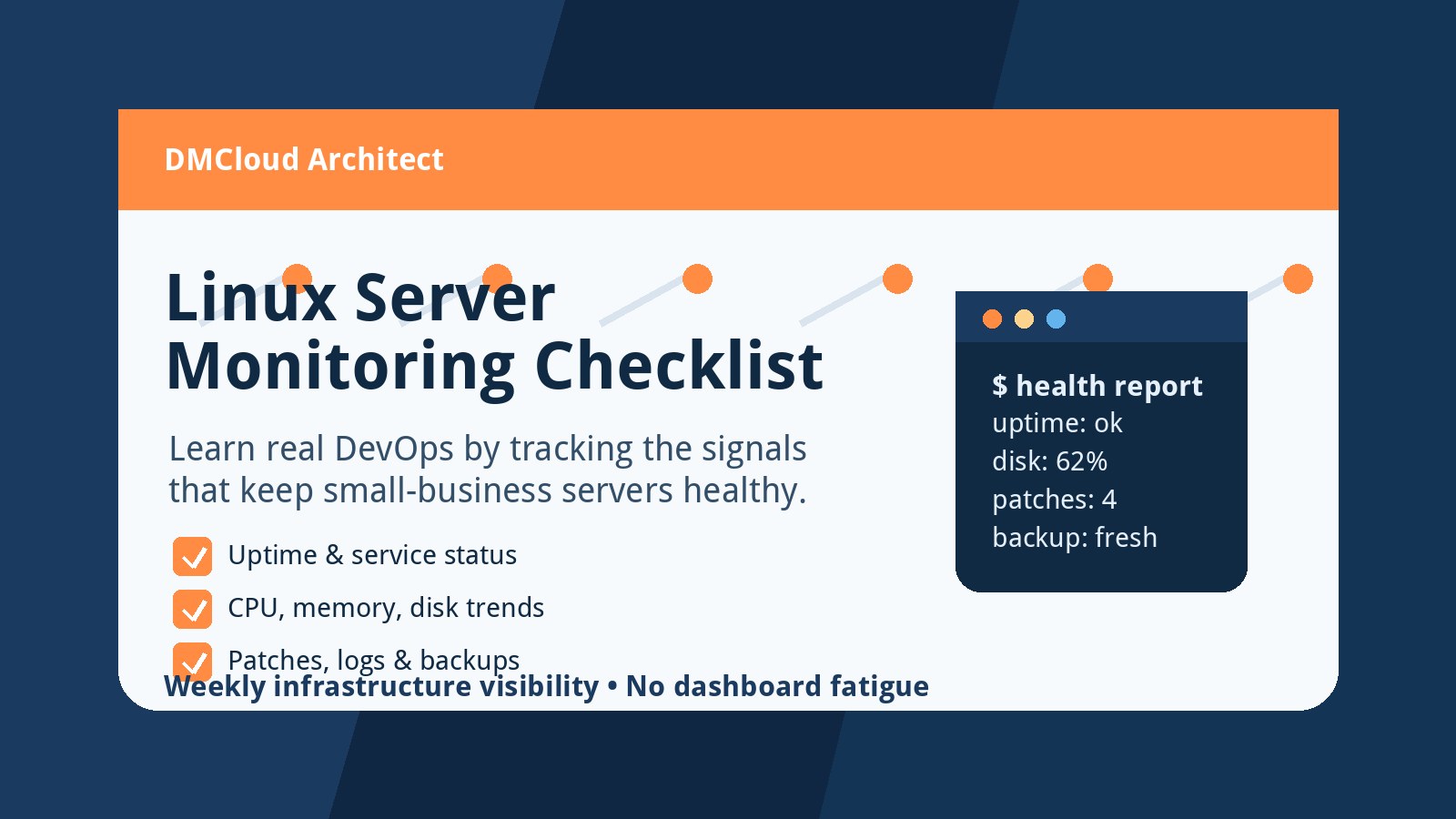
DevOps is easier to learn and teach when you start with real operational signals instead of random install tutorials. This checklist uses linux server monitoring to build practical habits around uptime, capacity, patches, logs, backups, and incident review. Use it as a portfolio-friendly learning path for developers, IT support pros, and small business teams that want useful infrastructure visibility.

Read More
Disk Usage History Linux: A Practical Guide for Small Teams

Disk Usage History Linux: A Practical Guide for Small Teams

Aug 14, 2026    Mariusz Antonik    Automation    6 min read

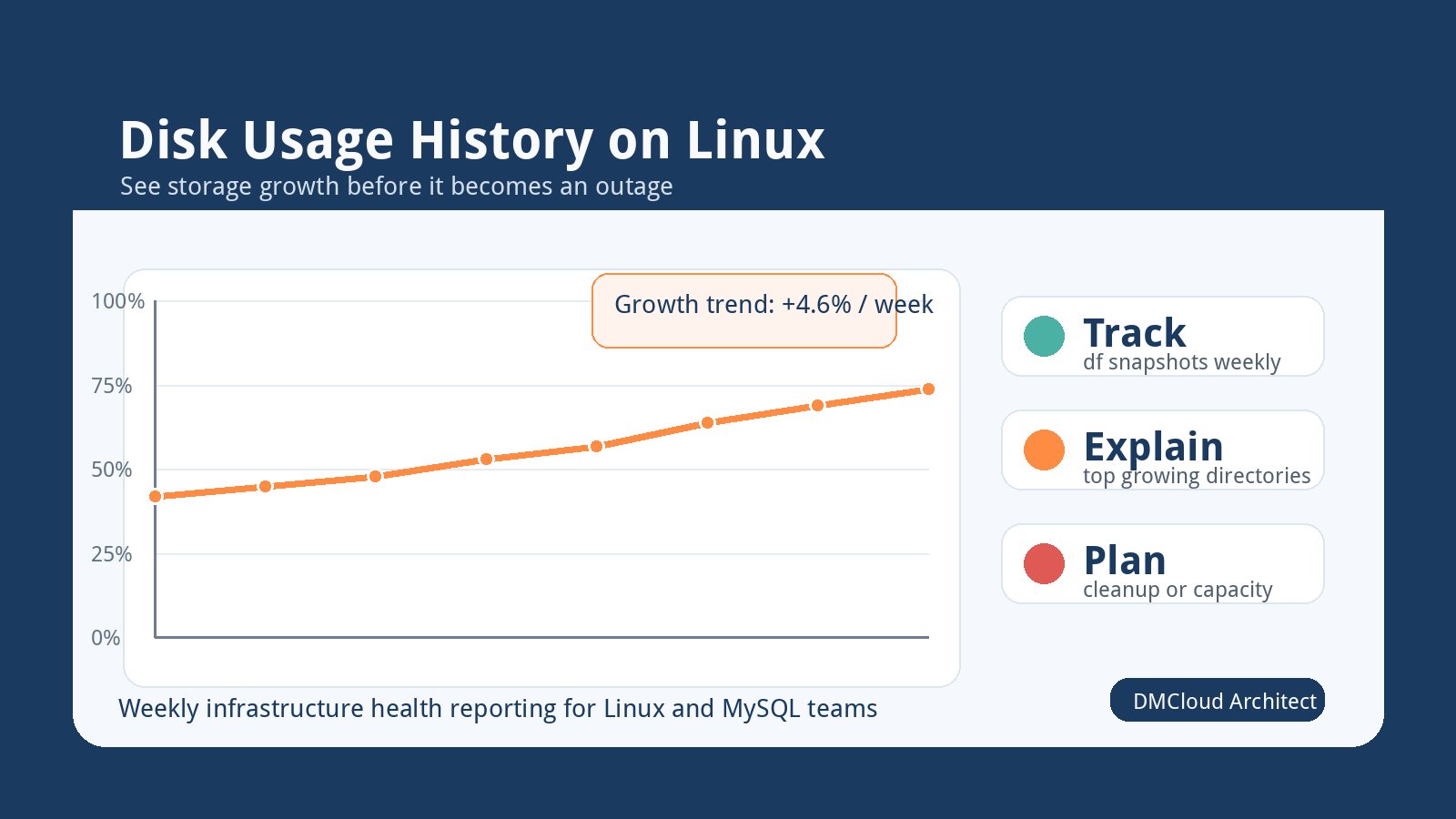
Disk usage history on Linux helps small teams see storage growth before it becomes an outage. Instead of reacting to a full filesystem alert, a simple weekly history shows which mount points, logs, backups, and database files are growing fastest. This guide explains how to collect disk usage trends on a Linux server, what to review, and when to plan cleanup or capacity changes. Use it as a lightweight baseline for better storage decisions without adding another dashboard to babysit.

Read More
Monitor Server Trends Over Time: A Practical Guide for Small Teams

Monitor Server Trends Over Time: A Practical Guide for Small Teams

Aug 12, 2026    Mariusz Antonik    Automation    5 min read

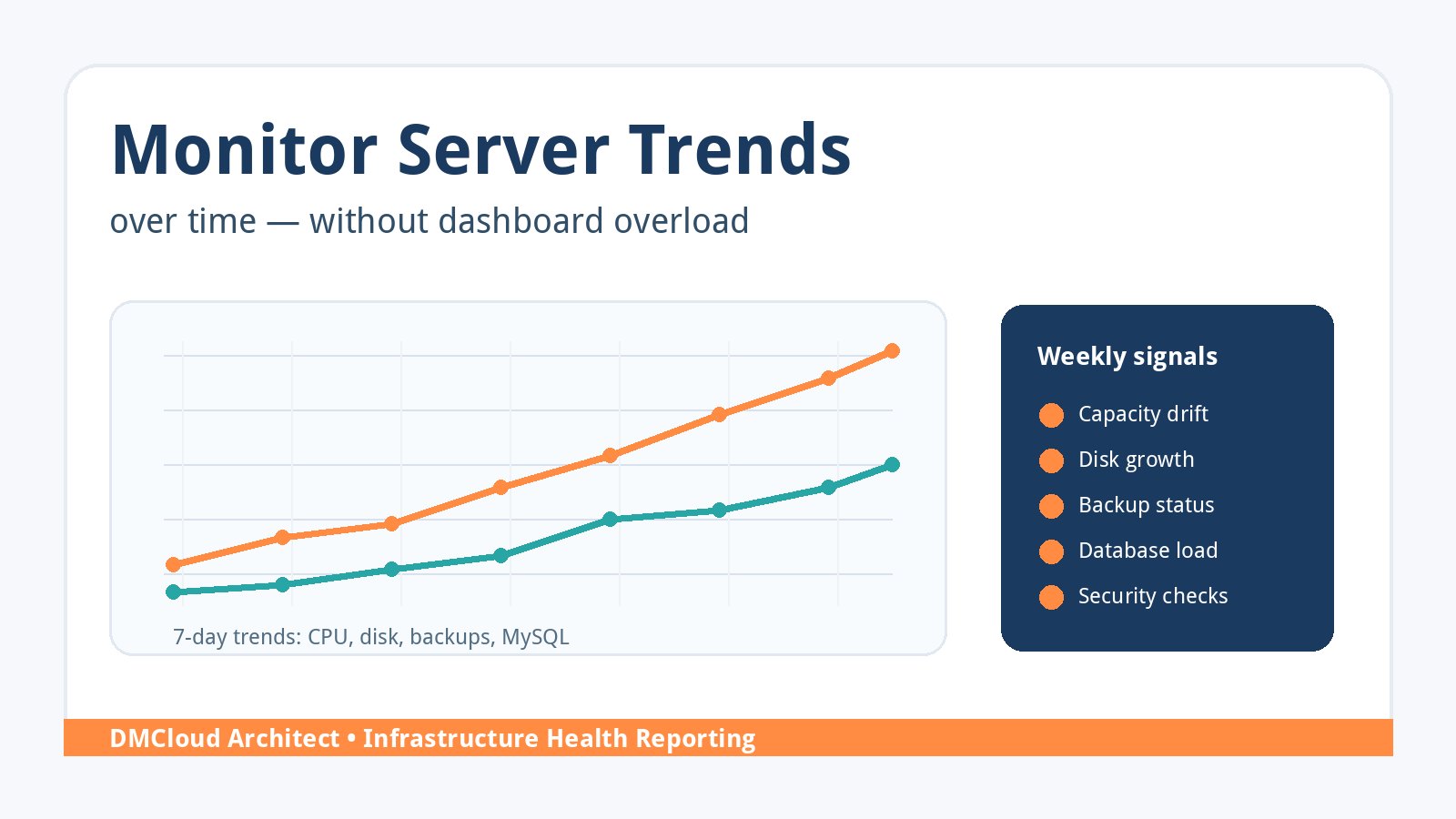
Monitoring server trends over time helps small teams spot infrastructure problems before they become outages. Instead of reacting to one noisy CPU spike or a single full-disk warning, trend-based monitoring shows whether capacity, database load, backups, and security signals are moving in the wrong direction. This guide explains which server trends to track, how to review them weekly, and how to turn historical monitoring into practical maintenance decisions. Use it as a lightweight baseline for better planning without adding dashboard fatigue.

Read More
Simple Ops Monitoring for Small Teams: What to Track Without Dashboard Overload

Simple Ops Monitoring for Small Teams: What to Track Without Dashboard Overload

Aug 10, 2026    Mariusz Antonik    Automation    5 min read

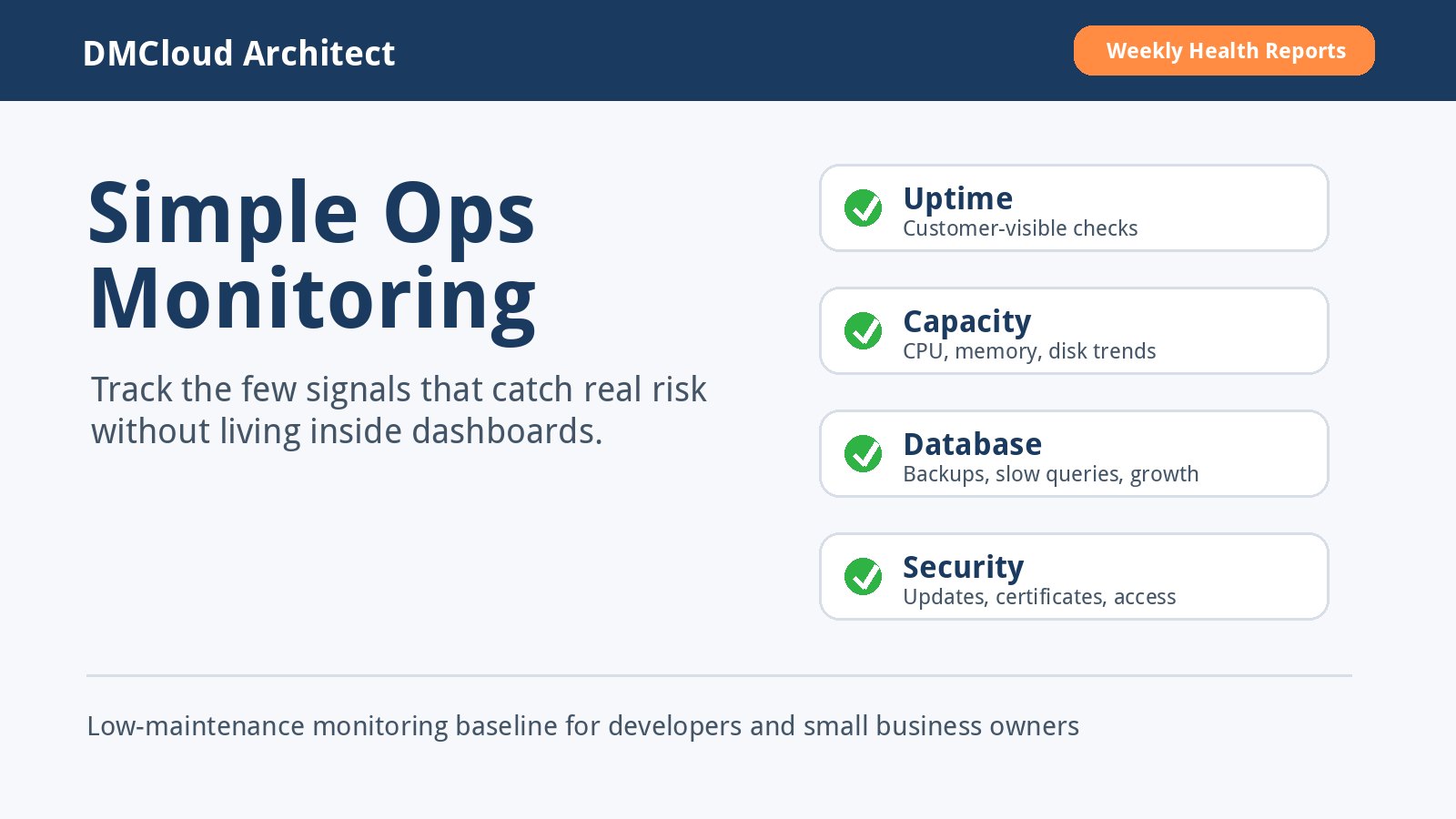
Simple ops monitoring helps small teams catch infrastructure risk without adopting a heavyweight observability stack. The trick is to watch a short list of signals that explain whether servers, databases, and backups are healthy enough for real customers. This guide shows developers and small business owners which checks matter most, how often to review them, and when to automate alerts or reports. Use it as a practical baseline for low-maintenance monitoring that still catches trouble early.

Read More
How to Spot MySQL Query Trends Before Performance Slips

How to Spot MySQL Query Trends Before Performance Slips

Aug 08, 2026    Mariusz Antonik    Database    5 min read

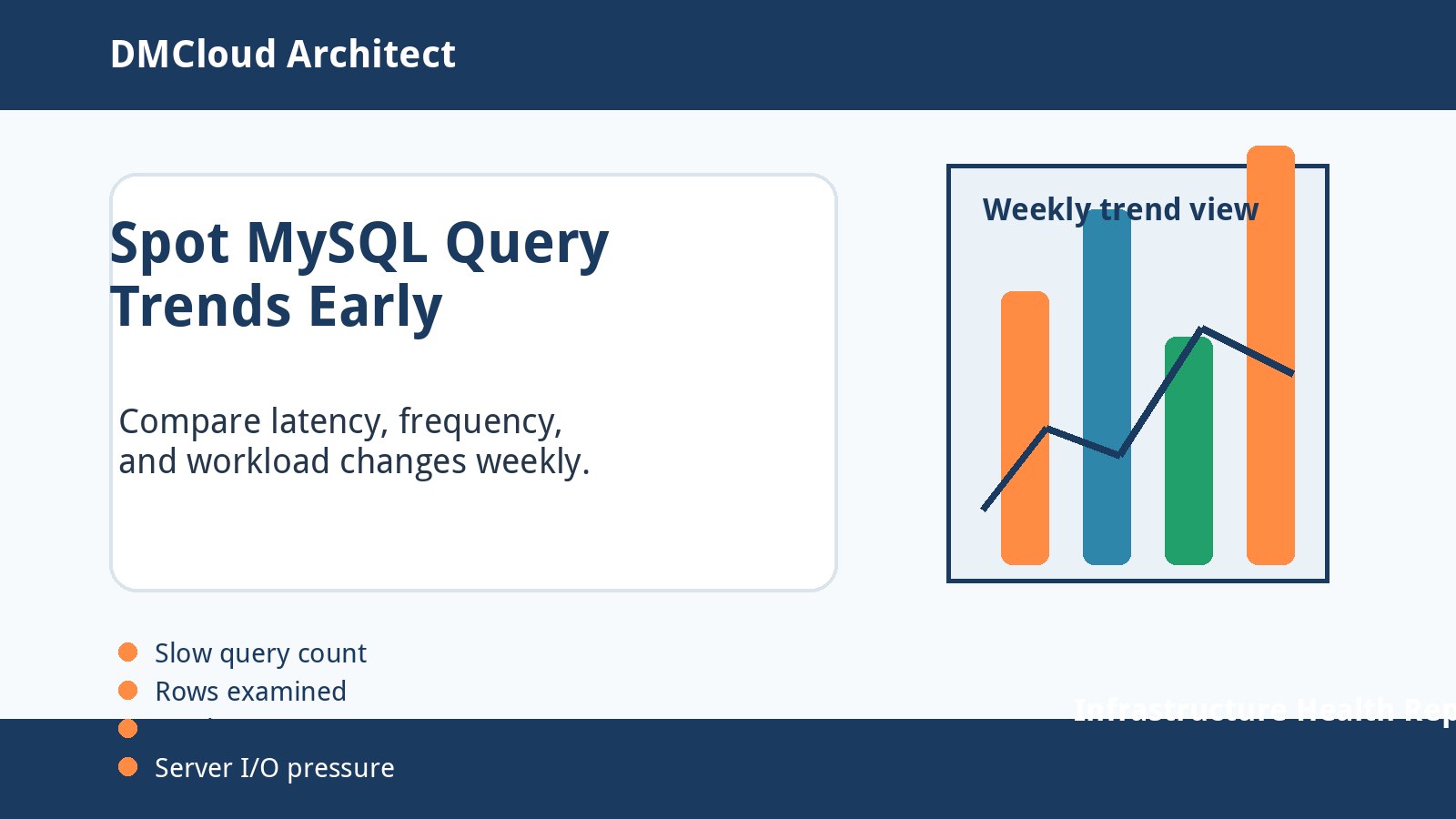
MySQL performance problems often build slowly as query mix, table size, and traffic patterns change. Tracking MySQL query trends gives developers and small business owners a practical way to notice degradation before customers feel it. This guide explains which signals to review weekly, how to separate normal growth from risk, and how to turn the findings into action.

Read More
Identify Disk Issues Early Before They Become Outages

Identify Disk Issues Early Before They Become Outages

Aug 06, 2026    Mariusz Antonik    Automation    6 min read

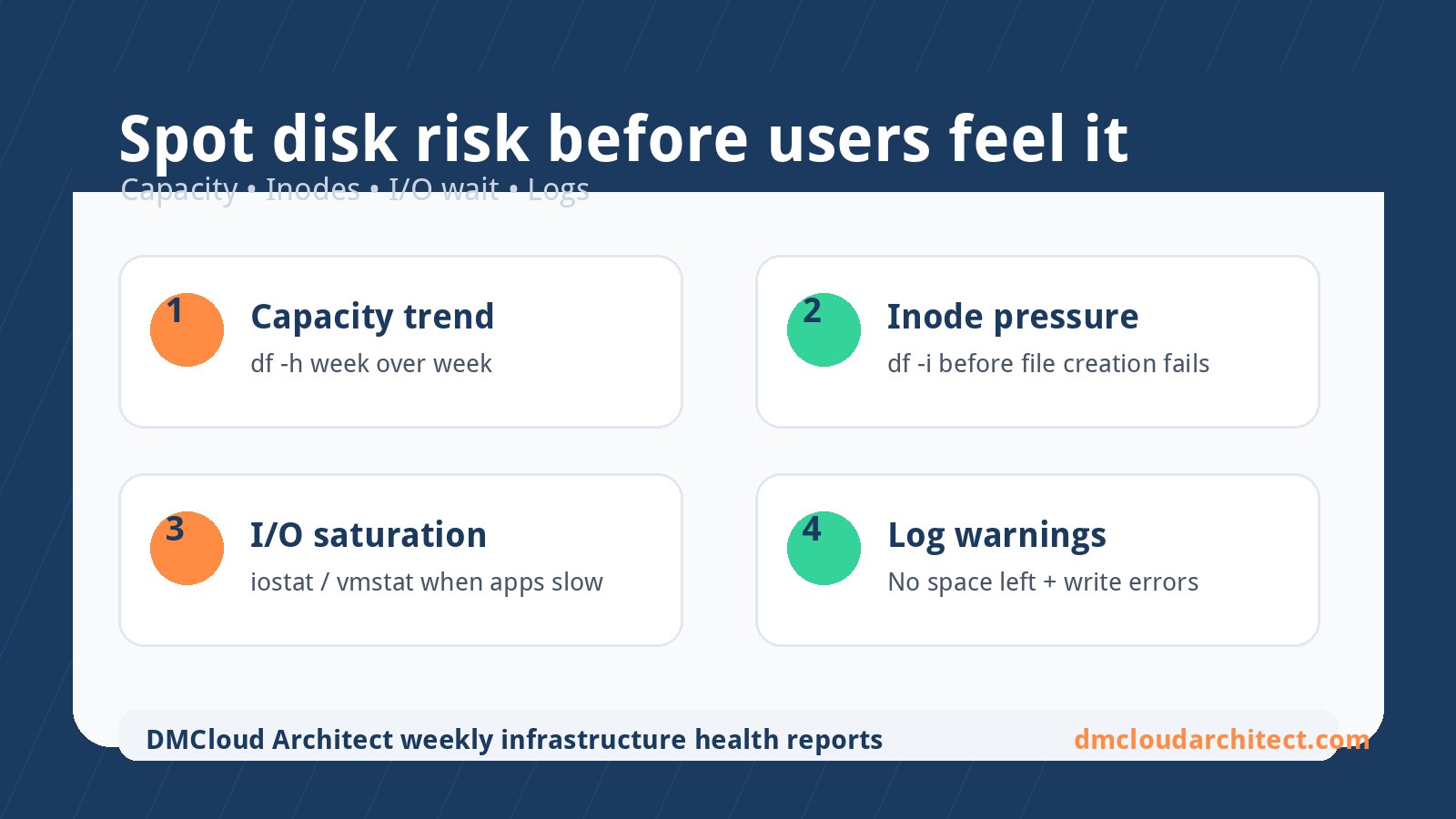
Disk problems rarely start as dramatic failures; they usually show up first as slow growth, noisy logs, or uneven I/O. Small teams can prevent disk full outages by watching a few practical signals every week instead of waiting for emergency alerts. This guide explains what to check on Linux servers, how to turn those checks into an early-warning habit, and when to clean up or expand storage.

Read More
Simple CPU Monitoring on Linux Without Heavy Tools

Simple CPU Monitoring on Linux Without Heavy Tools

Aug 04, 2026    Mariusz Antonik    Automation    6 min read

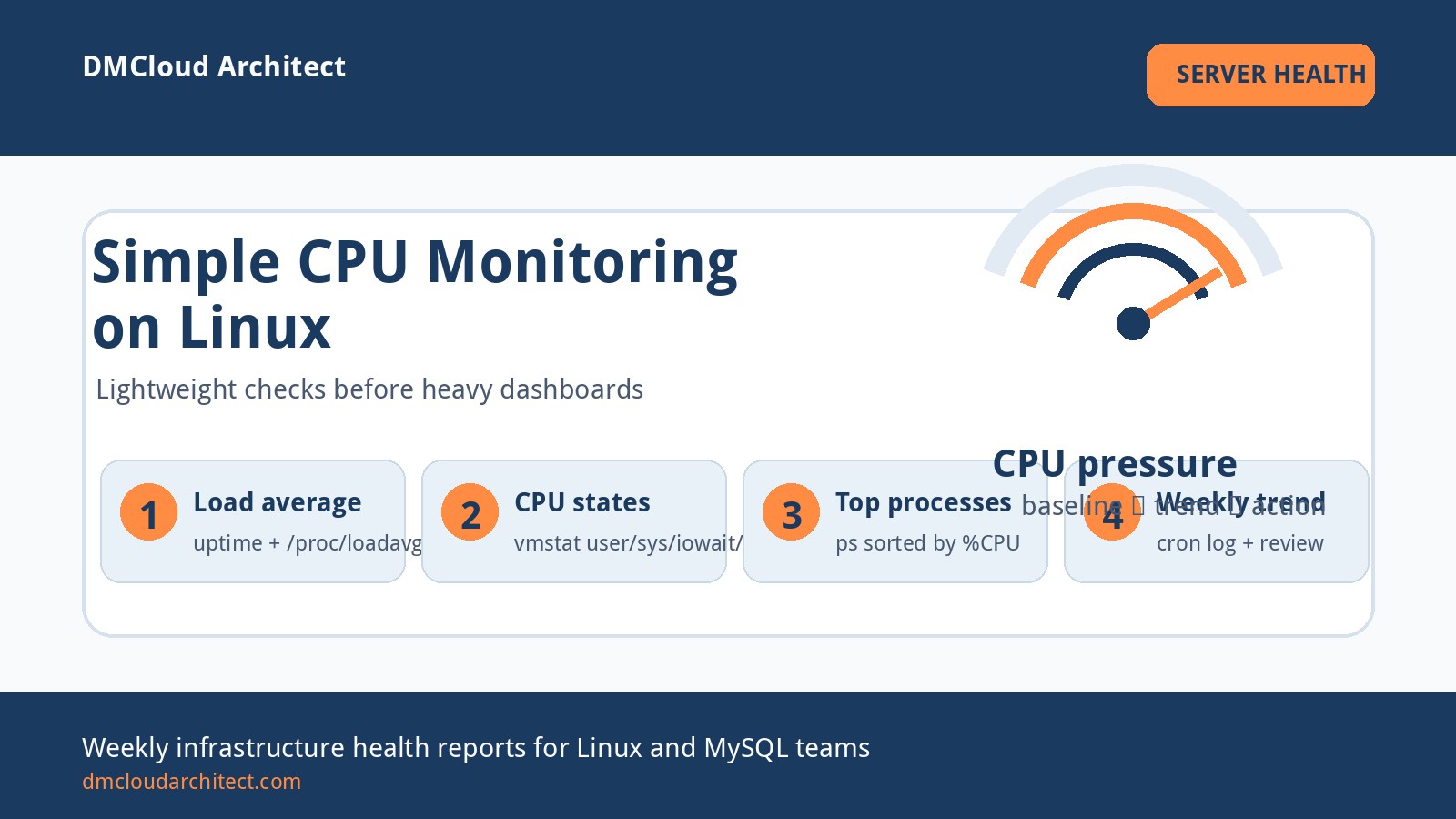
Simple CPU monitoring on Linux does not have to start with a large observability stack. For small teams, a weekly snapshot of load average, CPU steal, top processes, and trend direction is often enough to catch pressure before users notice slowdowns. This guide shows a lightweight approach using built-in Linux commands, a small Bash script, and cron-friendly reporting.

Read More
Wazuh Agent Enrolled but Missing from Dashboard: A Practical Checklist

Wazuh Agent Enrolled but Missing from Dashboard: A Practical Checklist

Jul 30, 2026    Mariusz Antonik    Security    7 min read

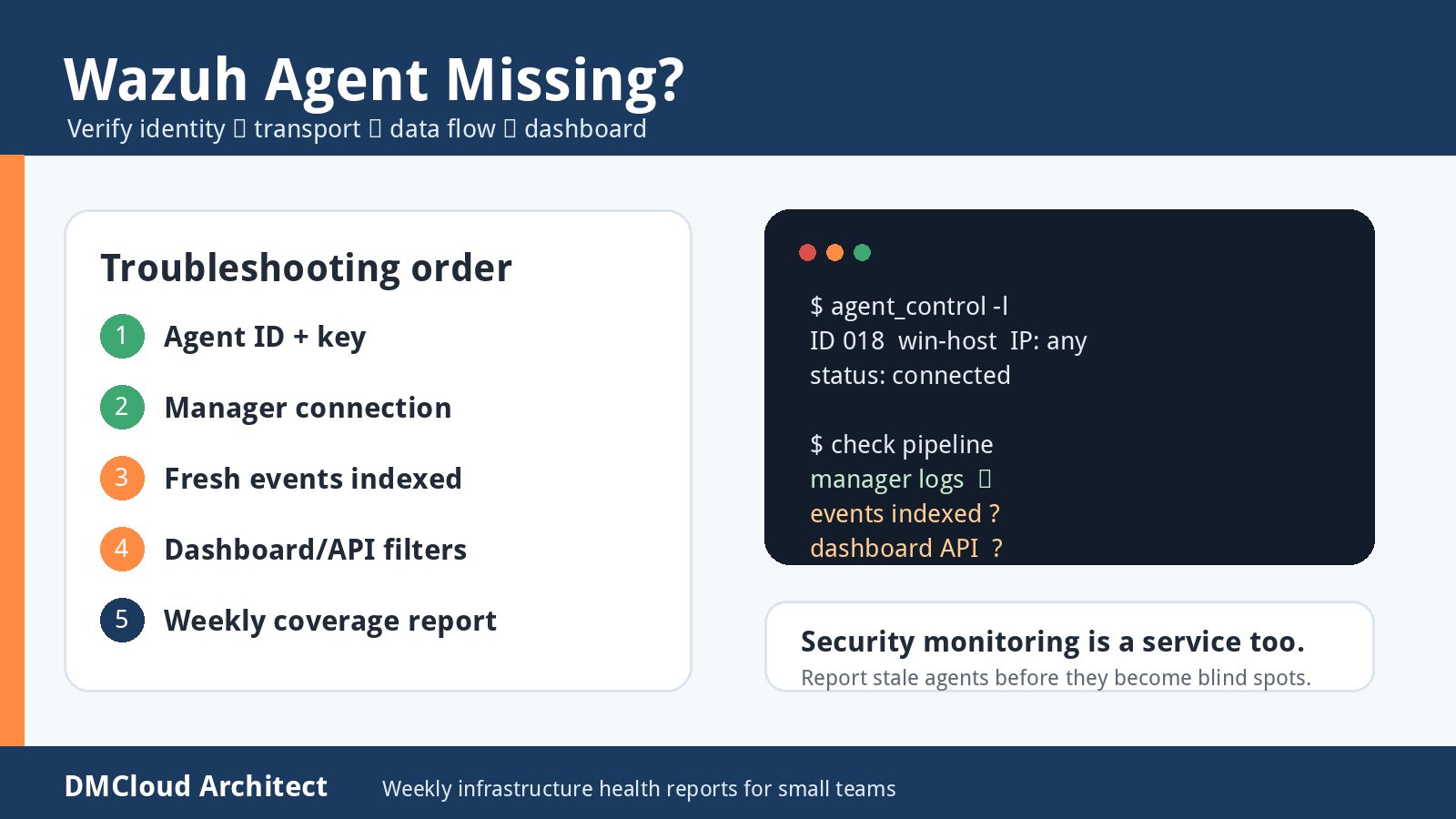
When a Wazuh agent says it is enrolled and connected but the dashboard still shows nothing, the problem is often in the gap between transport, identity, and indexed data. A calm checklist keeps teams from reinstalling agents blindly or weakening security controls just to make a host appear. Use this practical linux server monitoring workflow to verify the manager, agent identity, log flow, indexer health, and reporting expectations in the right order.

Read More
Bare Metal Linux Server Monitoring Checklist After Leaving the Cloud

Bare Metal Linux Server Monitoring Checklist After Leaving the Cloud

Jul 28, 2026    Mariusz Antonik    Automation    8 min read

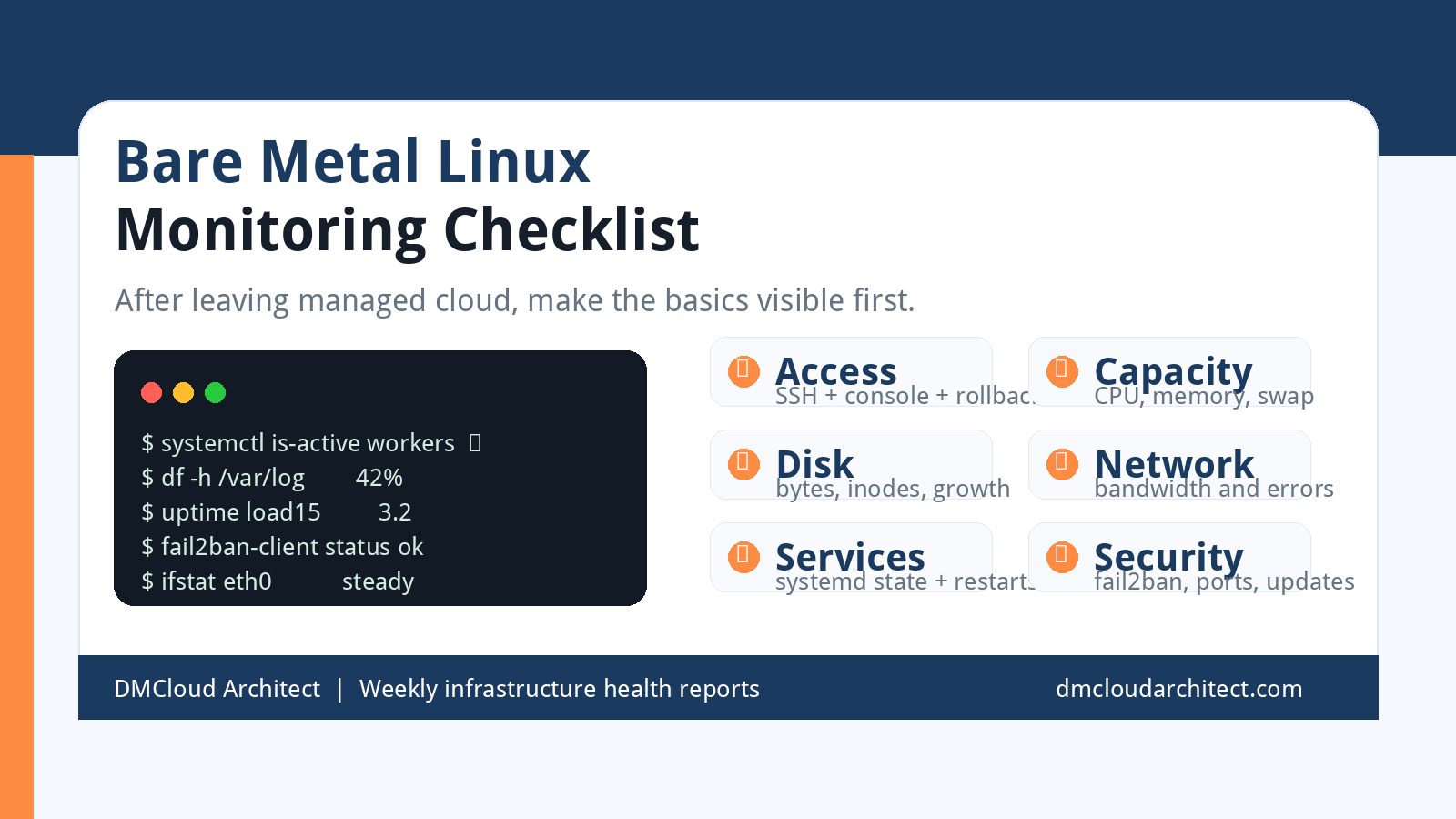
Moving bandwidth-heavy workloads from managed cloud to a dedicated Linux server can cut costs, but it also hands you responsibility for capacity, security, and recovery. The safest first week is not about building a giant observability stack; it is about a practical baseline that catches load, disk, network, service, and lockout problems early. This checklist gives developers and small business owners a friendly starting point for linux server monitoring after a bare-metal migration.

Read More
Linux Sysadmin Lab Checklist: Build Skills Without Guesswork

Linux Sysadmin Lab Checklist: Build Skills Without Guesswork

Jul 22, 2026    Mariusz Antonik    Automation    6 min read

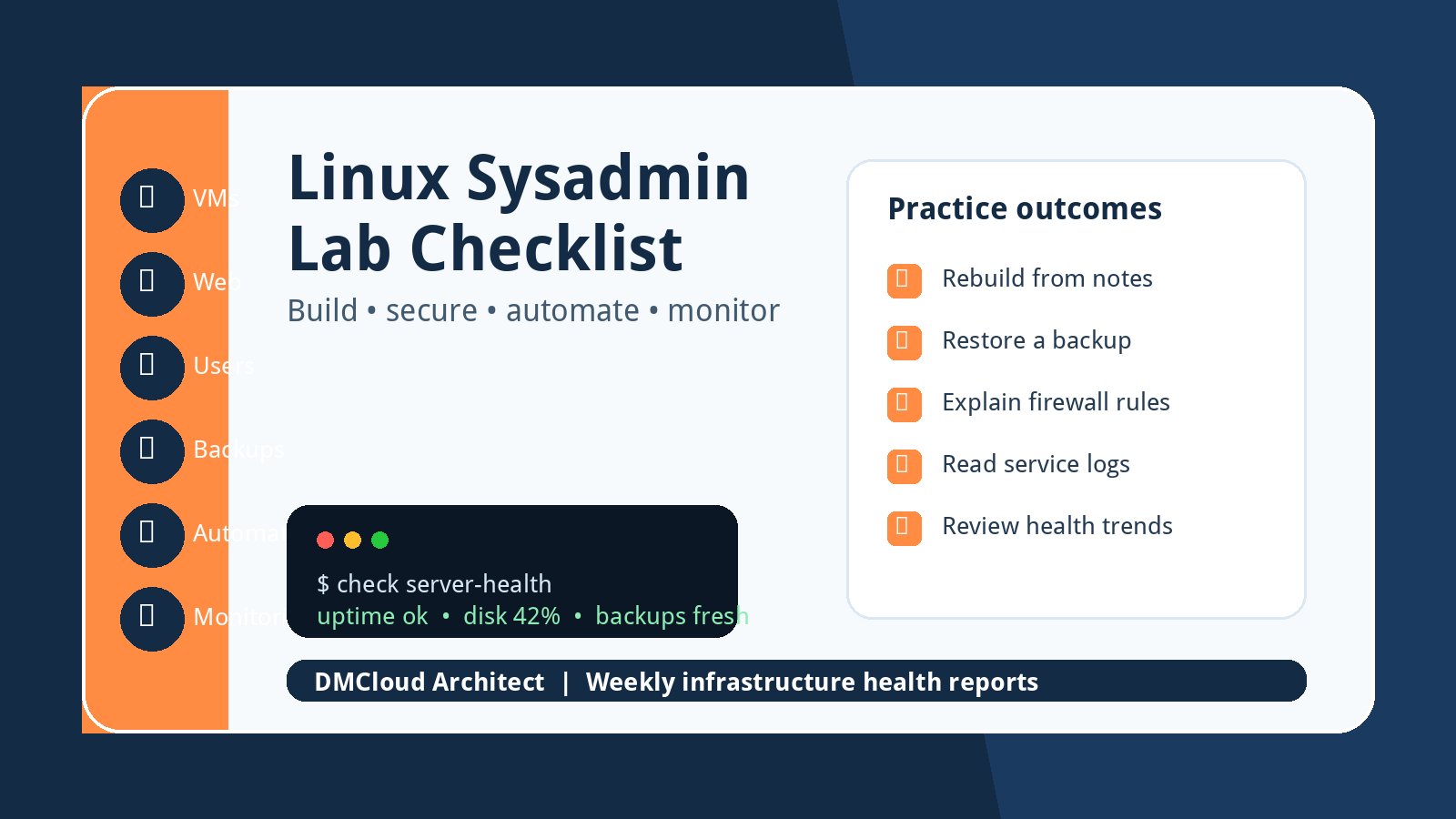
A Linux sysadmin lab works best when it teaches repeatable operations instead of random commands. Start with a small set of virtual machines, then practice web hosting, users, firewall rules, backups, automation, and linux server monitoring until you can rebuild the environment from notes. This checklist gives developers and small business owners a practical path for learning the skills that make production servers safer.

Read More