Blog

Linux Server Monitoring Checklist for High-Risk CVE Advisories

Linux Server Monitoring Checklist for High-Risk CVE Advisories

Aug 07, 2026    Mariusz Antonik    Security    7 min read

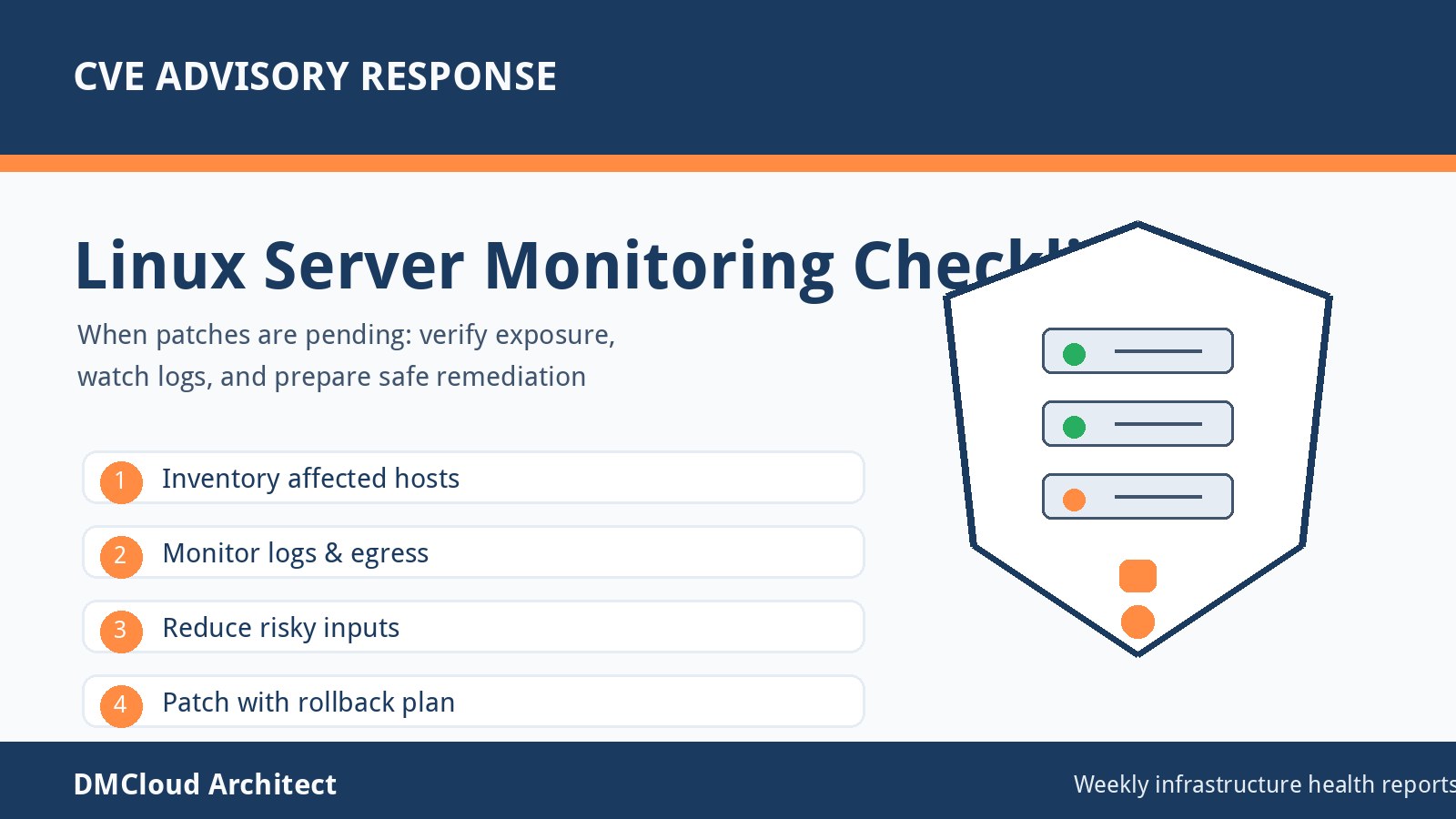
When a high-risk Linux advisory appears before a fixed package is available, small teams need a calm way to reduce exposure without making rushed changes. This checklist shows developers and small business owners how to use linux server monitoring, inventory checks, log review, and change planning while waiting for vendor patches. Use it for SSRF, local file read, package, and service advisories where the right response is visibility first, then controlled remediation.

Read More
Identify Disk Issues Early Before They Become Outages

Identify Disk Issues Early Before They Become Outages

Aug 06, 2026    Mariusz Antonik    Automation    6 min read

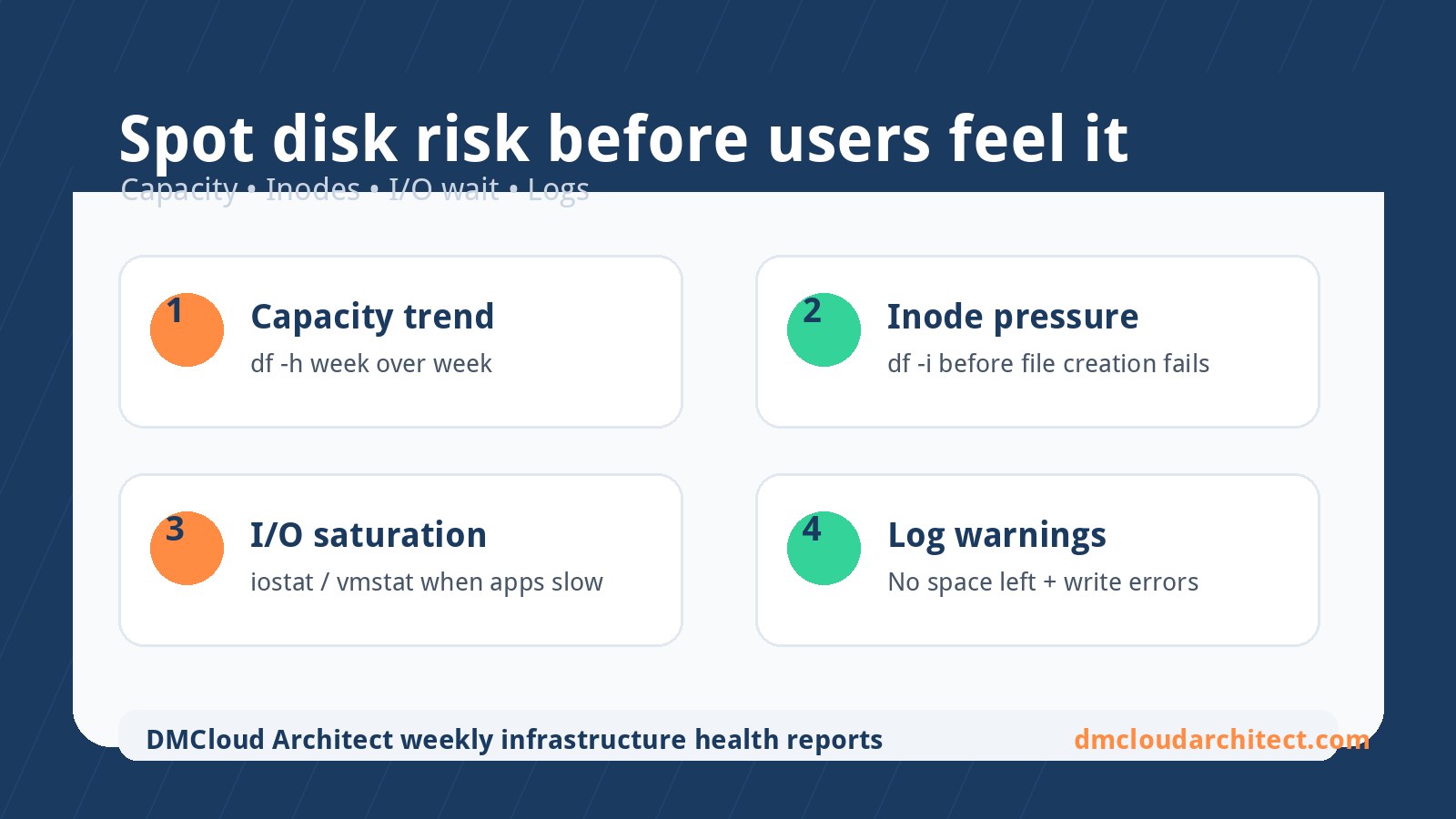
Disk problems rarely start as dramatic failures; they usually show up first as slow growth, noisy logs, or uneven I/O. Small teams can prevent disk full outages by watching a few practical signals every week instead of waiting for emergency alerts. This guide explains what to check on Linux servers, how to turn those checks into an early-warning habit, and when to clean up or expand storage.

Read More
Initial Linux Server Audit Checklist for Small Business Owners and Developers

Initial Linux Server Audit Checklist for Small Business Owners and Developers

Aug 05, 2026    Mariusz Antonik    Automation    8 min read

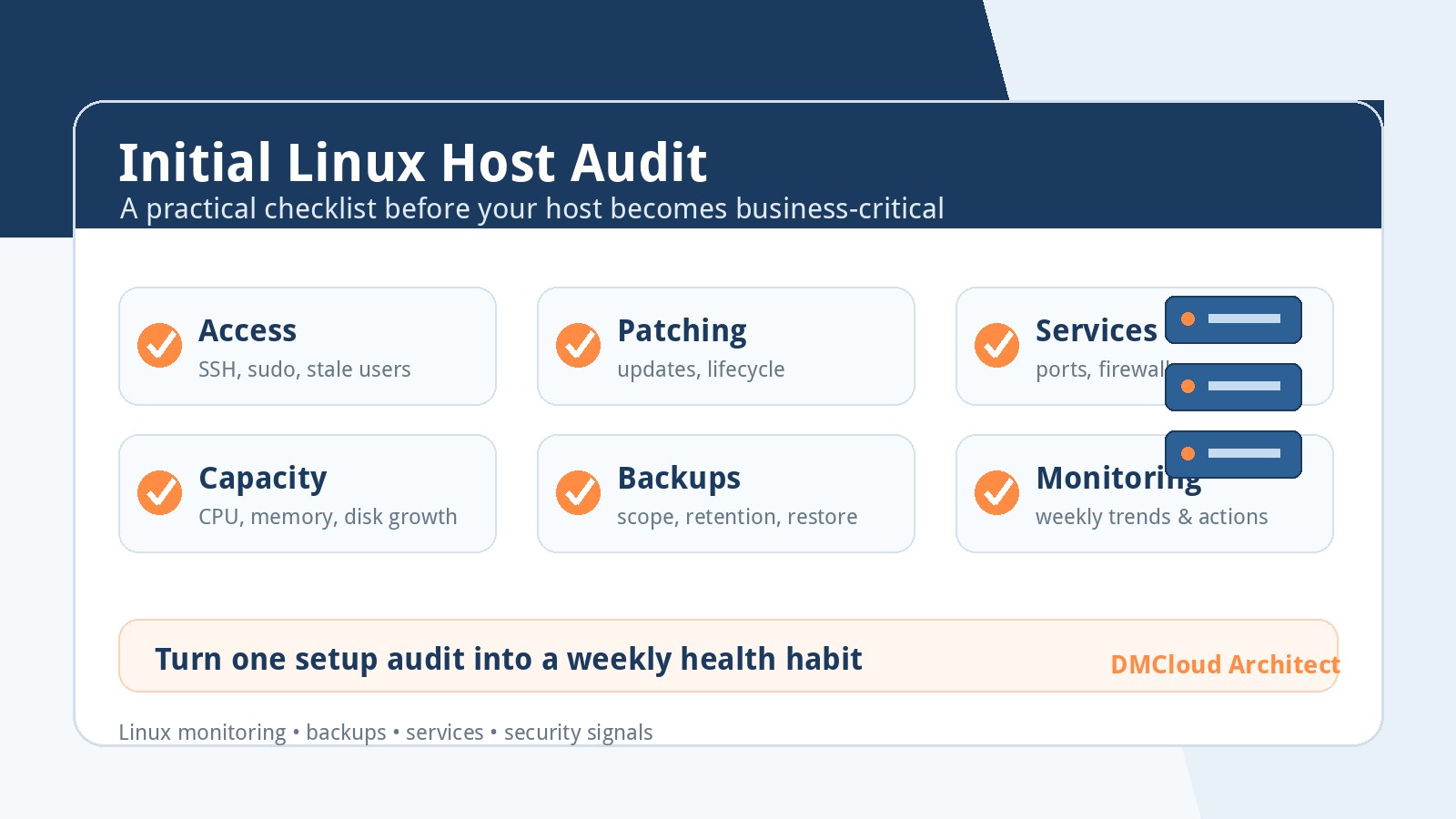
A fresh Linux server can look healthy on day one while still hiding weak passwords, missing backups, noisy logs, and capacity issues that will become urgent later. This practical initial audit checklist gives developers and small business owners a repeatable way to baseline access, services, updates, disk growth, backups, and linux server monitoring before the server becomes business-critical. Use it after provisioning, migrations, handoffs, or any time you inherit a machine without a clear runbook.

Read More
Simple CPU Monitoring on Linux Without Heavy Tools

Simple CPU Monitoring on Linux Without Heavy Tools

Aug 04, 2026    Mariusz Antonik    Automation    6 min read

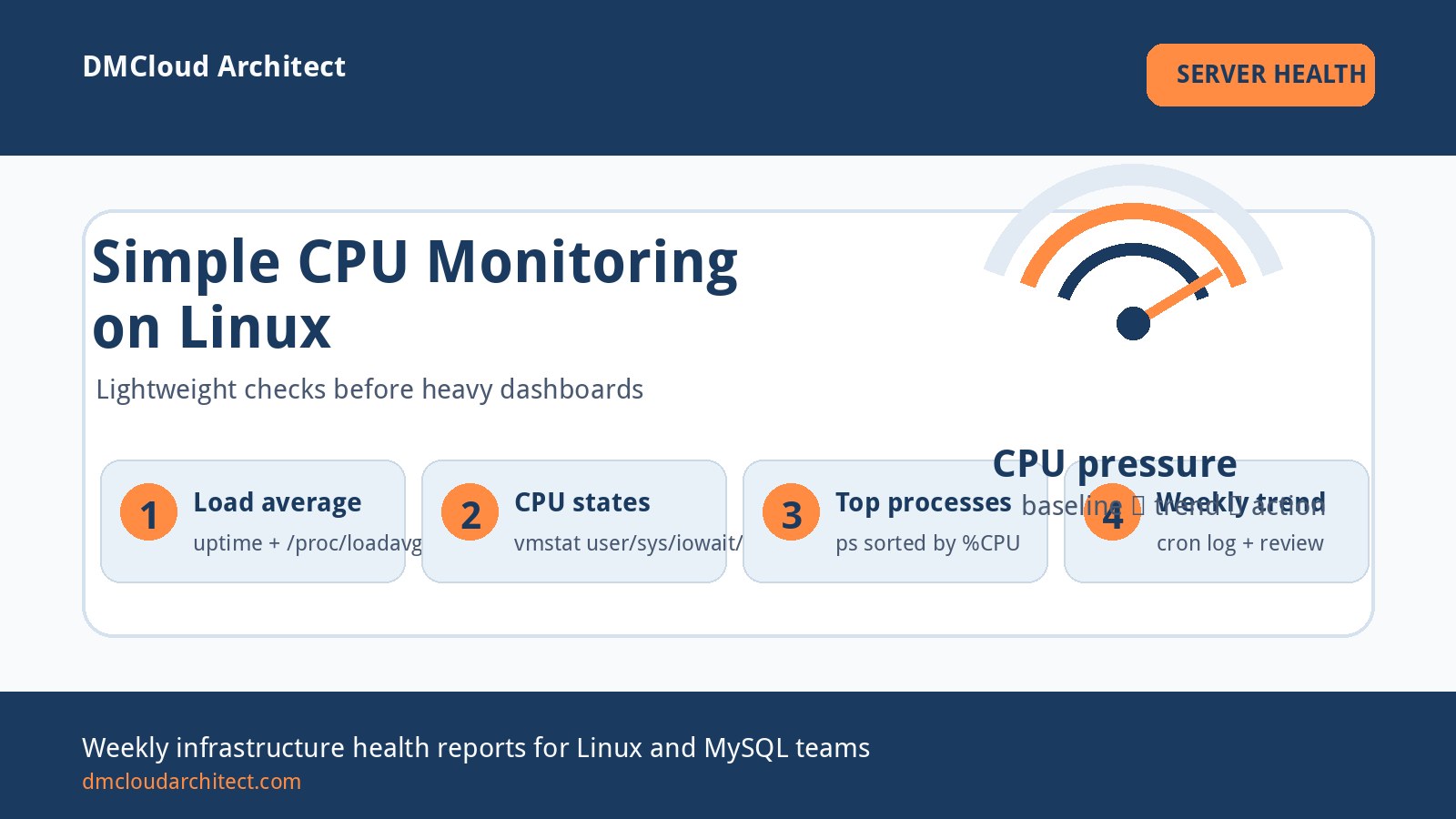
Simple CPU monitoring on Linux does not have to start with a large observability stack. For small teams, a weekly snapshot of load average, CPU steal, top processes, and trend direction is often enough to catch pressure before users notice slowdowns. This guide shows a lightweight approach using built-in Linux commands, a small Bash script, and cron-friendly reporting.

Read More
Linux Admin Interview Checklist: Server Monitoring Answers That Show Operational Maturity

Linux Admin Interview Checklist: Server Monitoring Answers That Show Operational Maturity

Aug 03, 2026    Mariusz Antonik    Automation    8 min read

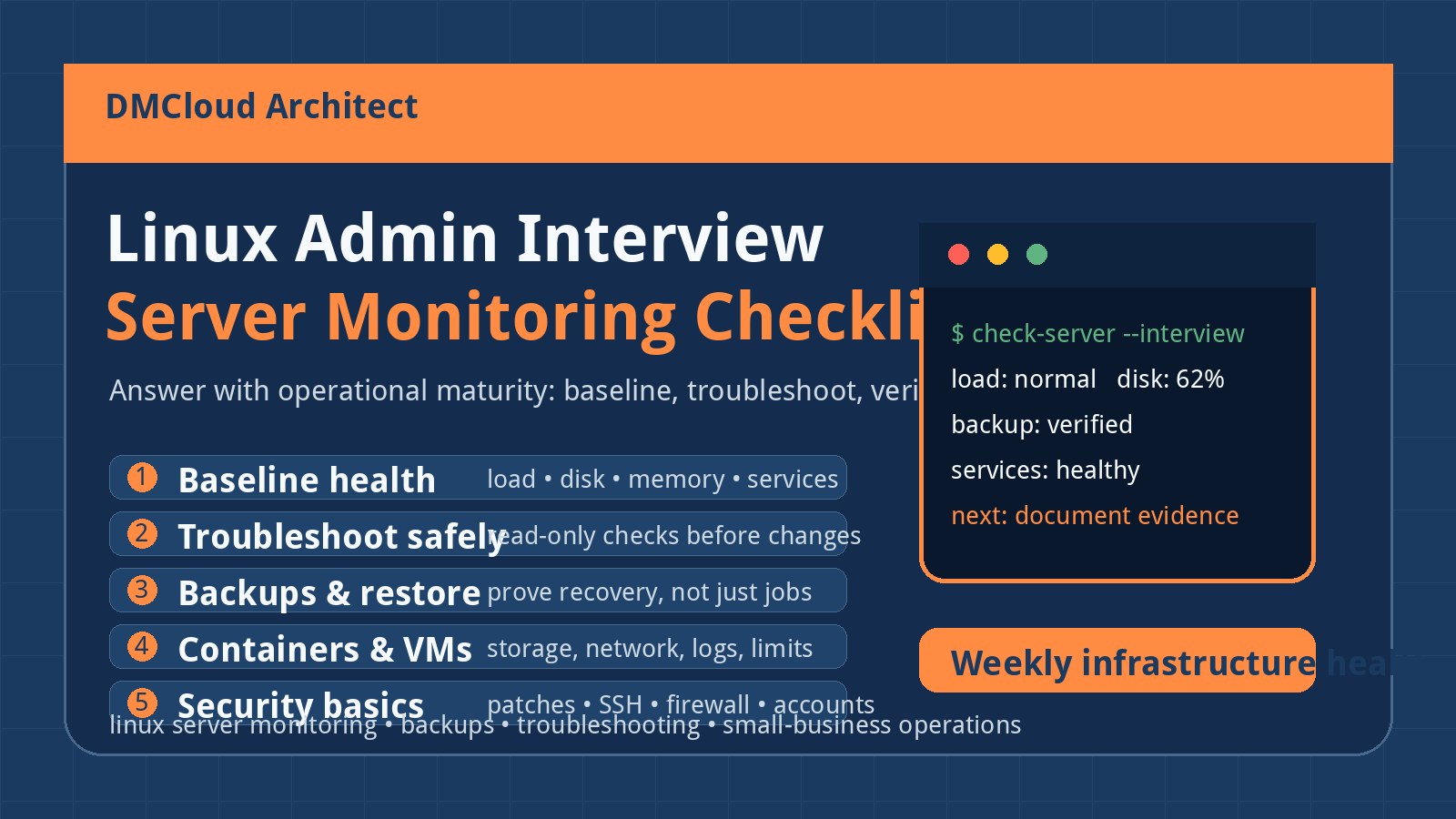
A Linux admin interview is not only a quiz about commands; it is a chance to show how you keep real servers healthy when documentation is incomplete and users need answers. This practical checklist turns common Linux operations topics into confident, experience-based answers around troubleshooting, backups, containers, virtualization, and linux server monitoring. Use it to explain how you think through production problems instead of trying to memorize every flag the night before.

Read More
How to Read MySQL Workload Trends Before Performance Slips

How to Read MySQL Workload Trends Before Performance Slips

Aug 02, 2026    Mariusz Antonik    Database    6 min read

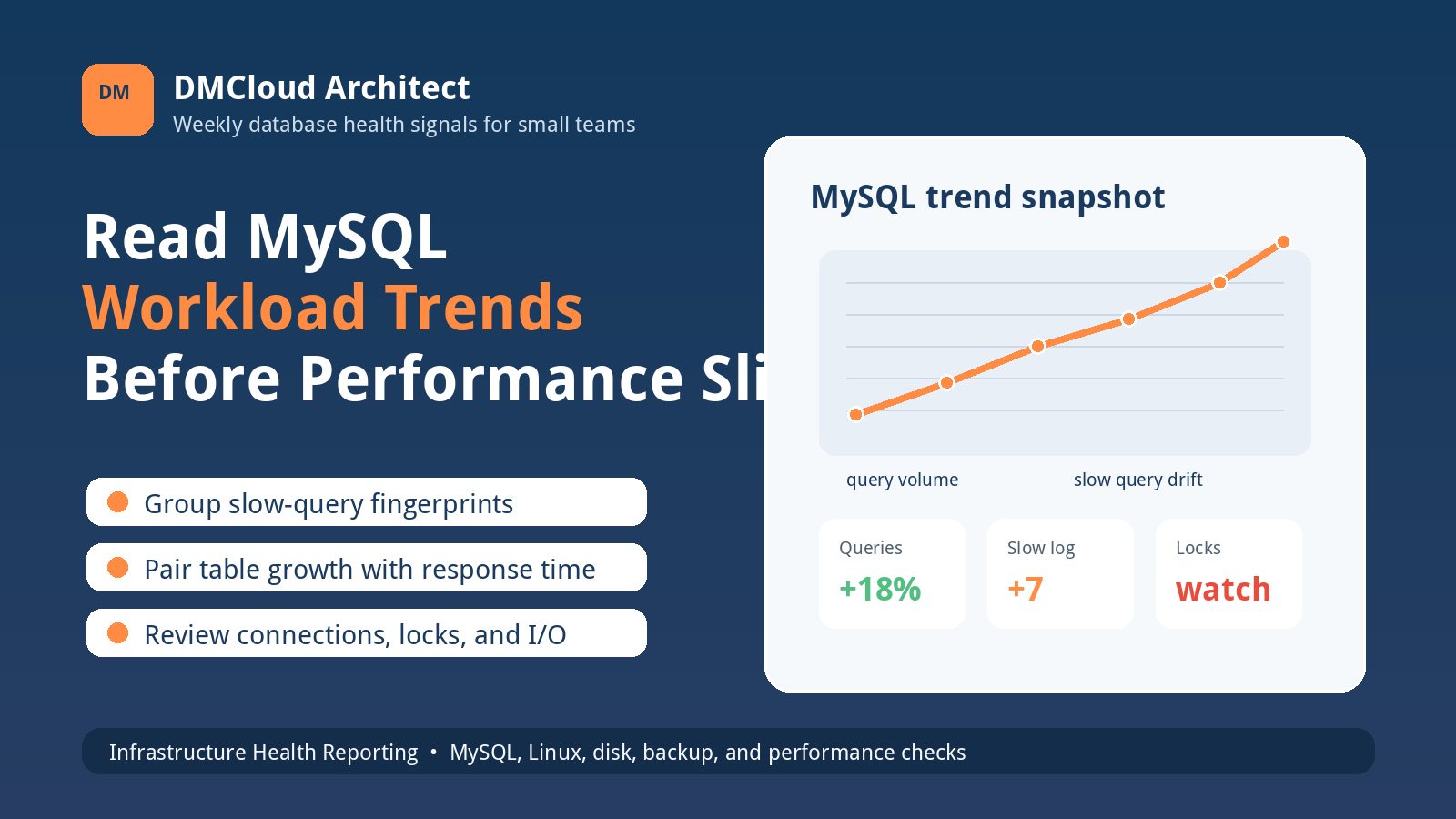
MySQL performance problems often build gradually as traffic, table size, queries, and background jobs change over time. Watching workload trends gives small teams early warning before slow pages, stuck reports, or connection pressure become customer-facing incidents. This guide explains which MySQL workload signals to review weekly and how to turn them into practical next steps.

Read More
Plesk XML API Privilege Escalation: A Small-Business Server Monitoring Checklist

Plesk XML API Privilege Escalation: A Small-Business Server Monitoring Checklist

Aug 01, 2026    Mariusz Antonik    Security    7 min read

A high-severity control panel vulnerability should trigger more than a rushed patch window; it should trigger a calm verification checklist. For small teams running Plesk on Linux, the safest response is to confirm exposure, patch level, account access, file integrity, and post-remediation evidence in a repeatable order. This linux server monitoring checklist helps developers and business owners turn a scary advisory into practical actions without losing track of the fundamentals.

Read More
How to Diagnose MySQL Query Performance Issues Before Users Complain

How to Diagnose MySQL Query Performance Issues Before Users Complain

Jul 31, 2026    Mariusz Antonik    Database    6 min read

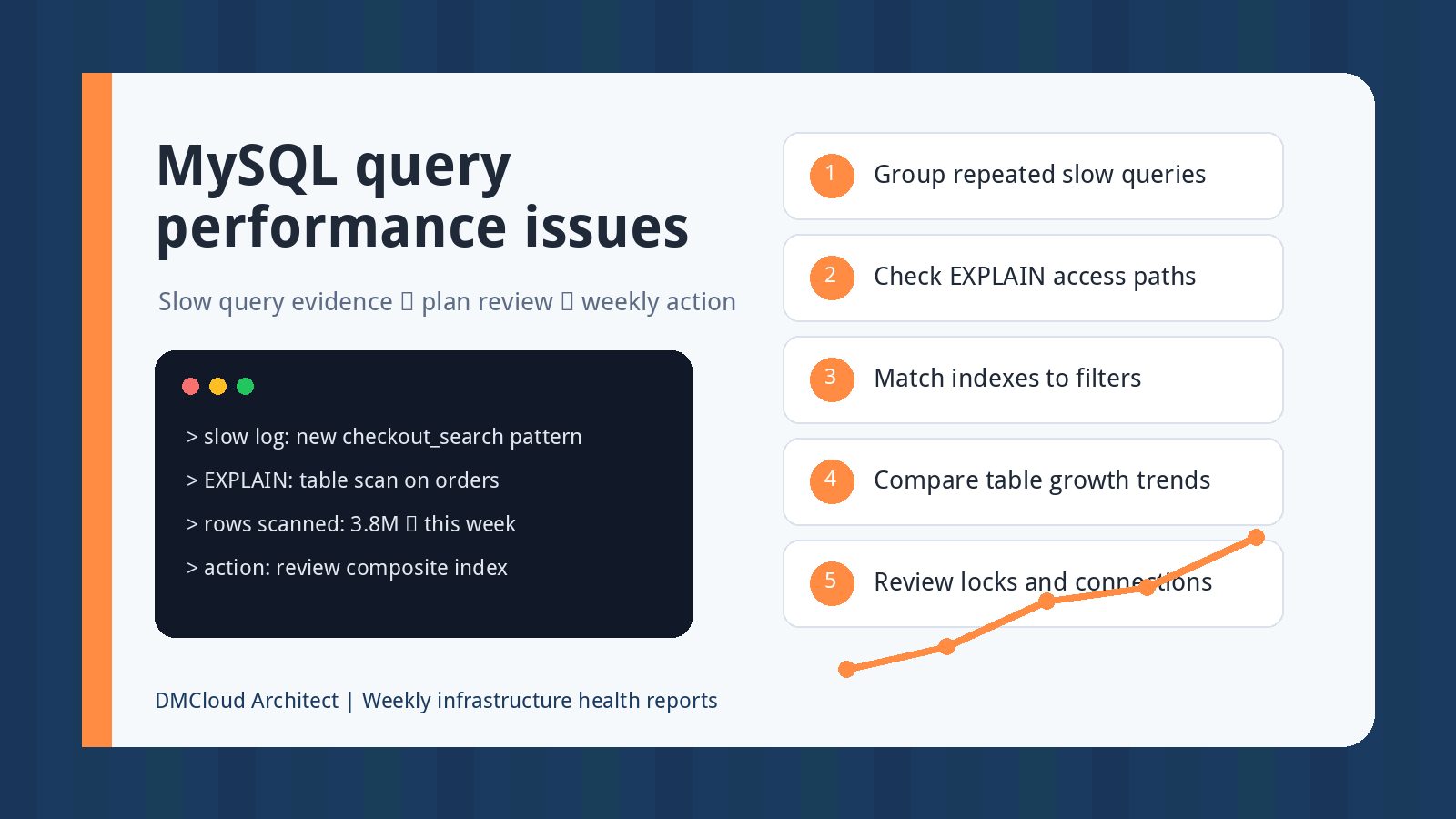
MySQL query slowdowns rarely appear out of nowhere; they usually leave clues in slow logs, execution plans, connection pressure, and server resource trends. A practical review rhythm helps small teams spot these signals before a customer-facing page or report times out. This guide shows how to diagnose MySQL query performance issues with lightweight checks that fit into a weekly infrastructure health report.

Read More
Wazuh Agent Enrolled but Missing from Dashboard: A Practical Checklist

Wazuh Agent Enrolled but Missing from Dashboard: A Practical Checklist

Jul 30, 2026    Mariusz Antonik    Security    7 min read

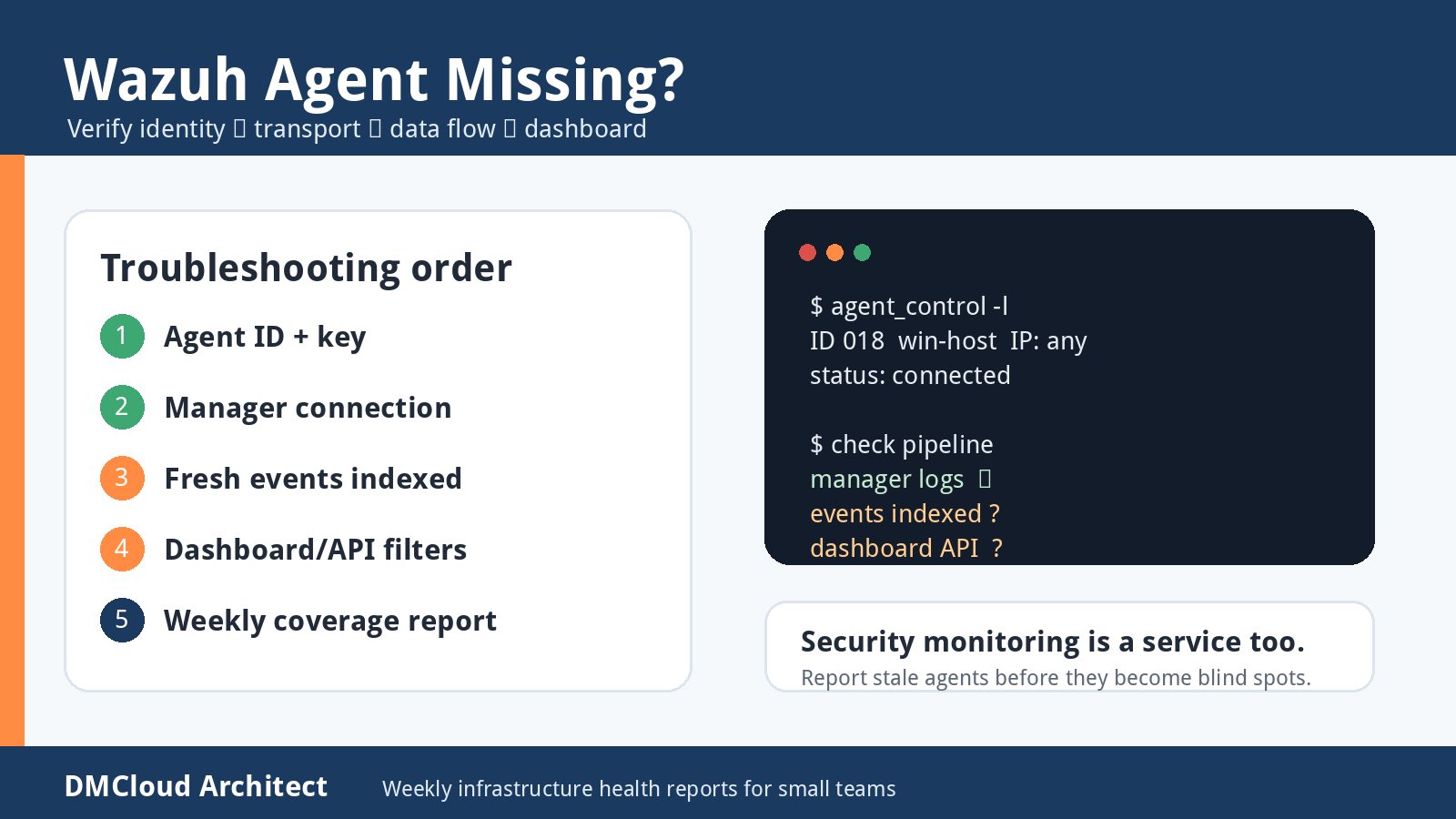
When a Wazuh agent says it is enrolled and connected but the dashboard still shows nothing, the problem is often in the gap between transport, identity, and indexed data. A calm checklist keeps teams from reinstalling agents blindly or weakening security controls just to make a host appear. Use this practical linux server monitoring workflow to verify the manager, agent identity, log flow, indexer health, and reporting expectations in the right order.

Read More
Lightweight MySQL Monitoring: What to Track Before Performance Slips

Lightweight MySQL Monitoring: What to Track Before Performance Slips

Jul 29, 2026    Mariusz Antonik    Database    6 min read

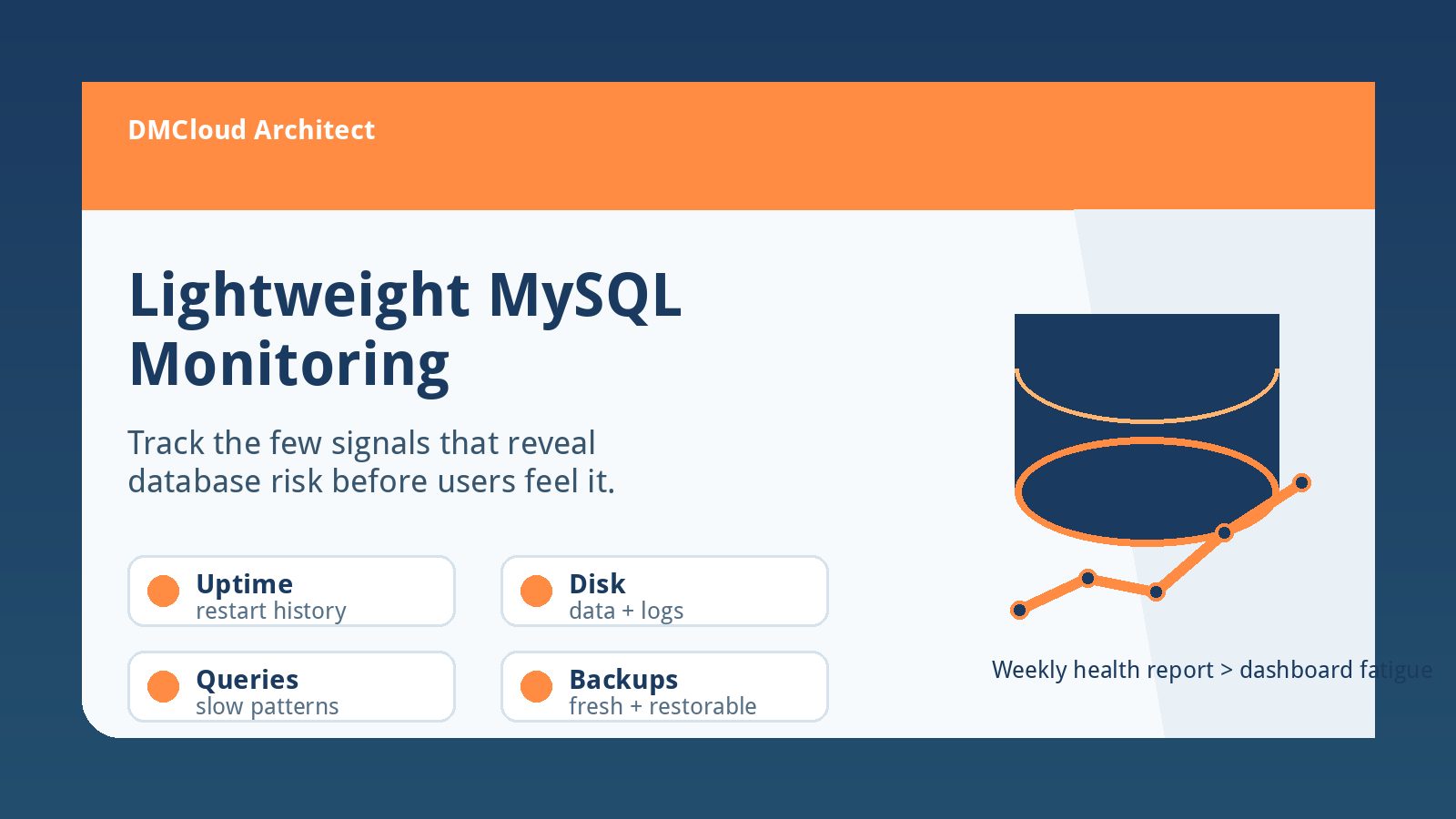
MySQL problems often start as small trends: slower queries, rising disk use, missed backups, or a connection count that keeps creeping upward. Lightweight MySQL monitoring gives developers and small business owners a practical way to catch those signals without maintaining a large observability stack. This guide shows which checks matter most and how to turn them into a simple weekly health report.

Read More